•
•
•
•
•
•
•
•
•
•
•
•
•
•
•
•
•
•
•
•
•
•
•
•
•
•
•
•
•
•
•
•
•


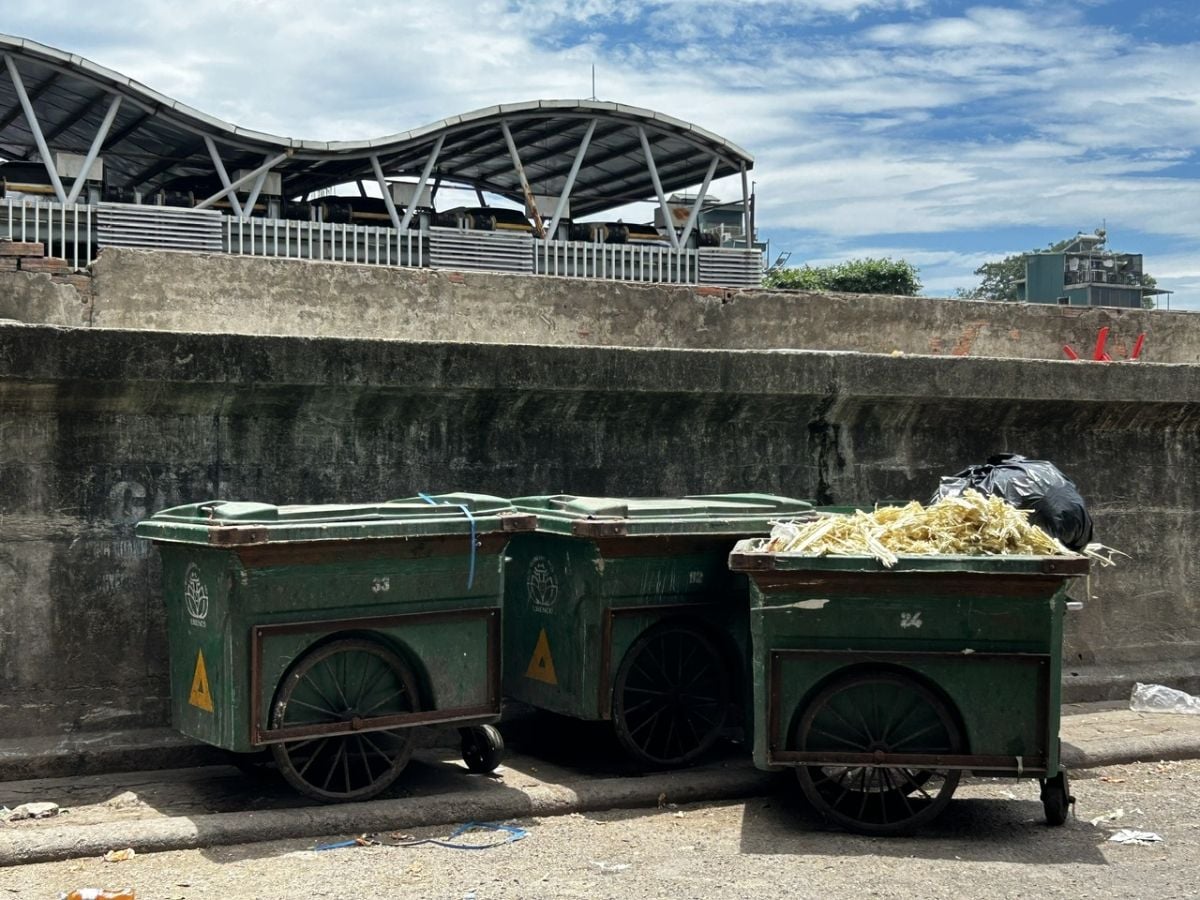
With a population of about 8.8 million, Hanoi generates around 8,500 tons of municipal solid waste daily, of which 7,600 tons are collected, transported and treated at centralized facilities. The collection rate is high, with urban areas at 100% and rural areas at 98%. This reflects the city’s substantial efforts given its large geographic area, high population density, and complex waste generation. However, behind these positive figures lie a number of bottlenecks that must be addressed. Specifically, the management of municipal solid waste in Hanoi still exhibits structural shortcomings. Open waste collection points, leachate, and odor at transfer stations are common in many places; source separation at the source has not been implemented uniformly; in some areas, collection vehicles remain manual; recycling and processing infrastructure have not kept pace with waste generation. Hence, if the traditional model of “collection – transport – landfill” is maintained, large urban areas will struggle to achieve green development and emissions reduction targets. RESTRUCTURING THE SOLID-WASTE MANAGEMENT MODEL In light of this reality, the current requirement goes beyond simply improving the efficiency of collection, transportation and disposal; Hanoi must also undertake a comprehensive restructuring of the solid-waste management model toward modern, smart and circular approaches. At a roundtable on solid waste and urban environmental hygiene in green, smart cities, Mr. Nguyen Thanh Son, Deputy General Director of URENCO, argued that solid waste management and public sanitation must be defined as a key component of green–smart urban infrastructure. Accordingly, waste collection points, transfer stations, recycling facilities, processing and resource recovery capacities should be integrated into urban planning. “To build green cities, we must change the waste-management mindset along the value chain. Sorting at the source is foundational; green collection is a prerequisite for operation; modern treatment is the solution to reducing landfilling; and financial mechanisms and green-economy policies are the drivers for the entire system,” Son noted. According to Nguyen Van Quy, Head of the Solid Waste Management Department at Hanoi’s Department of Agriculture and Environment, source separation must be substantive and tightly linked with the collection and post-separation treatment. If residents separate waste but the collection stage still mixes it, social trust will be undermined and long-term behavioral change will be hard to achieve. Moreover, greenizing sanitation vehicles should be considered an important task. The city has directed a gradual replacement of manual equipment with mechanized vehicles, prioritizing electric dedicated-use vehicles and vehicles meeting high emission standards to reduce greenhouse gas emissions. Mechanization not only improves collection efficiency and reduces operating costs but also helps transform the city’s appearance, reduces waste accumulation and mitigates negative environmental impacts on residents. In addition, applying digital technology and digitization in solid-waste management is an inevitable trend. Hanoi is aiming to build a centralized waste-management operations center to connect data from generation, collection, transport and processing. When this system operates, management will progressively shift to real-time operation. Technologies such as GPS, cameras, sensors and artificial intelligence can help optimize routing, monitor service quality and detect violations. Experts also emphasize that when building a smart city, solid-waste management should be integrated with transportation, energy and environmental planning. This integration will not only improve operational efficiency but also reduce social costs and limit future environmental hotspots. BUILDING GREEN LIVING THROUGH COMMUNITY ACTION Regarding long-term solutions, Prof. Nghiêm Van Khanh of Hanoi University of Architecture says the city must simultaneously focus on reducing pollution at the source; controlling emissions throughout the waste life cycle; improving planning and design of collection infrastructure; increasing capacity and financial mechanisms; expanding recycling and reuse; innovating collection technologies; and strengthening public awareness and community participation. Similarly, Prof. Luu Duc Hai, Director of the Institute for Urban Development and Infrastructure Research, notes that technology or modern infrastructure will not be effective without community involvement. Therefore, raising awareness and changing social behavior should be central to urban solid-waste management. “Environmental protection messaging needs to move from campaigning to concrete behavioral guidance. Schools should be places to instill sorting habits in the younger generation; communities should maintain green living; media and digital platforms should disseminate effective models while monitoring and criticizing violations,” Hai stressed. Facing significant pressure from rapid urbanization, a large population, and high development demands, Hanoi is also developing concrete programs and action plans to address solid-waste management and environmental hygiene. The city’s People’s Committee has recently issued a plan to mobilize the whole population to participate in environmental protection; reduce waste generation, promote segregation, and improve collection and treatment for a green, clean, and beautiful capital. Specific goals by 2030 include: 100% of municipal solid waste collected and treated in accordance with regulations; all wards and communes to implement household waste sorting; sufficient collection points and environmental standards; eliminate illegal dumping and burning; every neighborhood to integrate environmental protection into local regulations; maintain and expand self-managed environmental models. By 2030, 100% of municipal solid waste should be transported to centralized treatment facilities and treated using incineration with energy recovery or advanced technology; eliminate environmental “black spots”; close and rehabilitate all informal dumps; mobilize resources in communes and wards to invest in sorting, collection, recycling and processing infrastructure, employing advanced, eco-friendly technologies; and strengthen human resources in waste management.

Premium gym chains are entering a “golden era” that is ending or already in decline, as rising operating costs collide with shifting consumer preferences toward more flexible, community-based ways to exercise. Long-term memberships are shrinking, margins are pressured by higher rents and facility expenses, and competition from smaller, more personalized…