•
•
•
•
•
•
•
•
•
•
•
•
•
•
•
•
•
•
•
•
•
•
•
•
•
•
•
•
•
•
•
•
•
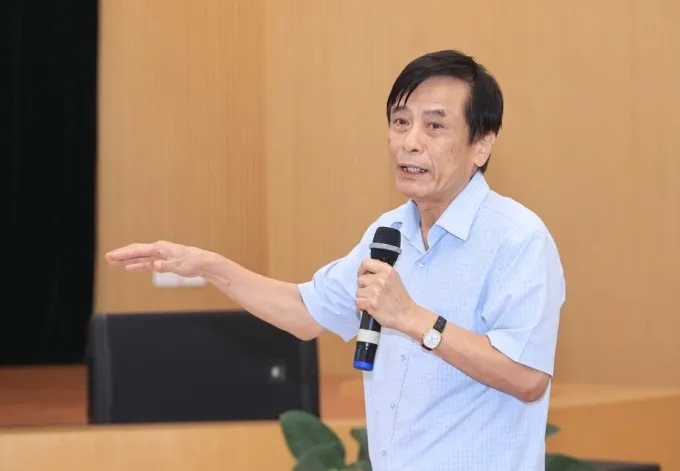
The cement industry faces difficulty achieving Net Zero because producing clinker—the key ingredient—requires firing limestone and clay at 1,450–1,500°C, which releases more than half a ton of CO2 per ton of clinker. Mr. Luong Duc Long, Vice Chairman and Secretary General of the Vietnam Cement Association, said at a green building materials seminar organized by the Ministry of Construction on May 5 that cement cannot follow a Net Zero trajectory by 2050 due to technical limits.
Long explained that cement is made up of clinker, gypsum, and additives such as fly ash and slag. Clinker represents 75–85% of cement and is produced by calcining a limestone and clay mix at 1,450–1,500°C. He said producing one ton of clinker emits up to 525 kg of CO2 and that “there is no possibility of further reductions.”
While technical limits constrain deeper cuts from clinker production itself, the industry is reducing fossil fuel use in clinker firing by substituting waste for coal. Long said nearly 20 companies have burned waste instead of coal, with some reporting substitution rates up to 40%.
He also urged that methane (CH4) emissions from landfills should be deducted from emissions quotas. Long noted that if waste is not burned at cement plants, it would emit CH4, a greenhouse gas with a global warming potential about 27 times that of CO2.
UNIDO estimates that the cement sector accounts for about 7–8% of Vietnam’s total greenhouse gas emissions. Accelerating emissions reductions in this sector, Long said, would support national climate targets.
Deputy Minister of Construction Nguyen Van Sinh said greening the building materials sector is an urgent requirement. He noted that the sector is resource- and energy-intensive and contributes to emissions, but also plays a critical role by supplying inputs for infrastructure, urban development, and housing.
According to the ministry, the building materials sector has recorded positive results in developing green products, including non-fired building materials such as cement-aggregate bricks, autoclaved aerated concrete, and foamed concrete. These products can reduce clay firing, save agricultural land, lower emissions, and support reuse of fly ash, slag, and gypsum—industrial by-products from other industries.
To promote the green materials market, the Ministry of Construction is finalizing the legal framework for standards. Le Van Ke, Deputy Director of the Building Materials Science and Technology Division, said that in Q4 the ministry plans to issue an energy-labeling circular for these materials, specifying which products must carry the label and the registration process.
The label is expected to serve as a “passport” for enterprises operating in the green building materials market.

Premium gym chains are entering a “golden era” that is ending or already in decline, as rising operating costs collide with shifting consumer preferences toward more flexible, community-based ways to exercise. Long-term memberships are shrinking, margins are pressured by higher rents and facility expenses, and competition from smaller, more personalized…