•
•
•
•
•
•
•
•
•
•
•
•
•
•
•
•
•
•
•
•
•
•
•
•
•
•
•
•
•
•
•
•
•


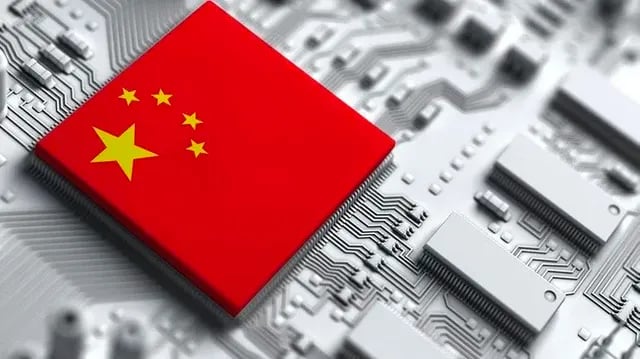
China is planning to restrict domestic technology companies’ ability to receive capital from the United States without explicit government approval, Bloomberg reported, citing people familiar with the matter. Under the proposed approach, firms would need clearance from Chinese authorities before accepting investment from US investors.
Bloomberg said Chinese regulators, including the National Development and Reform Commission (NDRC), recently instructed a number of private technology companies to decline US funding in financing rounds unless there is clear government approval.
Moonshot AI, which is considering an initial public offering, was among the companies reported to have received the guidance. Another startup, StepFun, was also reportedly asked to follow the same approach, according to unnamed sources.
ByteDance, the parent company of TikTok, was also advised not to allow secondary equity transactions to US investors without regulatory consent.
The measures are widely seen as aimed at preventing US investors from holding stakes in sensitive technology sectors tied to national security.
As of the time of reporting, the NDRC, the Chinese Embassy in Washington, and the companies StepFun, ByteDance, Meta, and Moonshot AI had not commented when Reuters sought responses.
The reported tightening follows Meta’s purchase of AI startup Manus for more than $2 billion in 2025. The deal was initially praised as a sign of globally ambitious startup activity, but later prompted investigations into foreign investment and technology exports, amid concerns that advanced technology could be moved out of China.
The NDRC is leading an interagency investigation with the Ministry of Commerce to clarify the deal’s implications. The Financial Times reported that Manus co-founders Xiao Hong and Ji Yichao have been restricted from leaving China.
For years, US capital has been a significant driver of China’s technology sector, including venture funding from firms such as Sequoia Capital and Benchmark, as well as deep collaborations involving large companies including Apple, Microsoft, and Tesla. US pension funds and grant funds have also been major sources of capital for funds focused on the Chinese market, supporting growth in areas such as the internet, electric vehicles, and artificial intelligence.
The reported shift also comes after Beijing imposed earlier restrictions on “red-chip” firms—registered overseas but largely operating in China—on listing in Hong Kong.
For much of the past, China encouraged leading technology companies to expand internationally and attract foreign capital, including from the US, to build globally competitive groups. The reported policy change signals a meaningful shift in approach as technology rivalry intensifies.
On the US side, since 2025 Washington has implemented measures to limit US investment flows into Chinese companies active in AI, semiconductors, and quantum technology, citing concerns that such funding could strengthen military and economic capabilities.

Premium gym chains are entering a “golden era” that is ending or already in decline, as rising operating costs collide with shifting consumer preferences toward more flexible, community-based ways to exercise. Long-term memberships are shrinking, margins are pressured by higher rents and facility expenses, and competition from smaller, more personalized…