•
•
•
•
•
•
•
•
•
•
•
•
•
•
•
•
•
•
•
•
•
•
•
•
•
•
•
•
•
•
•
•
•


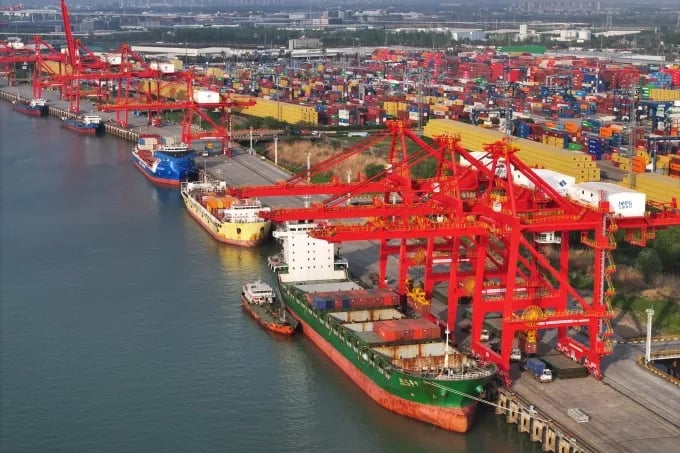
China’s trade expanded by more than 14% in April despite heightened tensions in the Middle East, supported by global demand for stockpiling and orders tied to artificial intelligence. Data from the General Administration of Customs (GAC) showed total imports and exports reached 639.4 billion USD in April, up more than 14% from the same month last year. The result exceeded March’s 2.5% growth and was above economists’ forecast of 7.9%.
Exports totaled over 360 billion USD, rising 9.8% year-on-year. Imports increased nearly 21% to 279.4 billion USD. As a result, China’s trade surplus reached nearly 85 billion USD, up from just over 51 billion USD in March.
“External trade activity has had a favorable start this year,” said Lyu Daliang, Director of Statistics and Analysis at GAC.
The GAC attributed the upturn to factories accelerating production to fulfill AI-related orders and to stockpile goods amid Middle East tensions that could raise input costs.
Machinery and electrical equipment accounted for the largest share of total exports at 63.5%. In the first four months, exports of this category rose 17.6%, approaching 865 billion USD.
Green products and low-carbon emission goods also posted strong growth. Exports of electric vehicles, lithium batteries, and wind turbines rose by more than 68%, 43%, and nearly 41%, respectively.
China has set a growth target of about 4.5% to 5% for 2026. In Q1, GDP grew 5%, surpassing the annual target. In April, factory activity data also showed new export orders reaching the highest level in two years.
“We expect external demand to remain a growth engine for the year,” said Lynn Song, Chief Economist for Mainland China at ING. She added that this driver is likely to be led by semiconductor exports and autos.
Wei Li, Head of Multi-Asset Investments at BNP Paribas Securities, said higher oil and fuel prices linked to the Iran conflict are pushing up production and logistics costs for many Chinese factories. Overall, however, he said the economy is expected to be more resilient than many other countries, supported by abundant oil reserves and a diverse energy supply.

Premium gym chains are entering a “golden era” that is ending or already in decline, as rising operating costs collide with shifting consumer preferences toward more flexible, community-based ways to exercise. Long-term memberships are shrinking, margins are pressured by higher rents and facility expenses, and competition from smaller, more personalized…