•
•
•
•
•
•
•
•
•
•
•
•
•
•
•
•
•
•
•
•
•
•
•
•
•
•
•
•
•
•
•
•
•


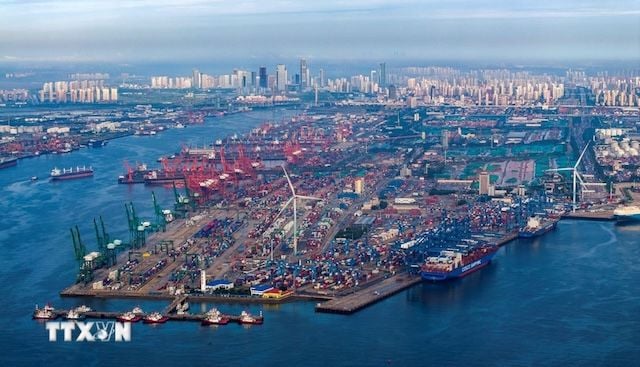
China’s exports grew faster than expected in April 2026, according to new customs data released May 9, underscoring resilience amid Middle East turmoil and broader global economic uncertainty.
Exports rose 14.1% year on year in April 2026, exceeding a Bloomberg forecast of 8.4% based on economists’ surveys. The figure also represented a sharp improvement from a 2.5% increase in March 2026.
The General Administration of Customs said China’s trade rose more than expected in April, with the data coming as risks from the Middle East conflict—sparked in late February 2026—continue to weigh on global conditions. Analysts noted that China’s trade has, so far, managed to weather the disruptions.
One factor cited is China’s diverse energy supply, which has helped limit near-term shocks. However, analysts said any global slowdown would likely dampen demand for Chinese exports over time.
Ahead of a high-stakes meeting in Beijing next week between President Xi Jinping and U.S. President Donald Trump, the latest figures showed a rebound in shipments to the United States.
China’s exports to the United States rose 11.3% year on year in April 2026, following a sharp 26.5% drop in March 2026. Exports to the United States fell by a total of 11% in January–February 2026.
The talks, originally scheduled for late March 2026, were postponed due to fighting in the Middle East, where a fragile ceasefire between the United States and Iran is in place.
China recorded a record trade surplus of about $1.2 trillion over the past year, a figure that remains a central fault line in the trade relationship with the United States.
While exports to the United States fell 20%, shipments to other regions rose sharply. The data cited included:
Analysts said the strong trade performance has become a key driver in recent years as domestic demand has remained weak, with sluggish spending and a lingering real estate debt crisis weighing on economic activity.
China’s economy grew 5.0% year on year in the first quarter of 2026, according to official data released in April 2026. Economists in a prior survey had projected growth of 4.8% for January–March 2026.
On a quarter-on-quarter basis, China’s GDP grew 1.3% in Q1, in line with forecasts and slightly higher than the 1.2% rise in the previous quarter. The 5.0% figure also marked a rebound from the 3-year low of 4.5% recorded in Q4 2025.
Earlier, China’s 2025 GDP reached 140.1879 trillion yuan (about $20.0842 trillion), up 5% from 2024, completing the 14th Five-Year Plan and maintaining a steady growth trajectory.
Analysts said many firms continue to operate in China due to advantages including a complete supply chain, large-scale manufacturing capacity, and competitive costs.
They also pointed to China’s leadership in strategic materials such as rare earths, which are critical for the semiconductor and defense industries. Many global companies still rely heavily on Chinese supply for these inputs.
Premium gym chains are entering a “golden era” that is ending or already in decline, as rising operating costs collide with shifting consumer preferences toward more flexible, community-based ways to exercise. Long-term memberships are shrinking, margins are pressured by higher rents and facility expenses, and competition from smaller, more personalized…