•
•
•
•
•
•
•
•
•
•
•
•
•
•
•
•
•
•
•
•
•
•
•
•
•
•
•
•
•
•
•
•
•


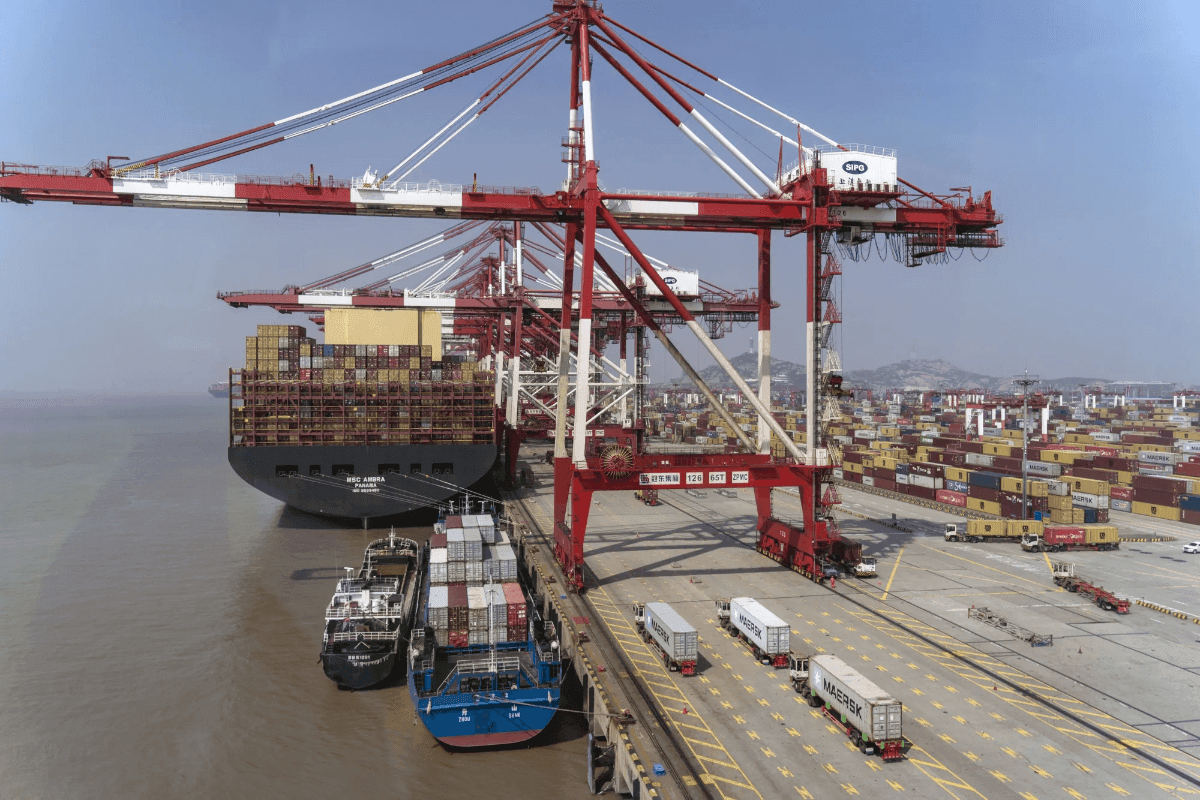
China’s exports rose sharply in April as factories accelerated production to meet orders from AI-related industries and as some customers stockpiled components amid concerns that the Iran conflict could push global input costs higher.
The export strength has lifted China’s trade surplus with the United States to $87.7 billion so far this year, a figure expected to be a focal point when President Donald Trump visits Beijing on May 14–15.
Economists say China has shown resilience to the Middle East conflict so far. However, they warn that if the war persists and energy prices remain elevated, demand in export markets could weaken, with domestic consumption unlikely to fully offset any shortfall.
In a Reuters interview, Xing Zhaopeng, a senior China strategist at ANZ, said the conflict has boosted demand for inventory replenishment across global manufacturing. He added that during this semiconductor upcycle, both China’s imports and exports have continued to grow strongly.
Xing also said there is still room for China’s AI-driven production cycle and forecast that annual export growth this year will reach about 10%.
China’s General Administration of Customs data published on May 9 showed exports, measured in USD value, increased 14.1% in April year-on-year to $359.4 billion. The gain significantly outpaced March’s 2.5% rise and exceeded economists’ forecast of 7.9%.
Separate data released in April also showed the volume of new export orders received by Chinese factories rose to the highest level in two years.
Imports grew even faster, rising 25.3% in April to $274.6 billion. That increase was higher than March’s 27.8% and above economists’ forecast of 15.2%.
As a result, China’s April trade surplus widened to $84.8 billion, from $51.13 billion in March.
China’s broader growth momentum remained solid in the first quarter, with GDP rising 5% year on year, within the government’s 4.5–5% annual target range. This reduced the need for immediate stimulus.
Even so, higher fuel and transport costs have weighed on parts of the economy. Factory data released last month showed input prices stayed elevated, particularly for refined fuels, crude oil, coal and chemicals. Unemployment also edged up, while retail sales—often used as a gauge of consumption—continued to grow more slowly than industrial production.
Trump is expected to meet Xi Jinping during the Beijing visit, an opportunity to stabilize a bilateral relationship that has been strained by trade, Taiwan and Iran. The meeting is also seen as significant for Trump ahead of US midterm elections in November, though business leaders and analysts do not expect major breakthroughs.
Meanwhile, Chinese exporters have continued adjusting to US tariffs that reached triple digits at times in 2025. They have sought new markets, including in South America, by selling goods at lower prices. Despite declines in exports to the US, China ended 2025 with a record trade surplus of $1.2 trillion.
Premium gym chains are entering a “golden era” that is ending or already in decline, as rising operating costs collide with shifting consumer preferences toward more flexible, community-based ways to exercise. Long-term memberships are shrinking, margins are pressured by higher rents and facility expenses, and competition from smaller, more personalized…