•
•
•
•
•
•
•
•
•
•
•
•
•
•
•
•
•
•
•
•
•
•
•
•
•
•
•
•
•
•
•
•
•


Strategic oil reserves are a key measure of how prepared governments are for energy shocks and geopolitical instability. When wars, sanctions, natural disasters, or market disruptions affect supply, stockpiles can help stabilize domestic fuel availability and reduce pressure on consumers.
According to the International Energy Agency (IEA), the world is facing one of the most severe energy-supply disruptions in modern history after transportation through the Hormuz Strait was disrupted. The development is increasing pressure on global fuel markets and gasoline prices.
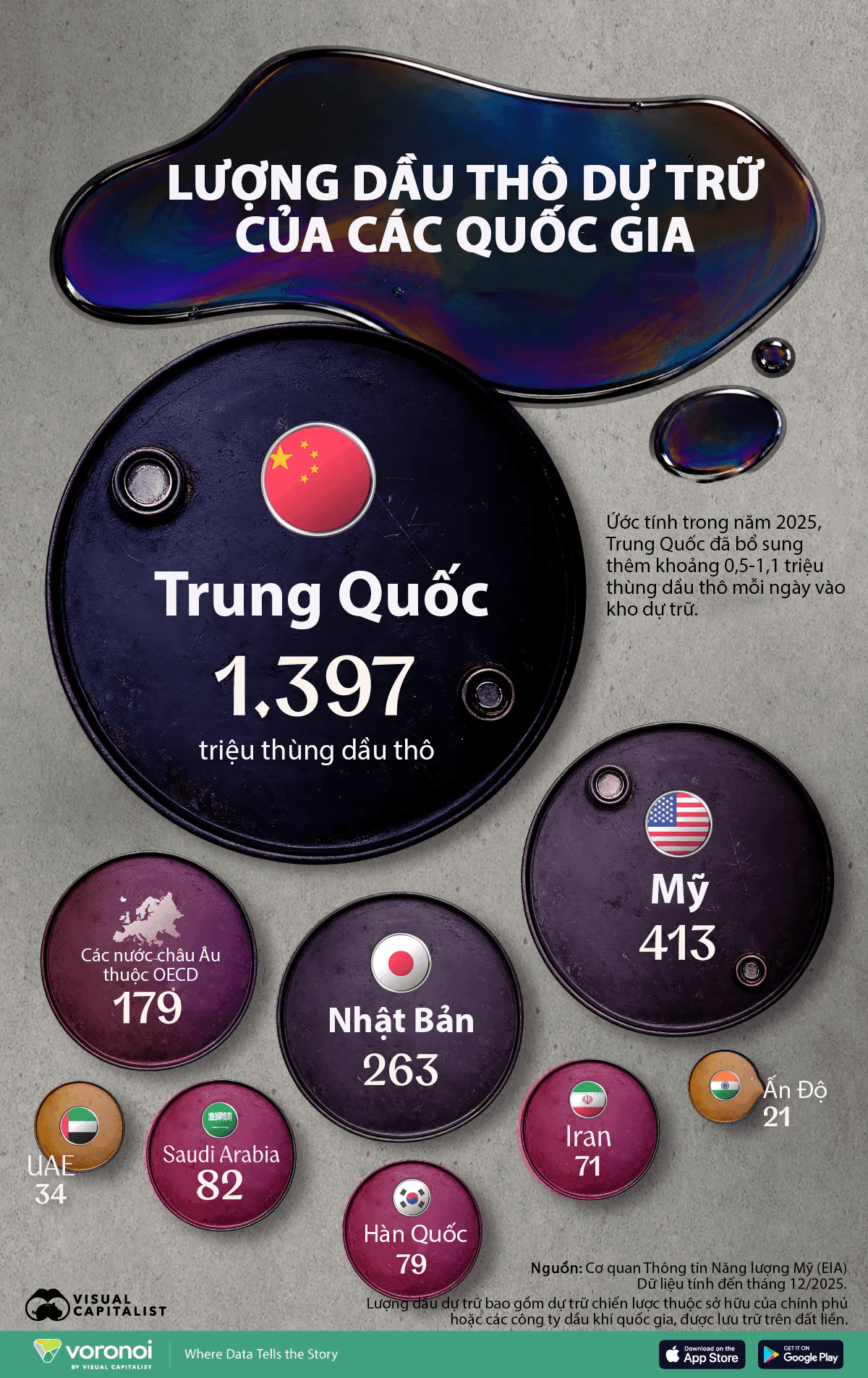
Data from the U.S. Energy Information Administration (EIA) shows the largest onshore strategic oil stockpiles held by countries. The figures indicate which nations have the most capacity to respond to global oil-supply disruptions.
The figures do not include emergency stockpile releases coordinated by IEA member countries in March 2026.
As of December 2025, China leads the ranking with an estimated 1.4 billion barrels of strategic oil. This is larger than the combined strategic reserves of the United States, Japan, OECD European countries, Saudi Arabia, South Korea, Iran, the United Arab Emirates, and India.
Together, the countries in the ranking account for roughly 70% of the world’s total stored oil.
The scale of China’s reserves suggests a high level of dependence on imported oil, including strategic routes such as the Hormuz Strait. With large reserves, the country has more time and policy flexibility to respond if oil prices move sharply or global supply is disrupted.
The United States’ 413 million barrels are held in the underground salt-cavern system created after the 1973 oil crisis to strengthen resilience against oil-supply shocks.
Japan, with 263 million barrels, is almost entirely import-dependent for crude oil due to limited domestic energy resources. Maintaining a large emergency stockpile has therefore been a long-standing priority in its energy-security policy.
European OECD member countries hold 179 million barrels of crude oil in stock. The presence of sizeable strategic reserves in some Middle Eastern and Asian nations also points to growing emphasis on energy security among both importers and exporters.
The 1973–74 oil crisis, triggered by an embargo by major Middle East producers, caused global oil prices to rise by about 300%. It highlighted how vulnerable industrial economies can be when external supply is disrupted.
In response, the IEA was established with one of its main objectives to encourage member countries to build strategic oil reserves to mitigate the impact of future supply disruptions.
Since the IEA’s founding, the strategic oil reserve release mechanism has been triggered six times to respond to major supply shocks. Releases occurred on the eve of the 1991 Gulf War; after Hurricanes Katrina and Rita damaged energy infrastructure in the Gulf of Mexico in 2005; and when the Libyan civil war disrupted oil supplies in 2011.
By 2022, IEA countries coordinated two releases after Russia began its military operation in Ukraine and the energy crisis escalated. The latest release in 2026 is also described as the largest on record, following significant disruption to shipping through the Hormuz Strait due to the Iran conflict.
Premium gym chains are entering a “golden era” that is ending or already in decline, as rising operating costs collide with shifting consumer preferences toward more flexible, community-based ways to exercise. Long-term memberships are shrinking, margins are pressured by higher rents and facility expenses, and competition from smaller, more personalized…