•
•
•
•
•
•
•
•
•
•
•
•
•
•
•
•
•
•
•
•
•
•
•
•
•
•
•
•
•
•
•
•
•


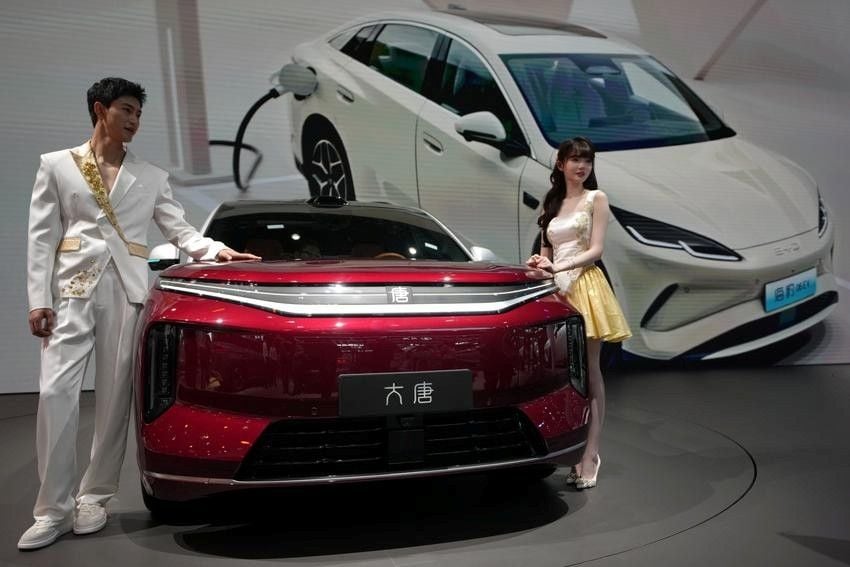
Chinese automakers are accelerating their expansion into international markets, particularly in the new-energy vehicle (NEV) sector, as weak domestic demand and intensifying competition at home push manufacturers to seek growth abroad. The surge in electric-vehicle exports reflects both China’s growing production capacity and the broader global shift toward lower-emission transport.
According to the China Association of Automobile Manufacturers (CAAM), passenger-car exports in April 2026 rose by nearly 85% year-on-year to about 796,000 units. The April figure also exceeded March’s shipments of about 748,000 vehicles.
Within this total, the NEV segment—covering battery-electric and plug-in hybrid vehicles—grew by more than 120%, reaching around 420,000 units. The figures suggest Chinese automakers are increasingly tapping global demand for low-emission mobility as countries pursue carbon-neutral transportation goals and reduce reliance on fossil fuels.
While exports strengthened, domestic sales in China continued to soften. CAAM data show passenger-vehicle sales in April fell 25.5% year-on-year to about 1.3 million vehicles, marking the sixth consecutive monthly decline.
Analysts attribute the downturn to multiple factors, including trimmed government subsidy programs intended to encourage consumers to switch to NEVs this year. For years, subsidy policies have played a key role in driving rapid EV market growth.
Uncertainty in the broader economic outlook—amid the prolonged real estate crisis—has also dampened consumer sentiment, with many households postponing major purchases such as new cars.
Despite the domestic slowdown, brand competition remains intense. At the Beijing Auto Show 2026, more than 1,450 models were introduced, highlighting the pace of technology development across manufacturers.
Chinese automakers are competing not only on price but also on technology, including artificial intelligence integration, smart-driving systems, and ultra-fast charging. This approach is intended to strengthen their global competitive position.
Leading companies such as BYD and Geely Auto are expanding their presence across broader regions worldwide. Beyond exports, automakers are also increasing overseas manufacturing investments to reduce trade barriers and improve access to large consumer markets. BYD, for example, is expanding production capacity in Europe and Latin America through new plants.
Rising global fuel prices—linked to geopolitical tensions, particularly around Iran—may further support EV adoption. In Australia, data cited from the Australian Industry (Federation) show that one in six new vehicles sold in April was an electric vehicle. BYD was reported as the second-best-selling brand in that market, behind Toyota.
Analysts also argue that sustained high oil prices would continue to lift EV demand. Claire Yuan, an automotive analyst at S&P Global Ratings, said high fuel prices will “encourage consumers to buy EVs and give Chinese EV exports an edge.”
The growth of China’s EV sector is also contributing to heightened trade tensions. The United States has restricted access to Chinese EVs by imposing a 100% tariff from 2024, with Washington arguing that Chinese automakers benefit from state support and face an uneven playing field.
Trade discussions between U.S. President Donald Trump and Chinese President Xi Jinping are being closely watched by the auto industry, particularly regarding market access and tariff measures. The European Union and Canada are also considering import policies for Chinese EVs, while Beijing has reportedly made some progress in dialogue with these partners.
Even with mounting trade barriers, Chinese automakers are continuing to rely on scale, low battery costs, and a mature supply chain to expand their global market share.
AlixPartners forecasts that China’s total passenger-car exports in 2026 could rise by about 20%, with Southeast Asia expected to remain a key market.
China’s EV export surge aligns with a wider global trend toward carbon-light growth. China has invested across the EV ecosystem, including battery-material supply, battery production, charging infrastructure, software development, and smart-control technology—positioning the country at the center of the global EV supply chain.
For many developing economies, Chinese EVs are also attractive due to lower prices compared with Western brands. As net-zero targets become a priority policy objective across economies, EVs are increasingly viewed as a strategic industry for green growth, potentially increasing Chinese automakers’ influence in reshaping the global auto sector.
At the same time, opportunities come with challenges, including technology competition, environmental standards, trade policies, and geopolitics. The global EV race is increasingly tied to green-economy strategy and industrial security for many nations.
Premium gym chains are entering a “golden era” that is ending or already in decline, as rising operating costs collide with shifting consumer preferences toward more flexible, community-based ways to exercise. Long-term memberships are shrinking, margins are pressured by higher rents and facility expenses, and competition from smaller, more personalized…