•
•
•
•
•
•
•
•
•
•
•
•
•
•
•
•
•
•
•
•
•
•
•
•
•
•
•
•
•
•
•
•
•


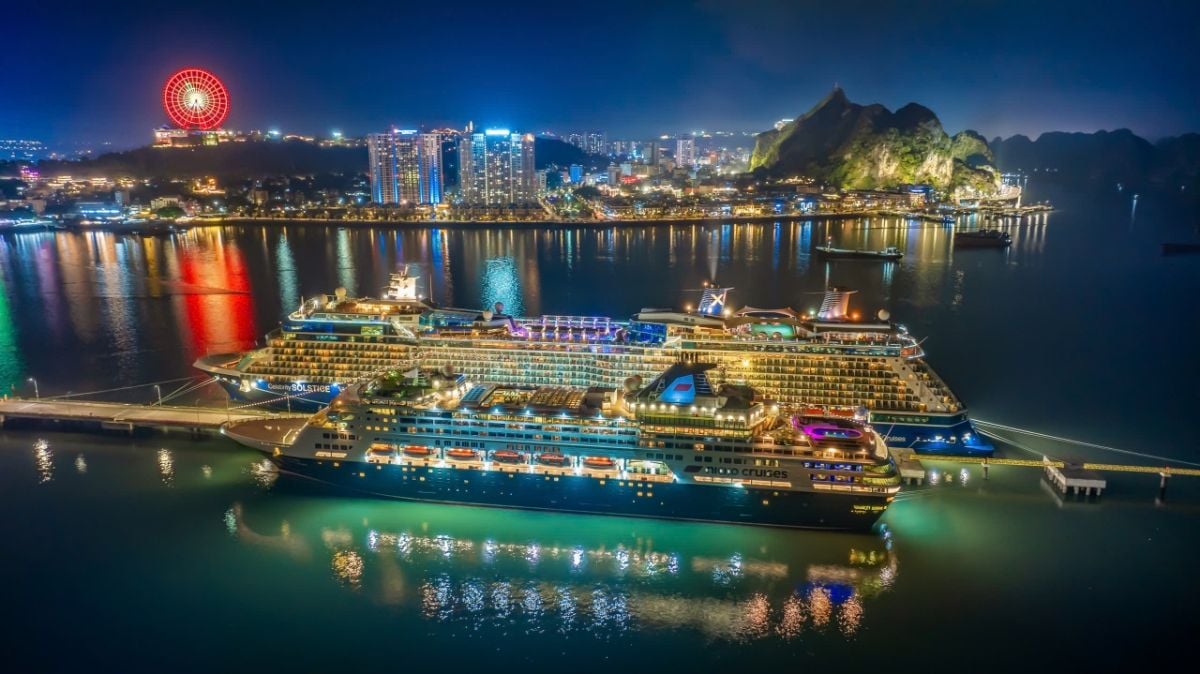
Located in the heart of Ha Long Bay’s world heritage area, Bai Chay is positioning itself for a major step forward as Quang Ninh is set to become a centrally administered city, supported by an infrastructure “revolution” on an unprecedented scale. The region’s synchronized transport network—among the best in Vietnam—connects Bai Chay to domestic and international markets through expressways, seaports, airports, and international border gates.
Quang Ninh has the longest provincial expressway network in Vietnam, helping shorten travel time to Hanoi to about 2 hours and expanding the domestic market. In parallel, Van Don Airport and Ha Long Passenger Port serve as gateways for international visitors, including potential markets in Northeast Asia via air and sea.
Quang Ninh continues to invest in an “infrastructure revolution 2.0.” The high-speed Hanoi–Quang Ninh railway began operation on April 12, with completion expected by late 2028. Once finished, it is expected to reduce travel time among the three growth triangle corners—Hanoi, Hai Phong, and Quang Ninh—to under 30 minutes, supporting economic growth.
In addition, the Hai Phong–Ha Long–Mong Cai railway is planned to diversify mobility and increase capacity to welcome visitors in the future.
With its location on the shore of Ha Long Bay, Bai Chay is both a gateway to the heritage site and a growing center for accommodation, entertainment, and leisure. Unlike destinations that focus on a single function, Bai Chay combines natural scenery, synchronized infrastructure, diverse tourism services, and flexible connectivity.
Coastal land along Bai Chay is becoming increasingly scarce, making projects with central tourism positioning near the heritage site particularly valuable to large investors. As infrastructure improves, inbound flows to Bai Chay are expected to rise, strengthening its role as a first stop for visitors exploring the heritage area.
Large developers, particularly Sun Group, are investing to build a complete ecosystem of travel, resorts, entertainment, and festivals. The Sun Elite City complex spans 324 hectares and is designed as a “24/7” living city at the center of Bai Chay, combining components already in operation and continuously upgraded with new products.
A key highlight is the full 4km Ky Quan seafront road. Along this route lies a white, fine-sand beach over 100 meters wide, described as the widest and most beautiful beach in Quang Ninh and the North, offering panoramic views of the heritage bay.
Sun Elite City is also positioned as a “capital of non-stop festivals,” with activities, entertainment, and events occurring around the clock. The complex includes major amenities and venues such as the Queen’s Cable Car Station, Sun World Ha Long, Sun Carnival Boulevard, a marina, the VUI-Fest night market, and high-altitude fireworks and 3D mapping at the Lighthouse.
By combining scenery with continuous programming and facilities, Sun Elite City aims to make Bai Chay more than a sightseeing stop—turning it into a 24/7 experiential destination.
The article links Bai Chay’s appeal to a “habit” among visitors: when traveling to Quang Ninh, Bai Chay becomes an indispensable destination. By consolidating needs—from Ha Long Bay visits to seaside resorts and entertainment and festivals—within a concentrated area, the model is expected to increase length of stay and tourism spending.
Experts cited in the article say the all-in-one complex model is a trend in modern tourism, as visitors can reduce time spent moving between multiple points by choosing areas with full amenities.
As the “no-smoke” tourism economy grows, real estate tied to resort tourism is described as a direct beneficiary. Rising visitor numbers support demand for accommodation, services, and commerce, while real estate products within tourism-entertainment complexes like Sun Elite City are positioned to have advantages in both business utilization and long-term appreciation potential.
Finally, the article argues that as Bai Chay gradually forms a “non-stop” tourism center, tourism cash flow can become less seasonal and more stable year-round—an element presented as underpinning the sustainable attractiveness of real estate in the area.




Premium gym chains are entering a “golden era” that is ending or already in decline, as rising operating costs collide with shifting consumer preferences toward more flexible, community-based ways to exercise. Long-term memberships are shrinking, margins are pressured by higher rents and facility expenses, and competition from smaller, more personalized…