•
•
•
•
•
•
•
•
•
•
•
•
•
•
•
•
•
•
•
•
•
•
•
•
•
•
•
•
•
•
•
•
•


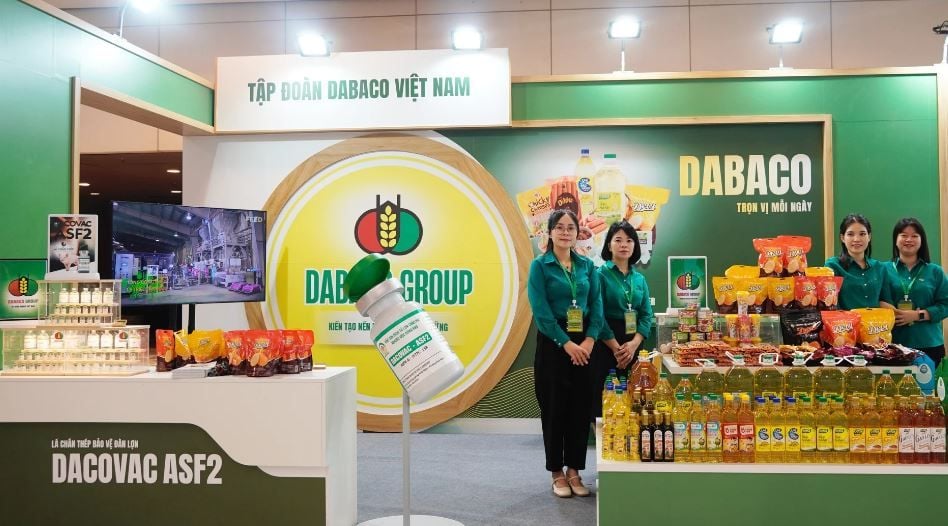
Dabaco Vietnam Group Joint Stock Company (ticker: DBC, HOSE) has approved a resolution to pay a 2025 dividend totaling 15%. The dividend comprises a 3% cash dividend (300 đồng per share) and a 12% stock dividend. The company expects to complete the payout in Q2 2026.
Dabaco plans to fund the 3% cash dividend using undistributed after-tax profits from its audited 2025 financial statements. With 384.86 million outstanding shares, the company expects to spend approximately 115.4 billion đồng for the cash portion.
For the 12% stock dividend, Dabaco expects to issue an additional 46.1 million shares. The rights issue ratio is 100:12, meaning shareholders holding 100 shares will receive 12 additional shares. The stock dividend is planned to be implemented in Q2 2026, and the company states that the stock dividend will not be subject to transfer restrictions.
In Q1 2026, Dabaco reported net revenue of 4,124 billion đồng, up 14% year over year. However, cost of goods sold increased by 25%, leading to gross profit falling 15% year over year to 691 billion đồng.
Financial operations were negative, while selling and administrative expenses rose by 6% and 7%, respectively. As a result, after-tax profit reached 374 billion đồng, down 26% year over year. Compared with its annual plan, the company achieved nearly 34% of its profit target.
The company attributed the Q1 2026 profitability decline to lower live hog prices, which reduced profitability for pig-raising businesses. It also noted that while feed sales volume increased, changes in product mix, higher input costs, and FX inflation weighed on profitability in the feed segment.
As of 31/3/2026, Dabaco’s total assets were approximately 15.7 trillion đồng, a modest decline from the start of the year. The company held about 2.3 trillion đồng in cash and equivalents. Inventories decreased by 7% to nearly 3.38 trillion đồng, while construction-in-progress fell by more than half to 852 billion đồng.
On the liabilities side, total liabilities declined 8% to 7.256 trillion đồng. Short-term borrowings remained above 4.0 trillion đồng, down 15%.
Premium gym chains are entering a “golden era” that is ending or already in decline, as rising operating costs collide with shifting consumer preferences toward more flexible, community-based ways to exercise. Long-term memberships are shrinking, margins are pressured by higher rents and facility expenses, and competition from smaller, more personalized…