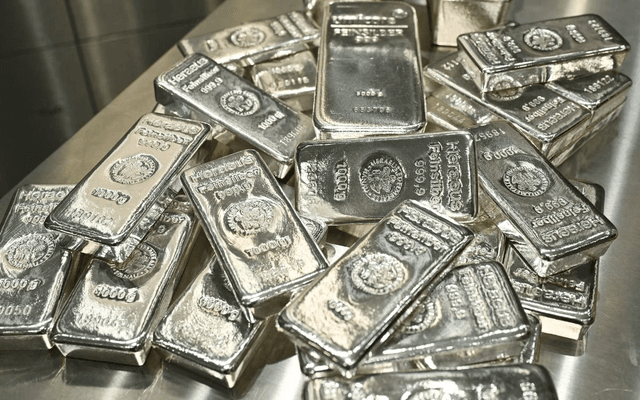
Silver rose to a two-month high after the iShares Silver Trust (SLV) reported net purchases of 34 tonnes on May 12. The fund has now bought a net 71 tonnes over two consecutive sessions, lifting its total holdings to 15,120 tonnes.
Silver has been supported by a six-session run of rising prices. At the May 12 close on COMEX (US), silver was quoted at 86.5 USD/oz, the highest level in two months.
SLV’s recent accumulation adds to the broader upward momentum in silver prices, which have continued to climb for six straight sessions. The trust’s latest net purchase of 34 tonnes on May 12 follows two consecutive sessions of net buying, bringing total net purchases to 71 tonnes.
In contrast to silver, spot gold in New York has corrected, trading at 4,716 USD/oz, down 0.4% from the previous close. The move reflects pressure from US inflation data that came in higher than expected, which has reduced expectations for an early Fed rate cut.
While gold is commonly viewed as a safe-haven asset and hedge, silver also has a significant industrial role, which can make its price performance more sensitive to changes in industrial demand and supply conditions.
The silver market is forecast to remain in deficit for the sixth consecutive year in 2026. Demand for physical investment is also expected to rise sharply, partially offsetting weakness in other demand areas.
Barbara Lambrecht, commodities analyst at Commerzbank, said reduced primary metal output this year could worsen the supply shortage of silver. She added that silver’s price strength may be driven more by the industrial metals market than by factors that typically influence gold.
Investors are also watching the gold-to-silver ratio, which has fallen quickly from above 62 to around 54 over a short period. Such a move often suggests silver may be entering a phase where it outperforms gold in the commodity cycle.
Simon-Peter Massabni, Head of Business Development at XS.com, said changes in economic conditions are helping silver separate from gold and reinforce its role as an independent monetary metal. He noted that the ratio’s decline from a record high to a more balanced level reflects investors reassessing silver as a higher-profit opportunity in a volatile environment, driven by its combination of precious-metal characteristics and industrial utility.