•
•
•
•
•
•
•
•
•
•
•
•
•
•
•
•
•
•
•
•
•
•
•
•
•
•
•
•
•
•
•
•
•


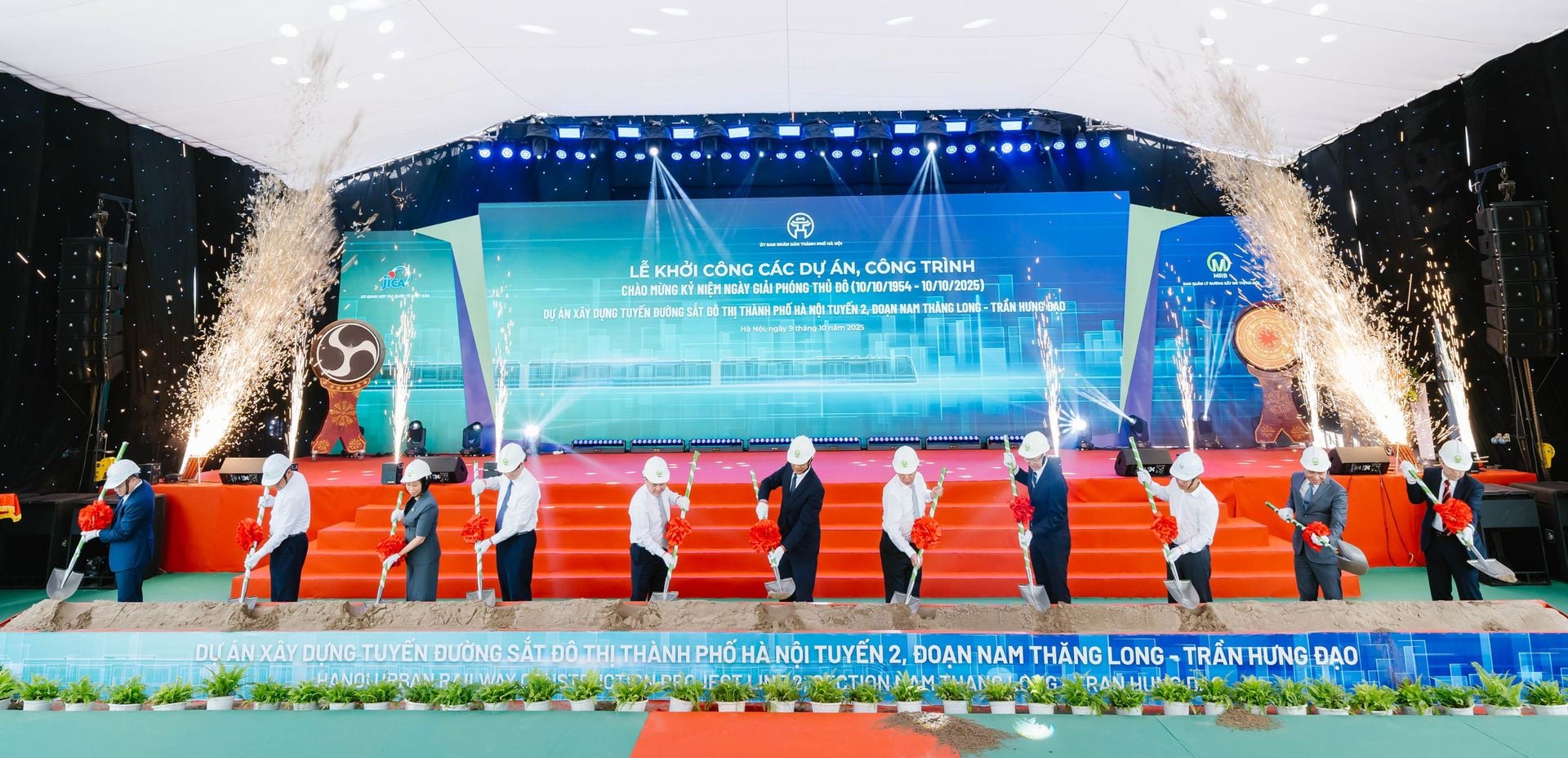
The urban rail project Metro Line 2 on Nam Thang Long - Tran Hung Dao stretches nearly 11 km, with most of its length underground through central Hanoi, and began construction in October 2025. According to the design, the line is about 10.9 km long, with nearly 2 km elevated and approximately 8.9 km underground. The line will have 10 stations, including 2 elevated and 8 underground, running through central streets such as Hang Giay, Dong Xuan, Hang Duong, Hang Ngang, Hang Dao, etc. Stations are laid out from Xuan Đỉnh to Tran Hung Đạo, creating a continuous north-to-core urban axis. The line is planned to use 10 train sets, each with 4 cars, with a design speed of up to 110 km/h on elevated sections and 80 km/h underground. In the Xuan Đỉnh Depot area, covering about 11.3 hectares, contractors are currently focusing on foundation works. After earthworks are completed, the compaction of the foundation is being carried out in parallel to prepare for subsequent construction steps. On the site, numerous heavy equipment are mobilized to treat the soil and strengthen the ground surface. Given that this area was historically farmland interspersed with ponds, the construction faces several difficulties. Unlike traditional depots, Xuan Đỉnh Depot is planned to be developed as an urban area integrated with public transport. In addition to maintenance, repair, and operation, the area will be connected to other modes of transport, gradually forming a transfer space and integrating service and urban functions. The Metro Line 2 project has a total investment of about 35,680 billion VND, funded by a Japanese ODA loan through JICA with a city budget counterpart. This is one of the large-scale transport infrastructure projects with high technical requirements due to much of the line running underground through the inner city, including the Old Quarter and surrounding Hoan Kiem Lake region. According to the Hanoi Urban Railway Management Authority, Line 2 plays an important role in planning Hanoi's urban rail network. The line not only connects key areas but also has the potential to be interconnected with future metro lines, contributing to a cohesive public transport system.







Premium gym chains are entering a “golden era” that is ending or already in decline, as rising operating costs collide with shifting consumer preferences toward more flexible, community-based ways to exercise. Long-term memberships are shrinking, margins are pressured by higher rents and facility expenses, and competition from smaller, more personalized…



