•
•
•
•
•
•
•
•
•
•
•
•
•
•
•
•
•
•
•
•
•
•
•
•
•
•
•
•
•
•
•
•
•


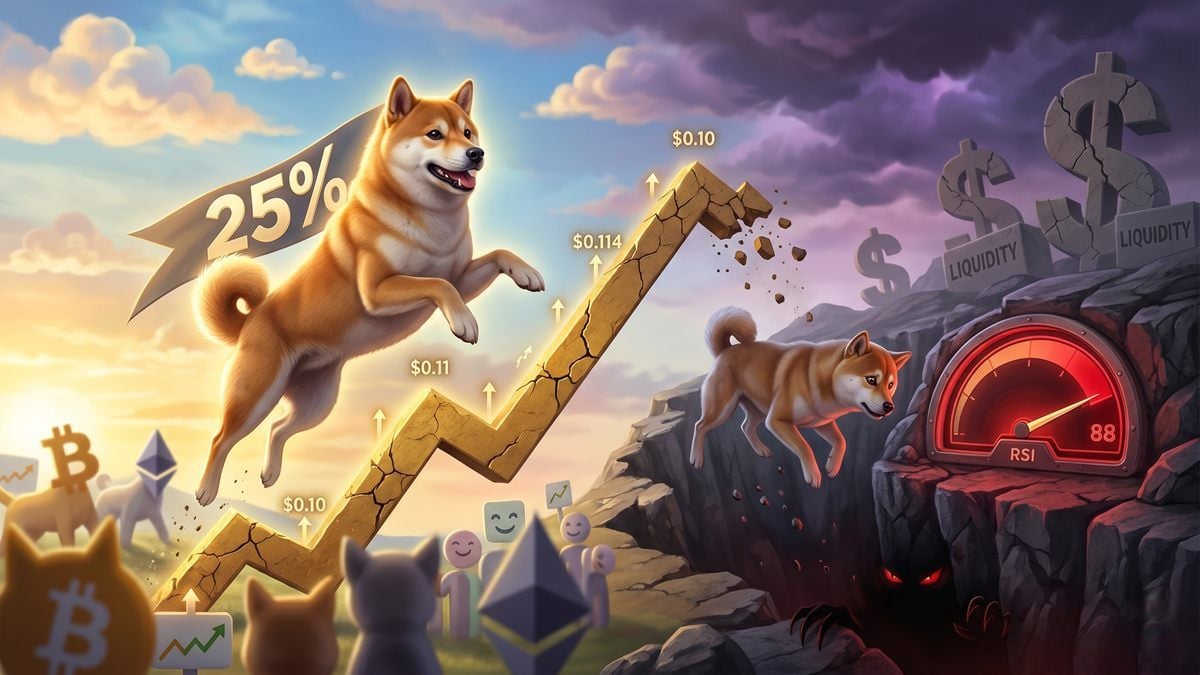
Dogecoin is trading at around $0.114 and has gained about 25% over the past 30 days, according to CoinGecko data. The rally has pushed the Relative Strength Index (RSI) to 88 points at the close of this report, while some projections—such as a move toward $12 per unit—would require a market capitalization of about $1.8 trillion.
Over the last month, Dogecoin recorded a double-digit increase and strengthened its position as the leading memecoin by market capitalization. The move also took place amid market volatility, with Dogecoin outperforming Bitcoin and Ethereum over two- and four-week timeframes.
Despite the optimism among investors, several technical indicators are raising concerns for short-term traders. Ali Martinez said the TD Sequential indicator issued a sell signal for the DOGE/USDT pair in the short term. The RSI reading of 88 points also sits well above the commonly used overbought threshold.
Key technical reference points:
“TD Sequential flashes a sell signal on Dogecoin [$DOGE], anticipating a price correction.” — Ali Charts (May 12, 2026)
Analysts on X have offered conflicting views on Dogecoin’s immediate direction. Analyst JAVON MARKS argued that Dogecoin is responding positively to a bullish divergence in the MACD and suggested a potential breakout toward $0.6533.
Other projections, including scenarios shared by MikybullCrypto, place Dogecoin at $12 per unit. However, the article notes that such a scenario would face major structural challenges, particularly around liquidity and the broader market.
To reach the $12 valuation cited by some analysts, Dogecoin’s market capitalization would need to rise to about $1.8 trillion. The article compares this with Bitcoin’s market capitalization of around $1.61 trillion and estimates that it would represent more than 60% of the total value of the entire cryptocurrency sector, which is currently below $2.8 trillion.
Other contributors, including the user Ryker, suggested that the current chart structure supports continued trend strength within the memecoin niche. The article also points to market data indicating that capital flows toward higher-risk assets often intensify after periods of stability in major currencies.








Premium gym chains are entering a “golden era” that is ending or already in decline, as rising operating costs collide with shifting consumer preferences toward more flexible, community-based ways to exercise. Long-term memberships are shrinking, margins are pressured by higher rents and facility expenses, and competition from smaller, more personalized…



