•
•
•
•
•
•
•
•
•
•
•
•
•
•
•
•
•
•
•
•
•
•
•
•
•
•
•
•
•
•
•
•
•


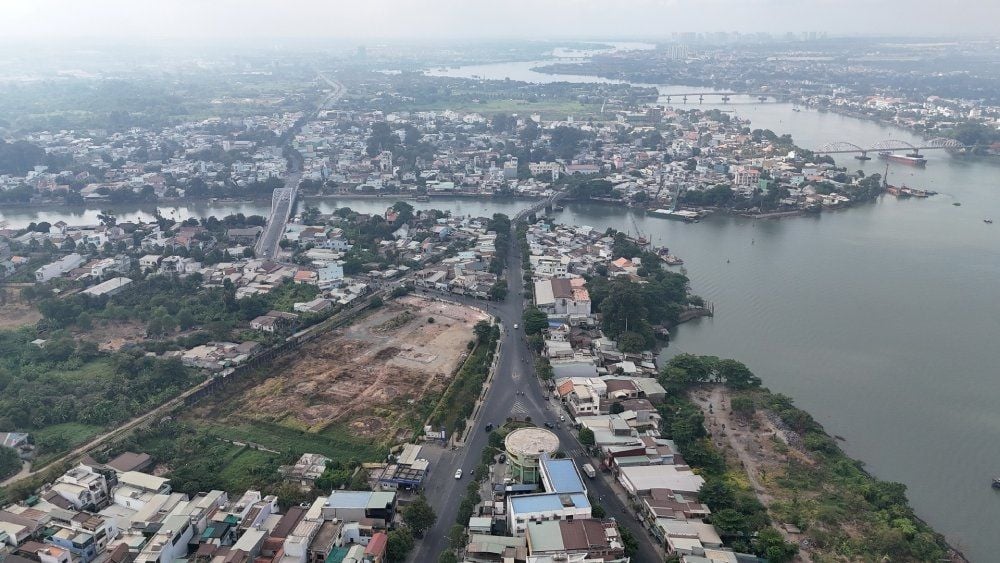
Dong Nai approves the 1/2,000-scale master plan for Đại Phước 1, a smart riverfront urban area focused on science and innovation. According to the decision, the planned area covers more than 3,131 hectares and sits west of Nhơn Trạch new urban area, adjacent to the Dong Nai River and Ho Chi Minh City. The sub-area is bounded to the north by the Ong Chuoc River, the Cau Tau River, and Đại Phước 2; to the south by Tac Miieu canal, Ong Mai canal, and Đại Phước 3; to the east by Cat Lai Road per the master plan; and to the west by the Dong Nai River and Ho Chi Minh City. Đại Phước 1 is intended to develop into a riverfront smart city, a science and innovation hub, serving as a driver for the socio-economic development of the Đại Phước commune and the Nhơn Trạch urban area as a whole. The area is also expected to contribute to spillover growth in the development corridor related to Long Thành International Airport. The projected population is about 180,000–230,000 people. In land use terms, residential land occupies nearly 616 hectares (about 20%), including roughly 413 hectares of housing with a mix of high-rise, low-rise, and mixed-use forms. Non-residential land accounts for over 1,598 hectares (51%), allocated for commercial, services, urban-level public facilities, training and research centers, green spaces, and technical infrastructure. The remaining area, about 917 hectares (nearly 30%), consists of rivers, canals, and natural water bodies retained to develop open space, parks, and riverine scenery. Urban space is shaped with a compact, multi-functional layout closely integrated with the public transportation system. The main sub-areas include mixed-use, commercial-service, innovation, cultural-sports, and theme parks. In terms of transportation infrastructure, the plan identifies main axes such as Phú Mỹ - 25C, DT.769F, DT.769G - Port Link Road, supplemented by inter-regional and internal road networks. Water transport is also to be utilized via river and canal systems connected to the Dong Nai River and Nhà Bè rivers. Additionally, the urban area is planned to develop public transport corridors such as BRT, while integrating smart transportation infrastructure, parking facilities, and electric vehicle charging stations. Technical infrastructure including water supply, wastewater treatment, power supply, and telecommunications is designed to be integrated and laid underground. Under the schedule, the 2025–2030 phase will complete planning management procedures, set out practical site demarcations, draft and approve detailed master plans for key areas, and implement core technical infrastructure projects and essential works. The 2030–2040 phase will focus on completing technical infrastructure and developing urban-level public facilities and housing projects. By 2040–2045, the project is envisioned to be fully invested and developed in line with the approved master plan.

Premium gym chains are entering a “golden era” that is ending or already in decline, as rising operating costs collide with shifting consumer preferences toward more flexible, community-based ways to exercise. Long-term memberships are shrinking, margins are pressured by higher rents and facility expenses, and competition from smaller, more personalized…




