•
•
•
•
•
•
•
•
•
•
•
•
•
•
•
•
•
•
•
•
•
•
•
•
•
•
•
•
•
•
•
•
•


Real estate market is seen entering a new phase—one that emphasizes more substantive and sustainable development. The shift is expected to require greater capital inflows and create new opportunities for cooperation between Vietnamese enterprises and leading global brands.
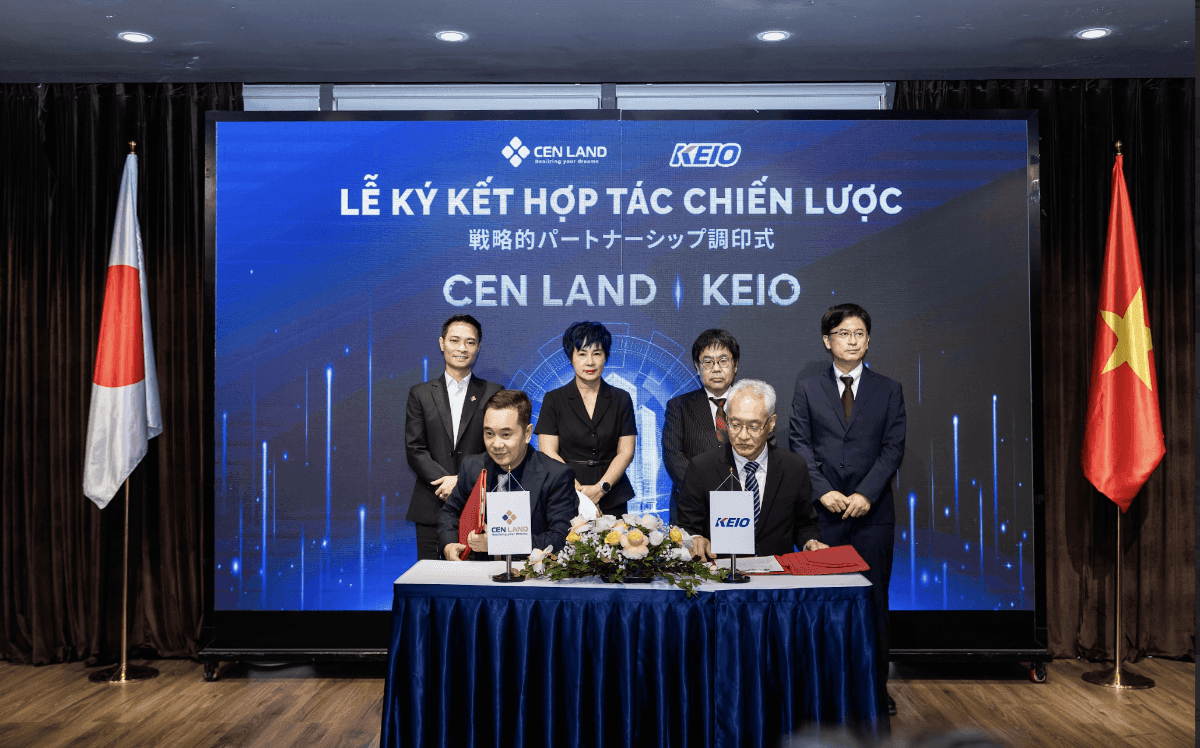
On 22 April 2026, Cen Land, the Century Real Estate Joint Stock Company, and Cen EcoTech College (Cen EcoTech) officially signed a cooperation agreement with Keio Group (Japan). The partnership focuses on real estate investment and development, as well as training programs aimed at supplying high-quality human resources.
Under the agreement, Cen Land commits to prioritizing Keio as a strategic investor in real estate projects developed or managed by Cen Land.
Through its cooperation with Cen EcoTech, Keio will build and organize specialized training programs to supply high-quality human resources aligned with international standards. Graduates of the Keio programs from Cen EcoTech are guaranteed employment at Keio Group itself and leading partner companies in Japan.
The program pathway is also intended to help Vietnamese workers improve productivity and return to contribute to the country’s development.
Speaking at the signing ceremony, Mr. Nguyen Trung Vu, chairman of Cen Land, said that while the Vietnamese real estate market has long attracted foreign capital, current capital inflows are highly selective and typically target potential and sustainable projects.
He described a sustainable project as one that attracts many residents to live in, generates cash flow, and becomes a source of pride for residents. He added that, over more than two decades of operation, Cen Land has sought and partnered with leading global partners to build high-quality projects and support the development of Vietnam’s real estate ecosystem and urban infrastructure.
Mr. Vu also highlighted Keio Group’s background, saying the company has a history of more than 110 years and plays a key role in shaping Japan’s transportation system and urban infrastructure, with core strength in railway operation. He noted that Keio has developed an ecosystem of 54 subsidiary companies, including in real estate, retail, and services, based on a modern urban model. Keio is also described as a leading brand in transferring management technology and implementing sustainable infrastructure projects.
According to Mr. Nobuo Kaneko, head of Keio Group, partnering with Cen Land represents an important milestone for Keio’s expansion in Vietnam. Through the alliance, Keio aims to bring direct capital, modern governance standards, and TOD (transit-oriented development) experience.
He said the combination of Cen Land’s understanding of domestic needs with Keio’s financial strength and international governance standards is expected to create synergy—enhancing management and operations, supporting investment and development of a sustainable urban ecosystem, and building capacity to supply highly skilled human resources for both countries.
At the ceremony, the two sides also left open the possibility of cooperation in transport infrastructure, leveraging Keio Group’s experience in developing urban models linked to modern railway networks.
Premium gym chains are entering a “golden era” that is ending or already in decline, as rising operating costs collide with shifting consumer preferences toward more flexible, community-based ways to exercise. Long-term memberships are shrinking, margins are pressured by higher rents and facility expenses, and competition from smaller, more personalized…