•
•
•
•
•
•
•
•
•
•
•
•
•
•
•
•
•
•
•
•
•
•
•
•
•
•
•
•
•
•
•
•
•


The Department of Domestic Market Management and Development (Ministry of Industry and Trade) held a workshop on April 22, 2026 to collect feedback on a draft Government Decree that will replace Decree No. 60/2024/ND-CP on market development and management.
Deputy Head of the Department of Domestic Market Management and Development, Mr. Bui Nguyen Anh Tuan, said the new decree is intended to strengthen the legal framework for the market system. It aims to support modern, sustainable market development in line with digital transformation and green consumption, while addressing problems that emerged during implementation of Decree No. 60/2024/ND-CP.
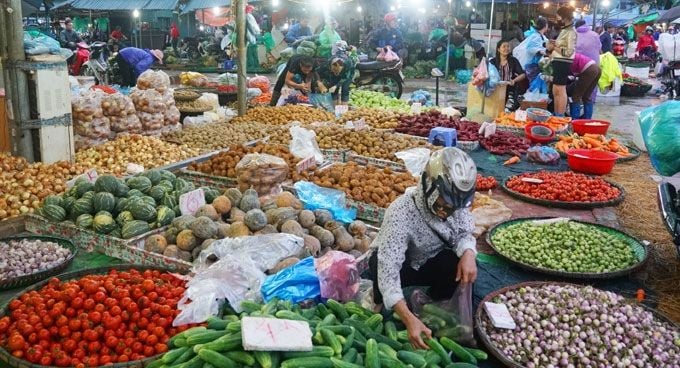
From 2015 to 2025, the market system faced significant challenges, with the number of markets tending to decline. However, markets still account for a large share of trade infrastructure. In 2025, Vietnam had 8,150 markets, 1,099 supermarkets, and 281 shopping centers.
Most markets are third-tier (Grade III) with limited facilities, accounting for about 86.9% of the total. First- and second-tier (Grade I and II) markets make up a smaller share, highlighting the need to upgrade infrastructure and modernize market management methods.
Economically, street and traditional markets remain a major channel for fresh food supply due to convenience, low costs, and established consumer habits.
Socially, market-based business households are estimated at roughly 1.7–2 million, providing direct and indirect employment for millions of workers. Markets also function as a labor market buffer, particularly for low-skilled workers and those in the informal sector, and contribute to poverty reduction.
Culturally, markets are distinctive spaces that reflect local customs and regional identities. Several market models have become tourism products, including Cai Rang Floating Market and Sa Pa Love Market, helping create economic value and promote local images.
The draft decree introduces changes focused on improving the mechanism for mobilizing investment resources, decentralizing responsibilities, and expanding the pool of investment participants.
The central budget is proposed to prioritize hard-to-reach areas such as mountainous regions, border areas, and ethnic minority communities. Local budgets would implement projects in other areas, in combination with other legitimate capital sources.
The draft also emphasizes decentralization and clearer delineation of responsibilities among management levels, aiming to shorten decision-making processes to improve the efficiency of state management.
A key new feature is to broaden investment participants to include individuals, household traders, and private enterprises in building and managing markets, with the goal of strengthening the socialization of market development.
The draft includes mechanisms intended to reflect practical development needs, such as allowing multi-objective, multi-functional use at markets; leveraging market infrastructure assets in public-private partnership projects; and developing border markets in a modern direction to reduce logistics costs and promote trade.
For the first time, the draft also includes provisions on smart markets, digital transformation, traceability of goods, and green transformation. The objective is to build a civilized, environmentally friendly market system that aligns with evolving consumer trends.
During the discussion, representatives from Departments of Industry and Trade, industry associations, and market management agencies agreed that, within the socio-economic structure, traditional markets continue to play an especially important role. They are not only venues for commerce but also spaces that connect communities, preserve cultural values, and support livelihoods for millions of people.
Mr. Bui Nguyen Anh Tuan said the drafting committee will study the contributions to complete the draft decree and submit it to competent authorities for consideration in the near future. The issuance of the new decree is expected to provide a coherent legal framework for market system development toward modernization and sustainability, while continuing to preserve and promote the cultural values of traditional Vietnamese markets.



Premium gym chains are entering a “golden era” that is ending or already in decline, as rising operating costs collide with shifting consumer preferences toward more flexible, community-based ways to exercise. Long-term memberships are shrinking, margins are pressured by higher rents and facility expenses, and competition from smaller, more personalized…