•
•
•
•
•
•
•
•
•
•
•
•
•
•
•
•
•
•
•
•
•
•
•
•
•
•
•
•
•
•
•
•
•


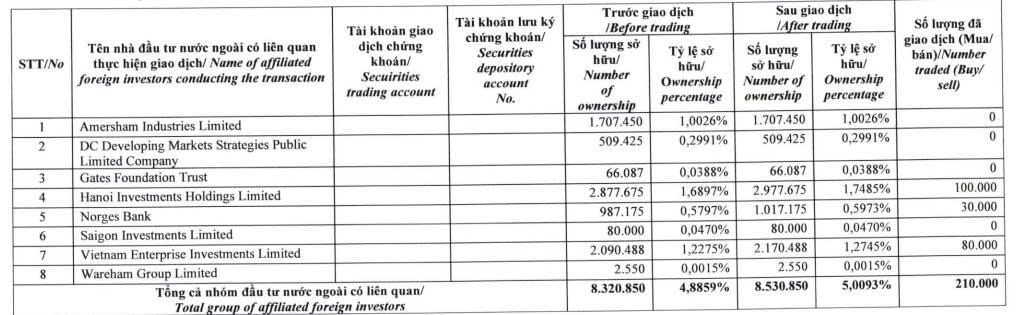
Dragon Capital’s foreign funds group has filed ownership reports covering foreign-related investors that are large shareholders in FPT Retail (FPT Retail, ticker FRT). On March 30, 2026, three Dragon Capital member funds purchased a total of 210,000 shares of FRT. Hanoi Investments Holdings Limited bought 100,000 shares, Norges Bank bought 30,000 shares, and Vietnam Enterprise Investments Limited bought 80,000 shares.
Following the transactions, Dragon Capital increased its stake in FRT from more than 8.3 million shares to more than 8.5 million shares. Its ownership rose from 4.8859% to 5.0093%, making it a major shareholder in FPT Retail.
In a separate development, FPT Retail has released materials for its 2026 annual general meeting (AGM) scheduled for April 17, 2026. At the meeting, the company will seek shareholder approval for its 2026 business plan.
For 2026, FPT Retail expects net revenue of VND 59,500 billion, up 16% from 2025. Pre-tax profit is projected at VND 1,550 billion, up 27%.
For 2025, the company reported net revenue of VND 51,083 billion, up 27.4% year-on-year. Pre-tax profit reached VND 1,219 billion, up 131.4%.
Alongside the business plan, FPT Retail will present a proposal to issue more than 8.5 million shares to pay dividends for 2025, with a payout ratio of 20:1. Under the ratio, shareholders holding 20 shares will receive 1 additional share.
The total issue value at par is nearly VND 85.2 billion, funded from undistributed profits as of December 31, 2025, according to the audited 2025 financial statements.
The issuance is expected to take place after AGM approval, anticipated before the end of Q3 2026, following the State Securities Commission’s written notice confirming receipt of the issuance report.
For 2026, the board proposes not paying remuneration to the board of directors and the supervisory board. Details are to be considered and approved at the 2027 AGM.
FPT Retail will also present plans not to pay remuneration to the board leadership in 2026.



Premium gym chains are entering a “golden era” that is ending or already in decline, as rising operating costs collide with shifting consumer preferences toward more flexible, community-based ways to exercise. Long-term memberships are shrinking, margins are pressured by higher rents and facility expenses, and competition from smaller, more personalized…