•
•
•
•
•
•
•
•
•
•
•
•
•
•
•
•
•
•
•
•
•
•
•
•
•
•
•
•
•
•
•
•
•


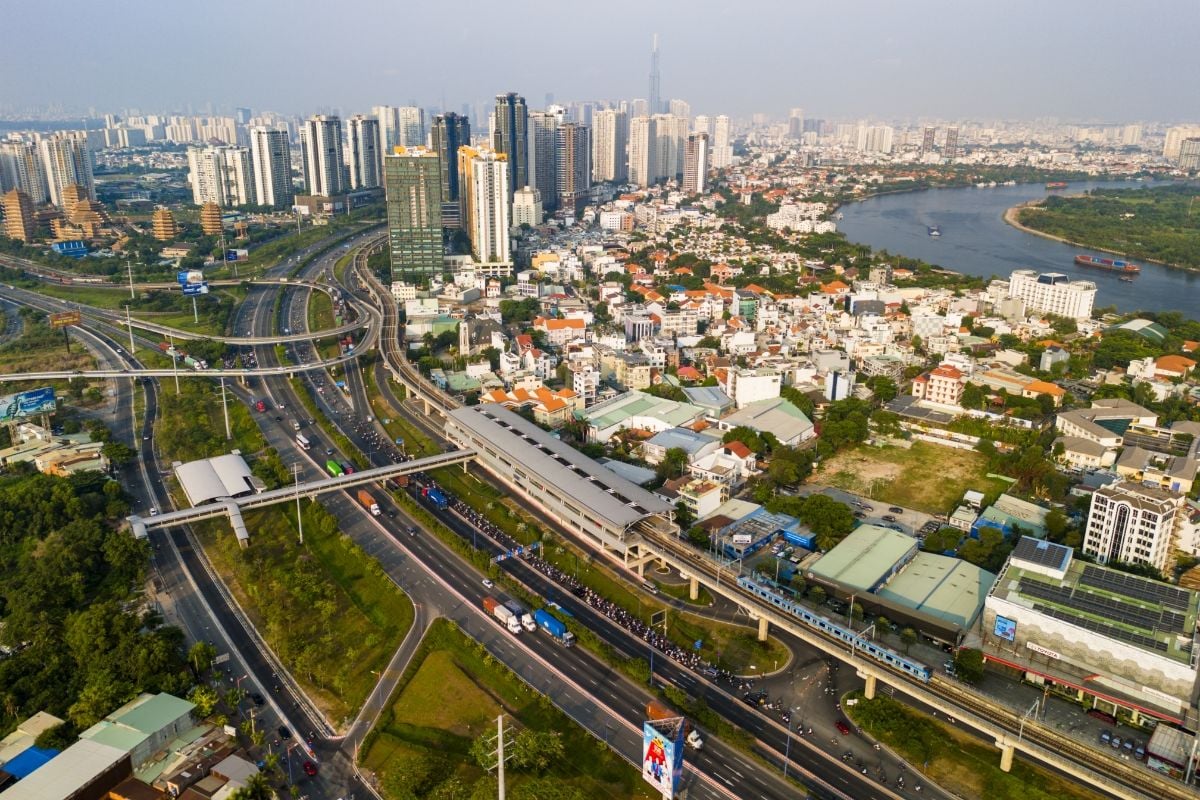
East Ho Chi Minh City is evolving into a new strategic center, with infrastructure and sustainable development expected to contribute about 30% of the city’s GDP.
In the 1960s–1970s, the southern Han River area of Seoul was close to a rural suburb, while the economic and administrative core was located entirely to the north. The Korean government then made a pivotal decision to designate Gangnam as the new urban core, relieving the old center and restructuring the city’s spatial development.
The “Gangnam Miracle” framework was implemented on three pillars: connectivity, a driving axis, and diffusion. Bridges across the Han River were built, Teheran-ro emerged as the financial–tech spine, and the metro network expanded to link directly to the old CBD. After four decades, Gangnam rose as a symbol of the “Han River Miracle,” contributing about 25% of Seoul’s GDP while occupying less than 3% of its area.
If Gangnam took 40 years to form, Shanghai’s Pudong took 30 years to surge ahead. Development began with river-crossing bridges over the Huangpu River, followed by Pudong International Airport, a modern metro system, and the Lujiazui financial district. Although Pudong accounts for only one-fifth of Shanghai’s area, it contributes about 30% of the GDP for the region.
Today, Ho Chi Minh City is pursuing a similar path with the East. The development story begins with solving the river-crossing challenge through the Thu Thiem tunnel, then continues with upgrades to the Hanoi–Mai Chi Tho–Vo Chi Cong route, the Ho Chi Minh City–Long Thành–Dầu Giây expressway, and Metro Line 1.
Projects including An Phú Interchange, Mỹ Thủy, and Beltway 3 are officially completing in 2026. The upgrades are positioned as a double lever—easing pressure on the core while laying groundwork for a new growth pole for the metropolis.
Masterise Homes, the internationally known real estate developer, has left a clear imprint on the East. Through systematic, long-term development, it is helping elevate the area toward a global living standard, drawing a refined, cosmopolitan community and emphasizing sustainable urban values.
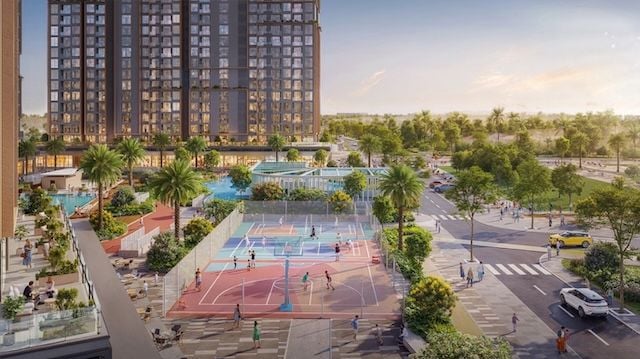
Masteri Thao Dien, Masteri An Phú, and LUMIÈRE Riverside are among the projects with metro lines passing through. As demand grows for deeper and more aesthetic living spaces, the LUMIÈRE Series—comprising LUMIÈRE Riverside and LUMIÈRE Boulevard—aims to align the East with a green-living ethos seen in globally developed cities.
The East’s prominence in luxury living is reinforced by The Global City, a 117.4-hectare international city project by Foster + Partners in central Ho Chi Minh City. It is designed with a people-centric urban philosophy and has become a venue for cultural, entertainment, and lifestyle events of high caliber.
The East’s luxury real estate profile is further underscored by The Rivus, a project featuring rare feng shui positioning—“Song long hí châu – Minh đường tụ thủy”—offering private, expansive riverside living and a balanced, refined lifestyle.
From Masteri Collection and the LUMIÈRE Series to The Global City and The Rivus, each project is presented as a milestone in the East’s evolution. Together, they reflect Masterise Homes’ approach to delivering high-end, distinctive, and sustainable living spaces in a megacity that is rapidly advancing on the world stage.


Premium gym chains are entering a “golden era” that is ending or already in decline, as rising operating costs collide with shifting consumer preferences toward more flexible, community-based ways to exercise. Long-term memberships are shrinking, margins are pressured by higher rents and facility expenses, and competition from smaller, more personalized…




