•
•
•
•
•
•
•
•
•
•
•
•
•
•
•
•
•
•
•
•
•
•
•
•
•
•
•
•
•
•
•
•
•


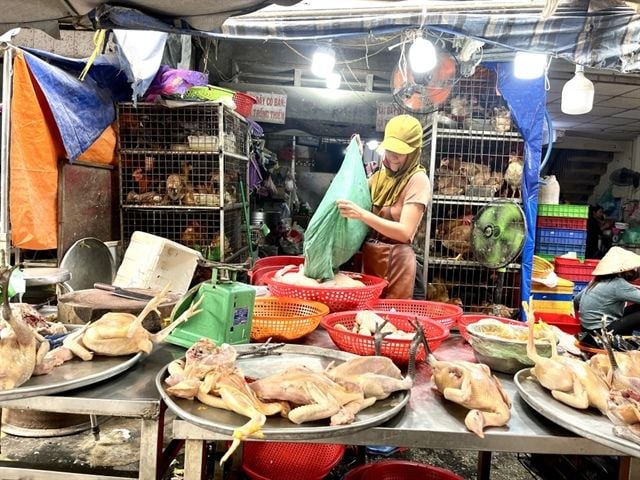
Egg prices at farm gates are currently 1,100 to 1,300 dong per egg, while the production cost of modern industrial poultry farming is 1,600 to 1,650 dong per egg or higher. With input costs rising and output prices staying low, Vietnam’s poultry sector is facing severe financial pressure, according to the Vietnam Poultry Association.
Nguyen Thanh Son, President of the Vietnam Poultry Association, said domestic poultry production is under serious pressure. He pointed to global feed price increases of 10–15%, with expectations that they could continue rising by 20–25%. Supply chain disruptions have also pushed transport costs higher; some firms reported transport costs rising by about 2 billion dong over two months compared with the same period.
Son added that Vietnam’s poultry market is facing stronger competition as Middle East demand weakens. Major exporters including the United States, Mexico and Brazil are shifting toward Vietnam, intensifying pressure on local producers.
Oversupply has further worsened the situation. Son said the sector saw rapid expansion late last year, leading to an oversupply that has kept egg prices at a level far below production costs. Even large producers with millions of eggs per day are struggling, while consumption of meat and eggs is trending downward. “If difficulties persist, producers of eggs and white- and colored-feather chickens may not be able to survive,” Son said.
To respond, the association has held meetings with major egg producers and other units to agree on countermeasures.
Son said coordinated implementation of these measures would help address current difficulties driven by low meat and egg prices.
From a government perspective, Deputy Director Pham Kim Dang of the Department of Animal Husbandry and Veterinary said the industry’s main challenge is input costs due to reliance on imported feed ingredients. Corn and other feed ingredients account for 60% to 70% of production costs.
He said earlier strategies to expand domestic feed production by 2020 did not expand acreage because domestic corn could not compete with imported corn. He also cited differences in scale and technology: foreign exporters often operate on large tracts with advanced technology and automation, ensuring stable quality, while Vietnamese production remains fragmented.
In the sector’s development plan for 2021–2030 with a vision to 2045, three main directions were identified:
The sector is building an “Export Project for the Agricultural-Ecosystem” aimed not only at trading products but also at promoting foreign investment. The article cited Thailand’s experience, including CP’s approach of maintaining a domestic hog herd under 10 million head for a decade while expanding abroad to optimize resources and markets.
Vietnamese authorities are also working to support Vietnamese firms investing in neighboring countries, particularly Laos and Cambodia. The article cited examples including TH Group’s investment in Russia and Vinamilk’s expansion to New Zealand as signals of potential for Vietnamese enterprises globally.
To implement the strategy, Vietnam needs an overarching investment plan focused on supporting the construction of input-material plants abroad to ensure supply and improve competitiveness across the agricultural ecosystem. The article also noted that Omix and other firms are moving forward with exports.
Export of feed additives has begun to show positive results, reaching about 1.6 million USD, while animal-feed products exceeded 600 million USD. The article said the additive segment has lower production costs, lower land-use requirements, and a smaller environmental impact.
Premium gym chains are entering a “golden era” that is ending or already in decline, as rising operating costs collide with shifting consumer preferences toward more flexible, community-based ways to exercise. Long-term memberships are shrinking, margins are pressured by higher rents and facility expenses, and competition from smaller, more personalized…