Short-term trend outlook: an expert warns that the
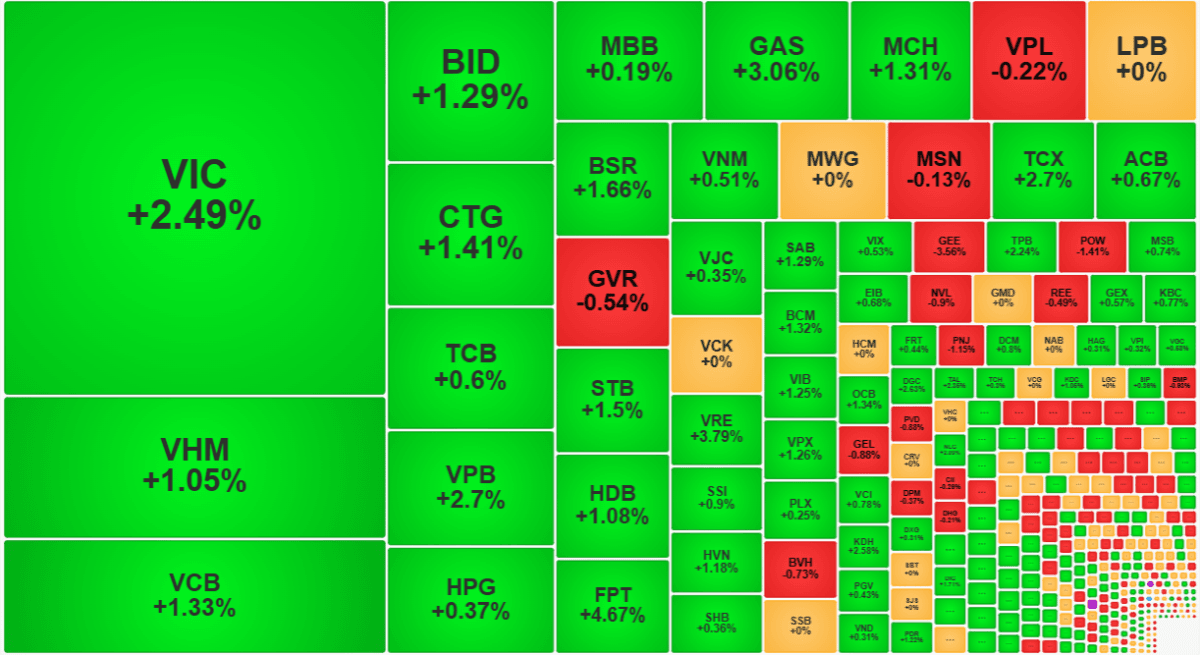
VN-Index is likely to continue fluctuating in a narrow range, with support around 1,650 to 1,675 points and resistance at 1,700 to 1,720 points. In addition, in terms of valuations, Mr. Tam notes the VN-Index is currently trading with a trailing P/E of about 13.7x, equivalent to a forward P/E for 2026 of over 12x. In the short term, the index is expected to remain within a tight band around 1,650–1,675 with resistance at 1,700–1,720. The expert says the market can only confirm a solid bottom when tensions in the Middle East, the most important variable right now, show more positive signals such as a ceasefire or progress in negotiations. Nevertheless, according to TVS, Vietnam’s stock market still has many mid-term supportive factors. Notably, the aim to boost economic growth with GDP expected around 10% annually, along with the story of market upgrading that could attract more international capital in the near future.
Which stock groups are signaling balance?
Looking at money flow, the expert says the oil and gas group, which previously led the market, is temporarily losing its leadership and may need more time to find a new balance. Meanwhile, the fertilizer group—including Ca Mau Fertilizer and Phu My Fertilizer—continues to rise thanks to global urea prices, but profit-taking pressure has appeared and holding these stocks should be short-term.
On the other hand, several sectors that had declined sharply since late 2025 are showing signs of balance and recovery, notably the infrastructure construction group with Vinaconex, Deo Ca Infrastructure Investment, and housing real estate groups such as Khang Dien House, Novaland, and Dat Xanh Group. However, these groups still need more time to break through resistance levels formed in previous months. The banking sector also shows clear dispersion, with Sacombank being one of the few stocks still attempting to sustain an uptrend.
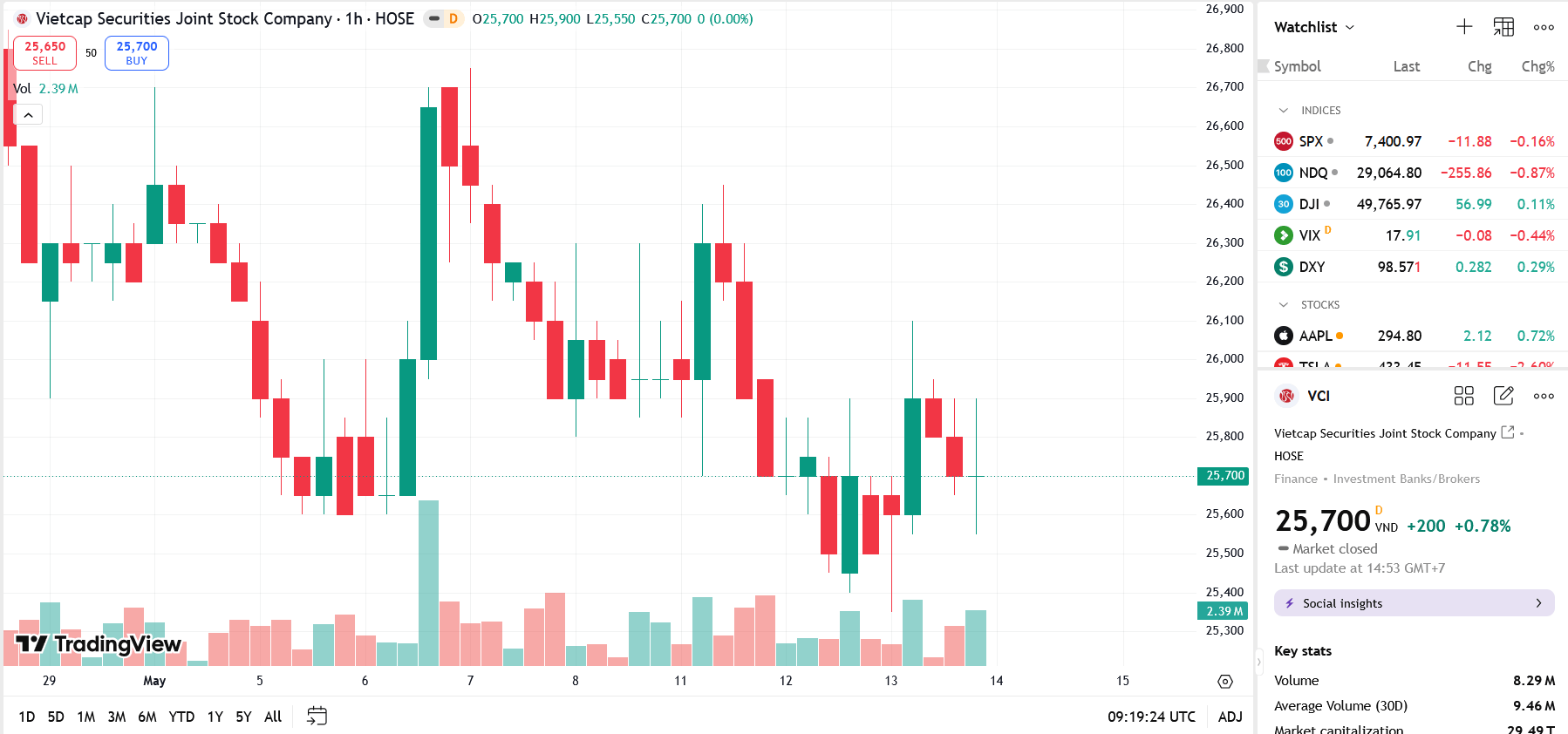
Meanwhile, the stock market sector, typically acting as the market’s “sentiment anchor,” is correcting as VN-Index discounts over the past two weeks and liquidity declines. Yet, in TVS’s view, this remains a notable mid-term lever due to potential gains if the Vietnamese stock market is upgraded.
Regarding investment strategy, Mr. Tam advises investors to stay cautious amid ongoing volatility. For those already holding stocks, portfolio allocation should be kept at a maximum of about 60%, prioritizing stocks with low cost bases, still maintaining an uptrend or showing relatively strong relative strength when the market corrects. For investors with a high cash ratio, deployment should be incremental during market swings, focusing on companies benefiting from growth policies, the market upgrade story, and companies expected to report positive earnings in 2026.