•
•
•
•
•
•
•
•
•
•
•
•
•
•
•
•
•
•
•
•
•
•
•
•
•
•
•
•
•
•
•
•
•
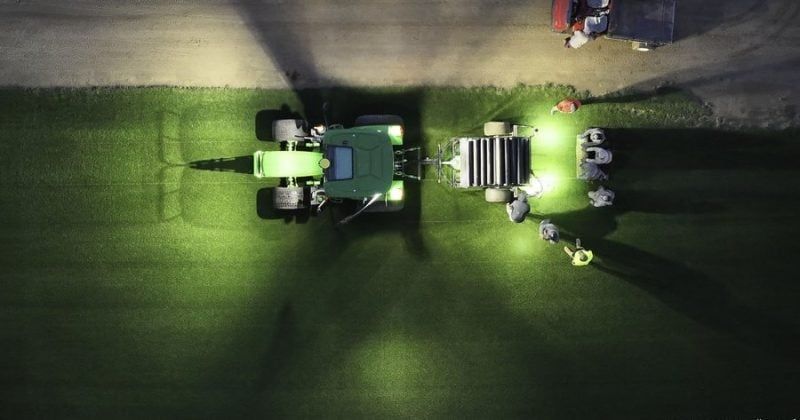
FIFA has a literal grass problem for the 2026 World Cup. The tournament will be played across 16 stadiums in North America, and every venue needs natural grass. Eight of those stadiums typically use artificial turf, forcing scientists and engineers to develop ways to grow, transport, and maintain real turf in facilities that were not originally designed for it.
The figure of $4 billion that has circulated in some coverage is described as misleading. FIFA’s total financial commitment to the 2026 World Cup is reportedly $3.8 billion, covering areas such as broadcasting rights, stadium operations, and logistics for 104 matches across three countries. Within that broader spending, the grass initiative is characterized as expensive and technically complex, but priced in the “millions” rather than at the scale of the overall tournament commitment.
Natural turf is mandatory for World Cup matches, creating an engineering challenge for venues built for other uses, including American football and synthetic surfaces, as well as stadiums with retractable roofs or fully enclosed domes.
John Sorochan, a turfgrass scientist at the University of Tennessee, is overseeing the grass growth and maintenance efforts. His team, working with researchers from Michigan State University, has spent several years developing turfgrass varieties intended to thrive across very different climates. The article cites the need to adapt to conditions ranging from Miami’s humid environment to Toronto’s cooler temperatures and the thinner air near Denver, meaning each stadium may require a tailored grass solution.
Sod farms across North America, including facilities near Denver, are growing grass specifically for the tournament. The plan is for the grass to be cut, rolled, transported, and installed in stadiums that may need to remove existing artificial surfaces shortly before kickoff.
For domed stadiums, the challenge is compounded by the lack of sunlight. Because grass requires light, the article points to the use of innovative grow-light systems to keep turf alive and healthy in enclosed environments.
The turfgrass research is not limited to surviving the 2026 World Cup. The varieties being developed are intended to handle extreme heat, limited sunlight, heavy foot traffic, and rapid installation timelines.
The tournament spans the US, Canada, and Mexico, and will feature an expanded 48-team format. It also requires converting eight artificial-turf stadiums into natural grass pitches that meet FIFA’s standards.
FIFA’s reported $3.8 billion commitment represents a major increase compared with previous tournaments, with spending distributed across infrastructure, operations, prize money, and grass. The article also states there is no indication that crypto-related assets or tokens are involved in the project.
For host cities and stadium operators, the process of removing artificial turf, installing natural grass, maintaining it during the tournament, and potentially reverting back to synthetic surfaces afterward involves costs that fall partly on local organizers.