•
•
•
•
•
•
•
•
•
•
•
•
•
•
•
•
•
•
•
•
•
•
•
•
•
•
•
•
•
•
•
•
•
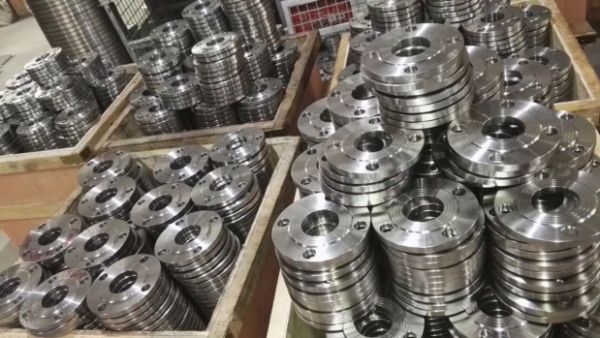
Vietnam ranks third among suppliers of stainless steel flanges to the United States, a market that remains attractive thanks to heavy infrastructure investment and a shift toward higher-strength materials. However, exporters face heightened trade defense scrutiny, including warnings of anti-dumping and potential anti-circumvention investigations.
In 2023, total US imports of stainless steel flanges from all sources reached $218 million. Vietnam accounted for about $21.4 million, or roughly 9.8% of market share. While the leading suppliers were India, Korea and Italy, Vietnam’s presence reflected meaningful production and export capacity.
In 2024, the market declined: total US imports fell to $185.7 million. Vietnam’s export value dropped by 42.3% to $12.3 million, reducing its share to 6.6%. The article notes this downturn was temporary.
In 2025, the market recovered. Total US imports rose to $205.6 million, while Vietnam’s exports increased to $18 million, lifting its share to 8.7%.
In the first two months of 2026, Vietnam exported $1.8 million, down 37% from $2.9 million in the same period of 2025. Despite the decline, Vietnam remained the third-largest supplier to the US during this period.
The US Trade Defense Agency has issued warnings that stainless steel flanges are high-risk and may be subject to trade defense investigations or anti-circumvention investigations.
A key driver is that the US applies stringent anti-dumping duties on stainless steel flanges imported from China and India. This creates pressure for US authorities to monitor neighboring countries and major trading partners to ensure goods are not routed through third countries or subcontracted in ways that could allow products from duty-affected origins to enter the US at lower prices.
To reduce exposure to anti-dumping and anti-circumvention actions, the US Trade Defense Agency emphasizes that Vietnamese firms should build a trade defense approach early rather than responding only after lawsuits arise.
The agency recommends particular attention to the origin of materials. Using main inputs imported from China and India to produce flanges exported to the US is described as a major risk that could trigger anti-dumping claims. The article frames strict compliance with origin rules as both a legal requirement and a “lifeline” for enterprises.
Firms should tightly control export activities to avoid engaging in price competition that could trigger dumping investigations.
Exporters should regularly monitor market developments, export volumes and market share changes to detect unusual signs promptly.
Building a transparent and standardized accounting system aligned with international practices is described as mandatory. The article notes this system can serve as key evidence for US investigators to demonstrate market-economy operations and the absence of illegal subsidies.
Rather than competing primarily on price, exporters are advised to invest in technology, improve quality and build a brand to compete on value. The article also recommends diversifying markets to reduce dependence on a single destination, distributing risk if anti-dumping measures are applied in a specific region.
The US Trade Defense Agency recommends that firms cooperate closely with regulators and industry associations. If there are signs of an investigation, exporters should actively participate in all steps of the process and consider hiring experienced legal consultants to protect their legitimate interests.
Premium gym chains are entering a “golden era” that is ending or already in decline, as rising operating costs collide with shifting consumer preferences toward more flexible, community-based ways to exercise. Long-term memberships are shrinking, margins are pressured by higher rents and facility expenses, and competition from smaller, more personalized…