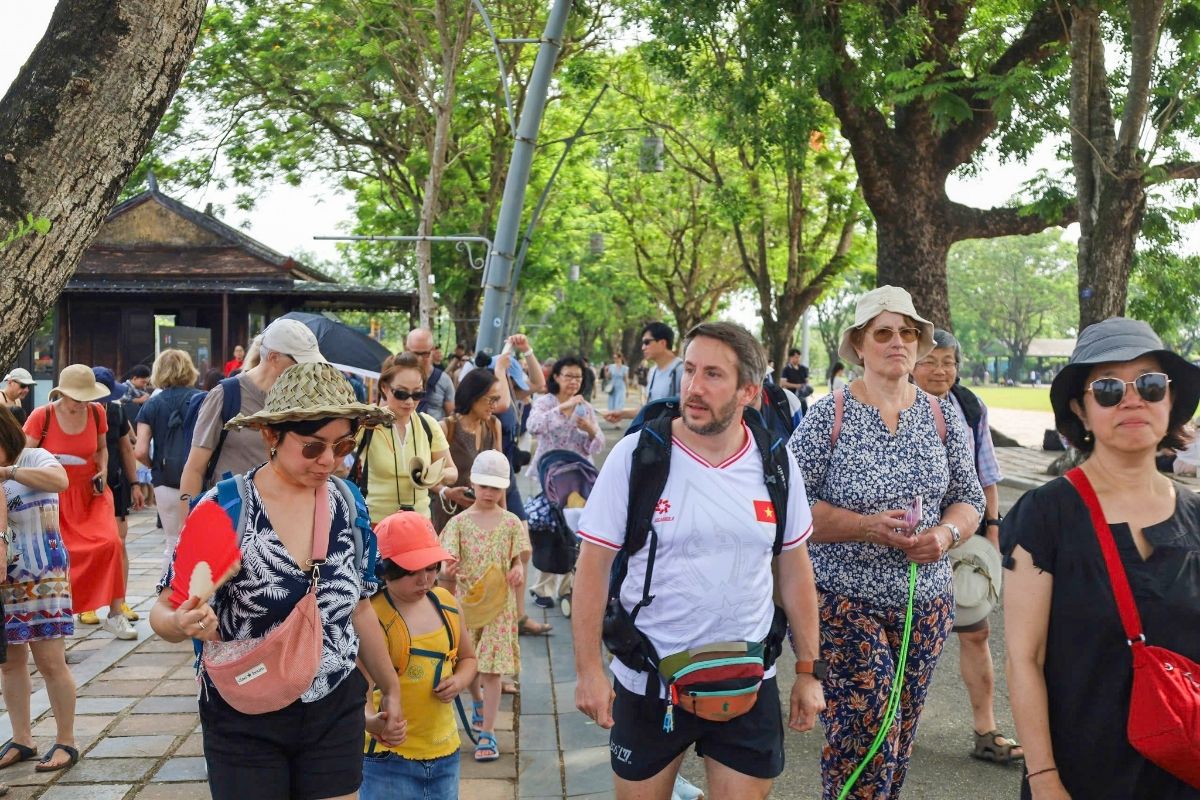
The trend toward flexible travel is being driven by travelers who increasingly design their own itineraries, from finding flights and booking accommodations to selecting experiences that match their preferences. This shift is changing the travel market’s product structure and how consumers make booking decisions.
Flexible itineraries have gained momentum as travelers seek to optimize costs amid rising airfares, hotel rates, and living expenses. In this context, many travelers prefer to plan and book services themselves rather than rely on pre-packaged tours.
According to Booking.com’s Travel Trends 2026, as many as 74% of Vietnamese travelers prefer to build their own itineraries, even though preparation requires time and effort. Among them, 63% say they want to plan and book services directly instead of handing the work to someone else or following off-the-shelf programs.
In response, tour operators are increasingly using data systems to tailor itineraries to different customer segments. Online tools such as chatbots are also being used to provide faster guidance and improve service processes.
The shift toward self-directed planning has also supported growth in “free & easy” travel combos that bundle air tickets and hotels, offering more freedom to explore compared with traditional fixed tours.
At the Vietnam International Travel Fair (VITM) 2026, demand for free & easy combos (air ticket and hotel packages) accounted for about 15% of orders, indicating a clear change in consumer behavior. Surveys from major online travel platforms such as Booking, Traveloka, Agoda, and others also reflect this trend.
Key figure: 74% of Vietnamese travelers prefer to build their own itineraries.
During the holiday period of April 30–May 1, Vietluxtour’s Communications and Marketing Director, Ms. Tran Thi Bao Thu, said there was a rising trend of customers choosing free & easy travel combos, especially among younger travelers. She cited two main drivers: growing demand for personalized experiences and cost pressures pushing travelers to optimize budgets, particularly for destinations accessible by car such as Nha Trang, Da Lat, Phan Thiet, and western provinces.
Viking Travel’s CEO, Mr. Tran Xuan Hung, said travel demand among Vietnamese customers in both domestic and international markets was relatively lively during the summer of 2026. He noted that many travelers are willing to spend substantial sums—from hundreds of millions to billions of VND—on distinctive experiences, high-quality services, and itineraries with a strong personal imprint.
For domestic travelers, private tours for groups of 80–200 people have been booked, often by car and combining multiple types of experiences. At the same time, the industry is seeing a decline in group tours as many workers choose to support travel with their families rather than join mass tours. This is pushing the market toward smaller, more flexible, self-reliant travelers.
Beyond traditional resort trips, groups increasingly favor trekking, mountaineering, forest trekking, adventure travel, or exploring new destinations in the Northeast, Northwest, and Mekong Delta. The market has also seen exploratory products such as helicopter tours combined with river cruising to explore Ho Chi Minh City, tours to Sơn Đoòng Cave (Quảng Bình), forest trekking in Ta Nang – Phan Dũng (Lâm Đồng – Bình Thuận), and cloud-chasing at Ta Xùa, Lảo Thận, and Fansipan in the Northwest.
Vietravel’s Director of the Northern Retail Center, Mr. Phạm Văn Bẩy, said that during this summer peak, products such as Caravan (self-drive trips), Signature, Young, and the New Generation lines are attracting considerable interest. He said this reflects a shift from “sightseeing” to “experiencing,” emphasizing local culture and reducing environmental impact.
To serve families seeking beach holidays in summer, Vietravel reduced a 4 days/3 nights Vietnam Airlines combo by 20% at 4-star hotels in Quy Nhon, Da Nang, Phu Quoc, and Nha Trang. The Signature product is positioned as a premium combo tour line for clients seeking unique experiences at 5-star resorts, with bookings mainly for small groups of 2–4 people.
The flexible travel trend is also being reinforced by digital platforms. Younger travelers search for and compare tours via social media and deal-hunting groups.
BestPrice Travel’s Marketing Director, Mr. Bui Thanh Tu, said the trend among younger travelers is driven by the need to optimize costs amid rising airfares, hotel rates, and living expenses. He added that young travelers no longer prioritize traditional premium tours; instead, they favor flexible packages, good value, numerous incentives, and options aligned with their personal budgets. Autonomy also plays a role, with young travelers tending to choose compact tours or combos over long, fixed itineraries so they can adjust schedules more easily.
He also noted that travelers now spend less time at shopping stops and more time learning about local culture and discovering distinctive features of each destination. Companies are launching personalized product packages that allow flexible adjustments for different groups, a trend described as growing strongly worldwide and in Vietnam.
Experts said promotions remain a major lever in booking decisions. Discounts of 10–30%, dining vouchers, complimentary room upgrades, or flash sales during “golden hours” often prompt younger travelers to finalize purchases quickly. Early-bird offers to lock in favorable prices are also being used by many firms.
Despite the growth in flexible travel, experts advised travelers to choose operators with official websites, transparent information, and valid travel licenses. They also cautioned against transferring money to unclear personal accounts. “Travelers should read terms of cancellation, surcharges, and, in particular, beware of tours priced unusually low compared with the market,” the expert said.