•
•
•
•
•
•
•
•
•
•
•
•
•
•
•
•
•
•
•
•
•
•
•
•
•
•
•
•
•
•
•
•
•


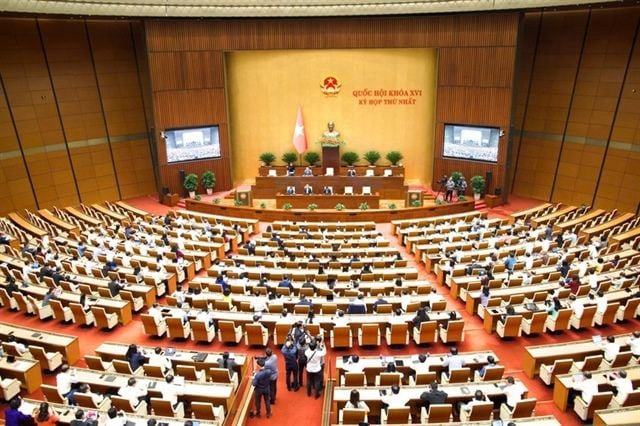
Parliament has approved a resolution on environmental tax, value-added tax, and excise tax for gasoline, diesel, and aviation fuel, while delegating to the Government the authority to actively manage how the measures are implemented. The decision is framed as significant beyond a routine fiscal adjustment.
With global energy prices fluctuating rapidly and unpredictably, maintaining a fixed tax rate over a long period may not match market dynamics. By granting flexible authority to adjust the timing, magnitude, and duration of the policy, the Government can operate a mechanism more aligned with real-world conditions.
What stands out is not only the tax reductions themselves, which have been used during difficult periods, but the structure of the policy this time. Parliament did not lock the measures into detailed regulations. Instead, it established principles and delegated flexible operating authority to the Government.
The delegation is described as more than decentralization: it authorizes executing agencies to respond in real time. This is intended to reduce the lag between market volatility and policy adjustment, a factor considered increasingly important.
The article links the need for flexibility to broader challenges where practice can move faster than policy frameworks—citing the digital economy, artificial intelligence development, and rapid swings in trade and logistics.
The challenges highlighted in the fuel-tax policy are presented as evidence that policymaking needs a new approach. The article argues for moving from a static, fixed-policy mindset to a dynamic, adaptive policy mindset, and further toward building a government with higher adaptability.
The article says these directions align with the Party and Government’s emphasis on improving execution capability and building a more effective, efficient administration that serves citizens and businesses better.
In the new context, the article argues that operating capacity should not be measured by the number of policies issued, but by how effectively policy outcomes are realized. It also notes the Prime Minister’s view that the system should be fast and timely while remaining thorough and effective.
The fuel-tax policy is presented as a notable example of a broader direction: rather than trying to control every fluctuation through rigid regulations, the policy system is designed to adapt to changing circumstances. The article suggests this could evolve into a guiding principle for modern national governance.
In a high-uncertainty world, it argues that countries able to adapt policy more quickly to practical conditions may gain strategic advantages. It concludes that all policies should aim to serve people and businesses better.
TS. Nguyễn Sĩ Dũng
Baoh Chinh Phu
06:02 22/04/2026

Premium gym chains are entering a “golden era” that is ending or already in decline, as rising operating costs collide with shifting consumer preferences toward more flexible, community-based ways to exercise. Long-term memberships are shrinking, margins are pressured by higher rents and facility expenses, and competition from smaller, more personalized…