•
•
•
•
•
•
•
•
•
•
•
•
•
•
•
•
•
•
•
•
•
•
•
•
•
•
•
•
•
•
•
•
•


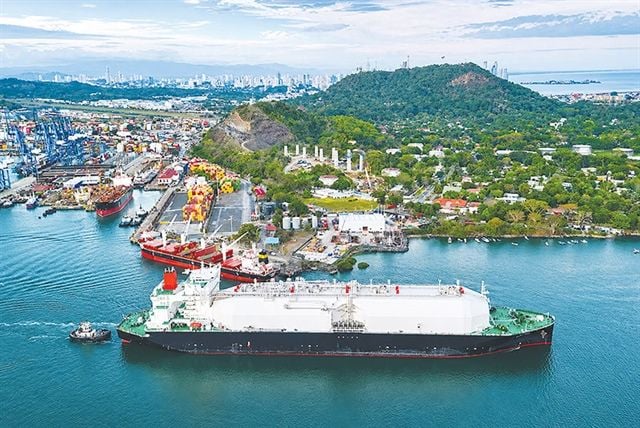
Tensions at the Hormuz Strait are rattling energy markets and spreading to other strategic sea lanes, including the Panama Canal, pushing global shipping into a period of deep and unpredictable volatility.
Recent developments around the Panama Canal indicate the route is rapidly becoming a hotspot in competition between major powers. On April 28, the United States and several Latin American and Caribbean countries accused China of “deliberate economic coercion” and actions “affecting Panama-flag vessels,” calling it “a brazen attempt to politicize maritime trade and infringe the sovereignty of regional states.”
Data cited by international maritime research organization Loadstar show a rise in irregular activity involving Panama-flagged ships. Loadstar analyzed records from 22 Asia-Pacific maritime authorities and found that Panama-flag vessels accounted for 91 of the 123 ships detained for inspection by Chinese port authorities in March.
In February, China detained 45 ships in total, including 19 Panama-flagged vessels. The US Federal Maritime Commission also said Panama-flag detentions have spiked to levels above historical norms.
China rejected the accusations, saying inspections were “in compliance with legal regulations,” and countered that the US “politicizes and securitizes port issues.” A Chinese Foreign Ministry spokesperson said: “It is the United States that has politicized this issue and spread misinformation.”
The tensions trace back to a January decision by the Panamanian Supreme Court to cancel nearly three-decade concessions of Hutchison Port Holdings (Hong Kong-based) covering the Balboa and Cristobal ports. The move was widely seen as occurring under pressure from Washington to curb Beijing’s influence on the strategic shipping lane. Panama’s President Jose Raul Mulino said the country is “being swept along by the tide of the confrontation between the two powers.”
The Panama Canal’s heightened significance is unfolding alongside heavy pressures on global shipping from the Hormuz Strait crisis, one of the world’s most critical energy chokepoints. The conflict that erupted in late February disrupted the route, which handles about one-fifth of global oil and LNG flows in peacetime.
Reports indicate around 2,000 vessels are currently congested at either end of the strait, while many others have been attacked, seized, or subjected to tight movement controls. Escalating retaliations have pushed crude oil and natural gas prices to multi-year highs.
In this environment, the Panama Canal has emerged as an alternative route for global energy flows, particularly for US crude shipments to Asia. Canal throughput rose from about 34 ships per day at the start of the year to around 50 ships per day in the recent period. US crude throughflow via the canal reached its highest in four years, exceeding 200,000 barrels per day.
Operating costs have also increased sharply. Last-minute passage bookings through the canal nearly tripled, from about $135,000–$140,000 before the conflict to around $385,000, with some shipowners paying as much as $4 million to secure priority passage.
The head of the Panama Canal Authority said energy products are playing an increasingly important role in the canal’s throughput. However, even as Panama helps absorb some demand, it can function only as a supplementary “pressure relief valve” due to limits on ship size and infrastructure. Current crude throughflow via the canal is about 2.3 million barrels per day, roughly one-tenth of Hormuz’s 20.9 million barrels per day.
What is unfolding at Hormuz and Panama reflects a wider trend: strategic maritime chokepoints worldwide are being pulled into geopolitical competition. Experts say the international maritime legal framework remains central to routine trade, but the number of disruptions is rising and is becoming a key risk driver.
In the Black Sea, Russia’s restrictions on Ukrainian exports contributed to a global food-supply shock, illustrating how naval power can be used to exert economic pressure beyond direct conflict. In the Red Sea, Houthi attacks have forced rerouting via the Cape of Good Hope, significantly increasing costs and transit times.
In the Malacca Strait, a proposal by Indonesian Finance Minister Purbaya Yudhi Sadewa to levy transit fees—quickly withdrawn—raised concerns. The proposal was described as “inspired by Iran” due to charges applied at Hormuz.
The “Hormuz effect” highlights a shift in how maritime transport is governed. Elisabeth Braw, Senior Fellow at the Atlantic Council, said: “We have not seen oceans as chaotic and dangerous since nations established maritime rules.”
The World Trade Organization estimates that over 80% of global trade is moved by sea, underscoring the system’s vulnerability to shocks. Jean-Paul Rodrigue, Professor at Texas A&M University, said disruptions have become more structured and strategic in recent years, and that changes in the scale, container volumes, and ship sizes of the global fleet have altered risk dynamics.
Jack Kennedy, head of the National Risk unit for the MENA region at S&P Global Market Intelligence, said even when straits are not fully blocked, permit regimes and pressure can create huge costs and instability. He described an incident near Oman—where a container ship was attacked causing serious damage—as “an example of calculated force used to signal control without fully halting traffic.”
Disruptions are spreading across the transport system as vessels divert routes, consume more fuel, and extend delivery times. Insurance costs and conflict risk are rising, while compliance procedures become more complex. Even short inspections can trigger contagion effects, disrupting schedules and shipping contracts.
Kennedy warned that the bigger risk is precedent: “The risk is the precedent set when many countries test limits—via licensing, selective enforcement, or fees through international straits. In that case, outcomes will depend more on negotiation and power.”
At the systemic level, businesses and governments are adjusting. Professor Abdul Khalique of Liverpool John Moores University said parties have “diversified supply chains, adjusted risk premiums, strengthened naval coordination, and invested in alternative routes,” while noting these steps reflect expectations of prolonged geopolitical volatility.
From Hormuz to Panama, maritime chokepoints are being drawn into power competition among great powers, changing how global trade operates. As common rules are challenged and new precedents form, maritime transport faces higher costs and a structurally uncertain era.
Premium gym chains are entering a “golden era” that is ending or already in decline, as rising operating costs collide with shifting consumer preferences toward more flexible, community-based ways to exercise. Long-term memberships are shrinking, margins are pressured by higher rents and facility expenses, and competition from smaller, more personalized…