•
•
•
•
•
•
•
•
•
•
•
•
•
•
•
•
•
•
•
•
•
•
•
•
•
•
•
•
•
•
•
•
•
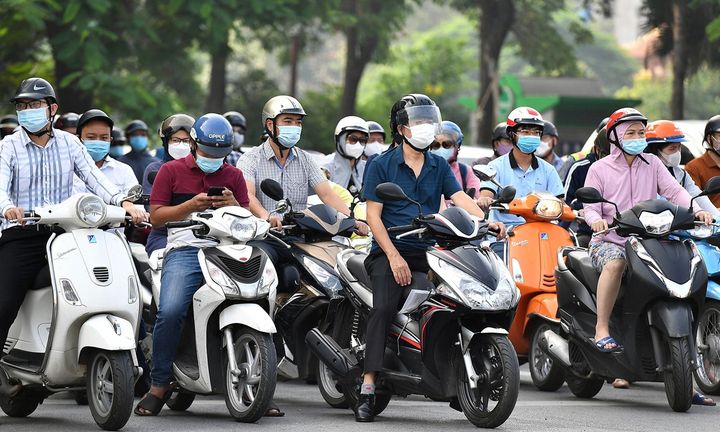
A survey conducted by Hanoi’s Urban Development Department and the Hanoi City People’s Council reported on parking lots and the shift to green transportation across the city. The survey found that the number of electric vehicles remains negligible overall, though some wards have started to see increases.
In the nine wards within Ring Road 1, the distribution of vehicles shows that gasoline-powered motorcycles account for 94% to 97% of motorcycles. Gasoline-powered cars make up 75% to 80% of total vehicles.
Electric vehicles remain limited. Electric motorcycles have appeared in these areas, but their numbers are roughly in the range of 1,000 to 3,500 vehicles per ward. Overall, motorcycles continue to rely almost entirely on gasoline, with a low conversion rate to electric vehicles. However, the number of electric vehicles in wards Hai Bà Trưng, Hoàn Kiếm and Tây Hồ has begun to increase, suggesting an early shift in the trend.
Gasoline-powered cars dominate in all wards, typically accounting for about 75% to over 80% of total vehicles. Diesel-powered cars account for a notable share, ranging from about 15% to over 40%, with Cửa Nam ward showing a particularly high share of diesel vehicles.
Electric vehicles are present in all wards but remain limited, at approximately 2% to 6% of total vehicles. Hybrid vehicles are described as almost negligible.
Based on directives from the City Party Committee and the City People’s Committee, the Department of Construction has prepared a draft resolution and is seeking opinions from relevant agencies (third iteration). The draft sets standards for vehicles operating in low-emission areas and satellite urban areas, and proposes solutions to encourage residents to switch vehicles, including financial incentives and parking-related measures.
The draft resolution also proposes policies to promote large-scale public transport use in Hanoi, including free fares for:
It also proposes free fares on national holidays, holidays, and special occasions of the country or the city.
The report links these measures to social welfare objectives and expects them to help encourage public transport use. By providing free fares for students, pupils, and industrial workers, the policy is intended to incentivize a shift away from personal motorcycles toward public transport, supporting efforts to reduce environmental pollution and accelerate the transition to green transportation.
In addition to public transport incentives, the draft resolution proposes other measures to support the shift to green vehicles, including direct cash support for motorcycles and waivers of registration and license plate fees for green transportation vehicles. The Department of Construction is leading the process and collecting input from relevant agencies to finalize the draft resolution.

Premium gym chains are entering a “golden era” that is ending or already in decline, as rising operating costs collide with shifting consumer preferences toward more flexible, community-based ways to exercise. Long-term memberships are shrinking, margins are pressured by higher rents and facility expenses, and competition from smaller, more personalized…