Gold and silver prices have swung sharply: the winner over the ten-year period is not the person who correctly guessed the price. Over the decade, the winner is the investor who sticks with a disciplined asset-allocation strategy, maintains a long-term perspective, and remains resilient amid short-term volatility.
According to The Economic Times, the gold and silver markets experienced a hot rally followed by a sharp correction in 2026. This volatility was driven by profit-taking after a strong upcycle, a stronger U.S. dollar, uncertain policy-rate trajectories, and global geopolitical tensions, causing many short-term traders to chase peaks and cut losses.
However, the common view among experts is that this is not a sign of a structural crisis, but a natural cycle adjustment in the commodities market.
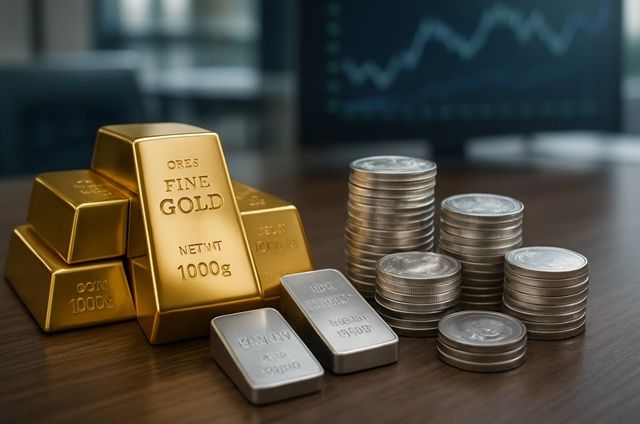
In this environment, gold and silver continue to hold a special role in the global financial system: they function both as safe-haven assets and as long-term investments capable of delivering returns.
Nevertheless, accompanying this appeal are periods of strong price moves that have left many investors uncertain about direction. The challenge is to make gold and silver assets less vulnerable to market swings over a 5–10 year horizon.
10-year review: Gold remains a 'pillar', silver a 'lever'
One notable point is the clear long-term differentiation between gold and silver. Gold is viewed as a defensive asset that benefits from central-bank demand and the role of maintaining value during crises.
Silver is more cyclical, highly influenced by industrial demand such as solar energy, electric vehicles, and electronics.
Analysts say silver could outperform in the next five years thanks to the 'green industrial' narrative, as it is an essential material for solar panels, electric vehicles, electronics, and renewable energy infrastructure. As the green energy transition accelerates, industrial demand for silver grows accordingly.
Meanwhile, gold is considered relatively more stable over a 10-year horizon, acting as a durable store of value. In other words: silver offers growth potential, gold provides asset preservation.
A key message from experts is to avoid trying to 'catch the bottom' for gold or silver. In reality, both metals can swing 10–15% within a single cycle. Waiting for the lowest price often causes investors to miss long-term uptrends.
Instead, a phased accumulation strategy is recommended. This approach helps to average cost, reduce the risk of buying at a peak, and aligns with a 5–10 year horizon.
Portfolio structure: Gold and silver should be a small component of the overall portfolio
Many experts argue the weights of the precious metals typically range around 5–15% of the total portfolio (including stocks, bonds, cash), depending on risk tolerance and investment goals.
A commonly recommended allocation varies by risk tolerance: for conservative investors, gold about 7–12% and silver 2–5%; for moderate, gold 10–12% and silver 5–8%; for higher risk, silver could be raised to 8–10% to seek growth opportunities.
The key point is not the absolute size of the allocation but the role they play: to dampen overall portfolio volatility during market downturns.
An interesting point emphasized by experts is the behavior of precious metals during periods of financial stress: markets tend to move in tandem, reducing diversification benefits. This suggests gold and silver are not absolute hedges, but they remain an important cushion that reduces portfolio drawdown.
In the long run, gold and silver are not suited for 'momentum trading.' Their greatest value lies in preserving purchasing power, balancing the portfolio, and capitalizing on long-term commodity uptrends.
Therefore, the effective approach is not to 'buy when markets are hot' or 'sell when panicking,' but to build a disciplined, steady accumulation over many years.
Tử Huy
[VietNamNet](https://vietnamnet.vn/gia-vang-bac-rung-lac-manh-nguoi-thang-sau-10-nam-khong-la-nguoi-doan-dung-gia-2514170.html)
- 10:24 11/05/2026