•
•
•
•
•
•
•
•
•
•
•
•
•
•
•
•
•
•
•
•
•
•
•
•
•
•
•
•
•
•
•
•
•


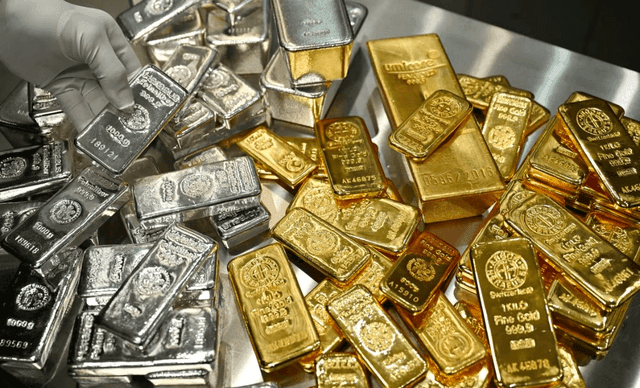
Gold prices have risen nearly 15% from the late-March trough, while silver has recovered more strongly, up over 30%—about double gold’s gain. On May 9, world gold prices traded above $4,700 per ounce, while silver traded above $80 per ounce. Analysts and major financial institutions say the upside potential for both metals has not ended.
The advance in gold and silver has been supported by signals that conflict in the Middle East could be winding down, with expectations that trade through the Hormuz Strait could resume. At the same time, the U.S. economy is showing signs of slowing, encouraging investors to seek safe-haven assets.
Bob Haberkorn, Senior Market Strategist at RJO Futures, said that if a ceasefire between the U.S. and Iran holds, the Middle East conflict could end and Hormuz Strait trade could reopen, potentially pushing gold toward $5,000 per ounce. He added that the market is also watching the path the Federal Reserve is considering.
Some analysts also argue that if Hormuz shipping returns to normal earlier, energy-related inflation pressure could ease. With signs that the U.S. labor market is cooling, they expect the Fed to have more room to consider rate cuts in 2026.
ADP’s private payrolls data showed the U.S. economy added 109,000 jobs in April, below the market expectation of 118,000 but higher than March’s 61,000. After the ADP release, the 10-year U.S. Treasury yield fell to around 4.3%, and the dollar weakened toward the 98 level as investors increased bets on a Fed rate cut later this year.
Separately, data show the People’s Bank of China bought more gold in April for the 18th straight month.
In the World Gold Council’s latest quarterly report on Gold Demand Trends for Q1 2026, total global demand exceeded 1,200 tonnes, up 2% year over year. Central banks bought a net more than 244 tonnes in Q1. Investment demand for gold bars and coins rose 42% year over year, led by China and India.
Amy Gower, Morgan Stanley’s metals and mining strategist, continues to hold a bullish view, forecasting gold around $5,200 per ounce by year-end—roughly 10% above current levels.
Gower said gold is particularly sensitive to changes in real yields and signals from Fed policy. If expectations for lower rates re-emerge, she noted that flows into gold from ETFs and institutional investors could continue.
The report also points to a shift away from the U.S. dollar, reflecting a broader trend toward de-dollarization as the U.S. remains a source of global instability. With gold and silver consolidating for more than a month, the precious metals market appears more stable after late-2025’s rally.
Alongside elevated energy prices, inflation risks may reassert safe-haven demand for gold and silver. The report also notes that industrial demand for silver could rise as AI development creates a new gap between supply and demand.
Local Vietnamese gold prices for 24K bars and jewelry were quoted at buy/sell of 164.5–167.5 million dong per tael. DOJI and Bao Tin Minh Chau jewelry were also quoted at 164.5–167.5 million dong per tael. Phu Quý and Bao Tin Minh Chau jewelry, as well as PNJ jewelry, were quoted lower at 164.3–167.3 million dong per tael.
Silver bars from Phu Quynh (Phú Quý) were quoted at 80.986–83.493 million dong per kilogram.
Premium gym chains are entering a “golden era” that is ending or already in decline, as rising operating costs collide with shifting consumer preferences toward more flexible, community-based ways to exercise. Long-term memberships are shrinking, margins are pressured by higher rents and facility expenses, and competition from smaller, more personalized…