•
•
•
•
•
•
•
•
•
•
•
•
•
•
•
•
•
•
•
•
•
•
•
•
•
•
•
•
•
•
•
•
•


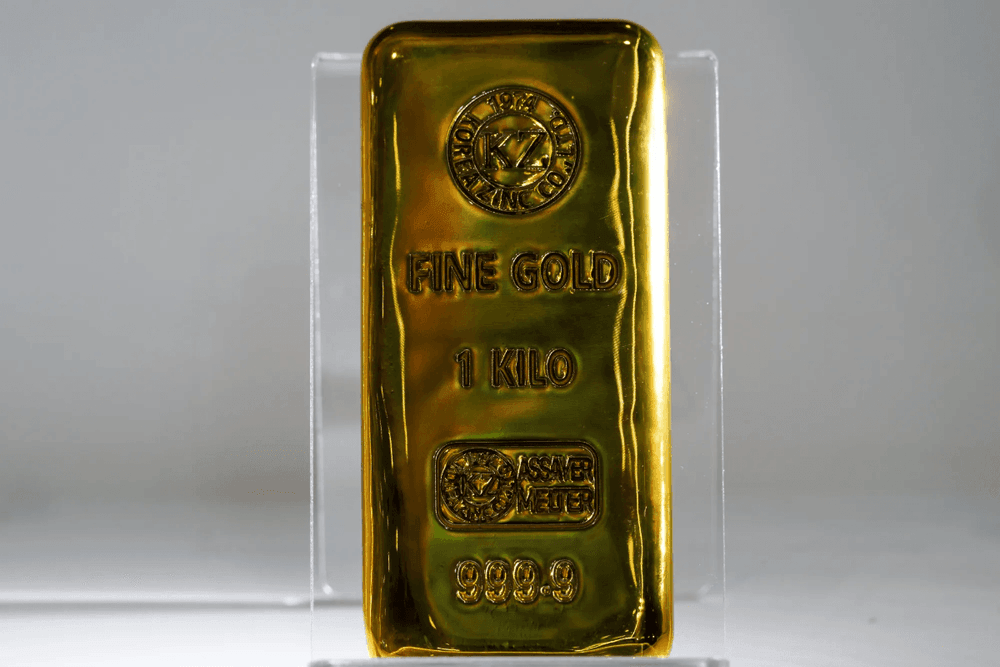
World gold prices fell in the Asian session on Thursday morning (April 13, 2026) after crude oil jumped above $100 a barrel amid US-Iran peace talks ending without a deal and President Donald Trump warning the United States would close the Hormuz Strait. Inflation risks and expectations of higher rates for longer also supported the US dollar against major currencies.
At 6:15 a.m. Vietnam time, spot gold in the Asian market traded down more than $90 from New York’s close the previous week, at roughly $4,658.4 per ounce, a decline of more than 1.9%. It had earlier fallen as low as $4,637 per ounce, about $110 below the prior close.
Spot silver also weakened, falling nearly 3.4% to $74.38 per ounce.
Peace talks between the US and Iran in Islamabad ended without a deal due to large gaps on key issues, including Israel’s attack on Hezbollah in Lebanon, Iran’s frozen assets, and the Hormuz Strait. Senior delegations from both sides returned home, blaming each other for the talks failing to reach an agreement.
A few hours after the talks ended, President Trump said the US Navy would block the Hormuz Strait. The developments pushed crude oil above $100 a barrel in early Asia trade, reviving concerns about global inflation and increasing the possibility that central banks keep policy rates higher for longer.
Such conditions are generally not supportive for gold, a non-yielding asset.
At 6:20 a.m., Brent crude front-month futures in London rose more than 8% from last week’s close, trading near $103 per barrel. WTI futures in New York rose about 8.6%, trading near $105 per barrel.
Geopolitical uncertainty in the Middle East also boosted the US dollar’s role as a safe-haven investment channel. The greenback received additional support from expectations that the Federal Reserve will not cut rates this year. A stronger US dollar typically weighs on gold, which is priced in USD.
The Dollar Index, measuring the USD’s strength against a basket of six major currencies, rose more than 0.5% in early trading to near 99.2.
Last week, gold recorded a third straight weekly gain as the US dollar and oil fell following a two-week US-Iran ceasefire and the start of peace talks with Pakistan as host. Analysts had previously warned that gold could face challenges near the $5,000/oz level given ongoing Gulf uncertainty.
In an interview with Kitco News, Christopher Vecchio, chief strategist at Tastylive, said the US-Iran ceasefire remains fragile and it is too early to conclude that the talks will lead to lasting peace. “I can’t get excited about gold while this uncertainty persists. The gold market needs a clear signal that an agreement can be reached. Otherwise, cash outflows will push gold lower,” he said. Vecchio added that he sees little near-term upside and does not see a reason to buy gold and silver while the uncertainty persists.
Ole Hansen, chief strategist at Saxo Bank, also remained cautious on gold, though he said he felt more confident after gold’s recent rebound and signs of ETF demand picking up. “There needs to be a certain degree of certainty that the Middle East conflict will end soon for the upside in gold to resume. Even then, a weaker US economy would be required to force the Fed to cut rates,” Hansen said.
Near-term, analysts said inflation concerns are likely to continue weighing on gold. US inflation data released last week showed persistence and the potential for inflation to accelerate.
Roukaya Ibrahim, head of research at BC A Researcho, argued that if inflation begins to weigh on growth, gold could again play its traditional role as a safe-haven asset. “Right now geopolitical risk remains primarily an inflation shock. This pushes investors to expect higher rates for longer. But if this persists, the consequence could be a growth shock that reduces yields,” she said.
TD Securities analysts forecast that the Fed could still cut rates in the second half of this year, and that gold could gain again once markets conclude the Fed will prioritize growth over fighting inflation. “We expect the Fed to stay patient because the impact of the Middle East conflict has not yet been fully reflected in the US economy. We still see a possibility of a 0.25 percentage-point cut in the second half of this year if inflation normalizes,” the report said.
With few major US economic statistics due this week, investors are expected to keep focusing on developments in the Gulf and on statements from Fed officials.
The upper price for international gold is equivalent to around VND 148 million per liang when converted at Vietcombank’s USD selling rate. Near 7 a.m., Vietcombank’s USD quotes stood at 26,100 dong (buy) and 26,360 dong (sell).

Premium gym chains are entering a “golden era” that is ending or already in decline, as rising operating costs collide with shifting consumer preferences toward more flexible, community-based ways to exercise. Long-term memberships are shrinking, margins are pressured by higher rents and facility expenses, and competition from smaller, more personalized…