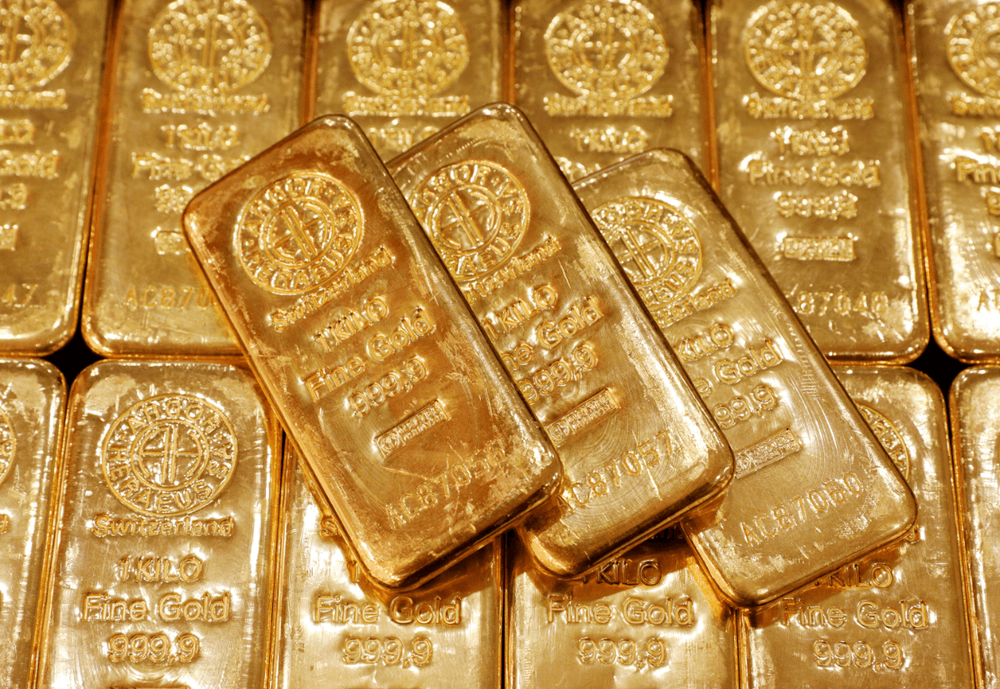
Global gold prices briefly moved above the $4,700/oz threshold during Thursday trading, but failed to hold the level into the close as investors booked profits and stayed cautious ahead of further developments in US-Iran peace talks. The firmer US dollar and modest net buying by the SPDR Gold Trust also limited gold’s upside.
At the close in New York, spot gold settled at $4,687.60/oz, down 0.09% from the previous session. Intraday, prices reached as high as $4,765/oz, the highest level in two weeks. Spot silver finished at $78.54/oz, up $1.05 (about 1.4%). On the COMEX, June 2026 gold futures rose 0.4%, settling at $4,710.90/oz.
Negotiations to end the war between the US and Iran remain fragile. The latest development involved an exchange of fire in the Hormuz Strait, with both sides accusing the other of initiating the clash. President Donald Trump said the ceasefire remained in place, but later posted on Truth Social that US forces had “completely destroyed” Iran’s equipment in the confrontation, including several small boats and drones. He also reiterated that Iran would be attacked again if no nuclear agreement is reached with the US.
Sources and officials cited by the Wall Street Journal said Iran is weighing a US proposal to end the war, with the most difficult bilateral issues temporarily set aside. The report also quoted a senior Iranian official saying Iran would not allow the Hormuz Strait to reopen under “an unrealistic plan.”
Crude oil closed lower on Thursday, though losses were contained after an intraday drop of as much as about 5%. Brent crude settled roughly 1% lower, while WTI declined less than 0.3%.
The prospect of a potential peace agreement has supported gold, which gained nearly 3% on Wednesday. Ending the conflict would likely imply lower oil prices, easing global inflation pressures and allowing central banks to continue rate cuts. If the conflict continues, gold could face renewed downward pressure.
“If the ceasefire holds, the war ends, and the Hormuz Strait reopens, gold could retest the $5,000/oz level,” said Bob Haberkorn, a strategist at RJO Futures, in a Reuters interview.
A TD Securities report suggested gold could push above $5,200/oz once the conflict ends and oil prices ease, citing weakening Treasury yields and the US dollar as the Fed shifts back toward full employment, along with rising bullion demand from investors and central banks.
China’s central bank bought gold for the 18th consecutive month in April, according to data released on May 7. On Friday, market attention will turn to the US non-farm payrolls report, a key data point expected to influence the Fed’s rate outlook.
In the ETF market, the SPDR Gold Trust recorded a net inflow of nearly 0.3 tonnes on Thursday, bringing total holdings to 1,033.5 tonnes. The inflow was modest compared with recent outflows.
The Dollar Index rose about 0.2%, trading above 98.2. Heightened tensions in the Hormuz Strait and cautious investor sentiment prevented gold from holding above $4,700/oz at Thursday’s close. However, gold pushed back above the level in early Asia trading.
By around 7 a.m. Vietnam time, spot gold was up roughly 0.4% from the US close, trading above $4,705/oz. Spot silver rose more than 1.1% to $79.40/oz. Using Vietcombank’s USD selling rate, the gold price level translated to about 149.5 million dong per tael, up about 0.5 million dong from the previous morning. Vietcombank’s USD quotes were 26,088 dong (buy) and 26,368 dong (sell), with the buying rate down 10 dong and the selling rate unchanged from the prior morning.