•
•
•
•
•
•
•
•
•
•
•
•
•
•
•
•
•
•
•
•
•
•
•
•
•
•
•
•
•
•
•
•
•


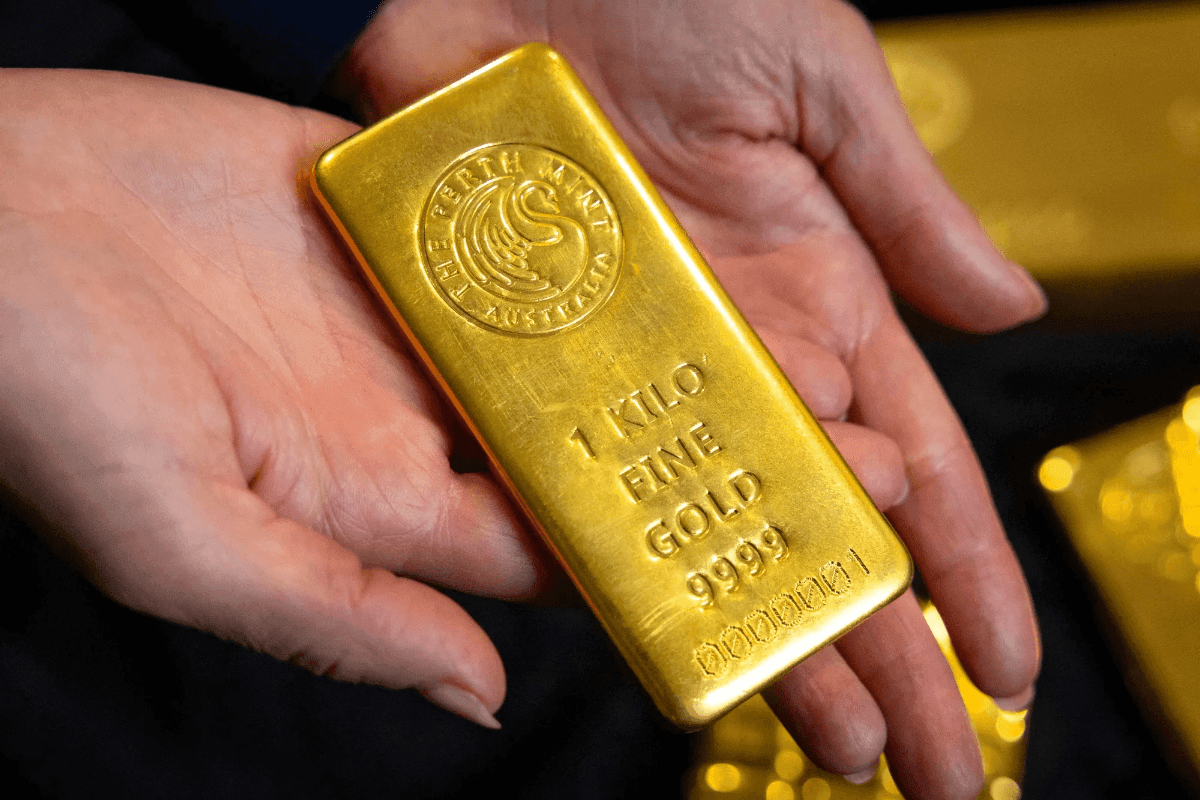
Gold prices fell sharply in the early hours of May 11 in Asia after the United States rejected Iran’s proposal for how to respond to Washington’s peace plan, highlighting the market’s sensitivity to developments in the Gulf conflict. Spot gold in Asia declined by nearly $23/oz from the close in New York last week, or about 0.5%, trading around $4,693/oz at just after 6:00 a.m. local time in Vietnam, according to Kitco data.
Silver also slipped, falling about 0.6% to trade around $80/oz.
Gold had risen last week by 2.3% after two weeks of declines, supported by expectations that the US and Iran could reach an agreement to end the war. Market participants linked such a scenario to lower oil prices, easing global inflation pressures, and a reduced likelihood that central banks keep interest rates higher for longer.
Those expectations weakened toward the end of last week after President Donald Trump rejected Iran’s response to the US peace proposal. In a Truth Social post on Sunday, Trump described Iran’s response as “completely unacceptable.”
According to The Wall Street Journal, Iran did not accept US demands related to its nuclear program and its stockpile of highly enriched uranium. Instead, Iran proposed separate talks on the nuclear issue, including diluting a portion of its highly enriched uranium and sending the remainder to a third country, with the uranium potentially returned to Iran if the US breaches the agreement.
The report also said Iran proposed that the US end the blockade of Iranian ports in exchange for Tehran opening the Hormuz Strait to commercial shipping. The US, meanwhile, is seeking guarantees that Iran will end its nuclear program. Iran agreed to suspend enrichment for a shorter period than the 20-year term proposed by the US, and Iran also refused to dismantle its nuclear facilities, the Wall Street Journal reported.
In an interview with CBS on Sunday, Israeli Prime Minister Benjamin Netanyahu said the US–Israel war with Iran “has not ended yet,” adding that the US and Israel remain determined to curb Tehran’s nuclear ambitions.
Following the renewed tensions, crude oil prices surged again. The move reinforced the link that can weigh on gold through higher oil prices and inflation expectations, increasing the probability that rates remain higher for longer.
At around 6:00 a.m. Vietnam time, Brent futures in London rose nearly 3.1% from last week’s close to trade above $104.4 per barrel. WTI futures in New York rose 3.1% to trade around $98.4 per barrel.
Beyond war-related developments, investors in the international gold market are expected to focus on upcoming US inflation data, including CPI and PPI, with the US Labor Department scheduled to release the figures on Tuesday and Wednesday respectively.
Other key events this week include President Donald Trump’s visit to China on May 14–15 and the possibility that the US Senate will vote to confirm Kevin Warsh as Fed chair. Warsh has signaled support for rate cuts this year to stimulate the economy, while also proposing reducing the size of the Fed’s balance sheet, which would imply lower market liquidity.
Some analysts cited in the article argue that even if a new Fed chair takes a more dovish stance, inflation pressures remain strong and could limit the Fed’s ability to cut rates—constraining gold’s near-term upside.
“US economic data remains solid, not weak enough for the Fed to cut rates. Therefore, investors should be patient. At the same time, every pullback should be viewed as a buying opportunity. Asset managers are still awaiting a catalyst for gold to rise, such as a technical signal,” said Ole Hansen of Saxo Bank.

Premium gym chains are entering a “golden era” that is ending or already in decline, as rising operating costs collide with shifting consumer preferences toward more flexible, community-based ways to exercise. Long-term memberships are shrinking, margins are pressured by higher rents and facility expenses, and competition from smaller, more personalized…