•
•
•
•
•
•
•
•
•
•
•
•
•
•
•
•
•
•
•
•
•
•
•
•
•
•
•
•
•
•
•
•
•


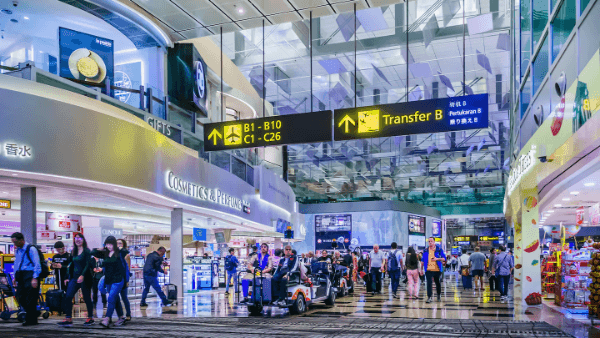
For many years, airport shopping was an easy win: a captive customer base, ready cash, tax-free prices, and no marketing costs. However, as of 2026, the factors that once made travel retail a steady growth driver are weakening.
Flight volumes have returned to pre-pandemic levels. International flights globally in February were up 14% year-on-year versus 2019, with airports accounting for the largest share of travel retail. Yet industry-wide sales growth remains slow. In 2024, travel retail revenue was still about 13% below 2019, according to Kearney.
The clearest signal comes from LVMH. This luxury travel retailer DFS Group sold back its Hong Kong and Macau operations this year, and recently announced a deal to transfer the rights to operate at major airports in Los Angeles and San Francisco.
These moves reflect a reality many brands are facing: even though passenger numbers have recovered globally, travel retail no longer translates traffic into revenue as effectively as before, largely due to changes in consumer behavior in Asia. Geopolitical tensions, especially the conflict in the Middle East, are also making the market outlook more uncertain.
The core of the duty-free channel's decline lies in the “daigou” phenomenon—individuals buying tax-free goods in markets like Korea or Singapore and reselling them to customers in China. This was once a meaningful source of revenue for luxury and beauty brands, with resellers often purchasing large quantities for domestic distribution upon return.
Since 2024, the Chinese government has tightened control of daigou activities. Markets such as Korea have borne the brunt. Previously, around 10–15% of global tax-free revenue came from Korean buyers; today, that figure is only about 5%, according to Filippo Falorni, CEO at Citi.
Reliance on travel retail varies by category. Beauty groups—especially The Estée Lauder Companies—have long depended on this channel. About 7% of global beauty sales come from travel retail, according to The State of Fashion: Beauty by The Business of Fashion and McKinsey & Company.
In contrast, traditional fashion brands tend to view airports less as profit centers and more as an initial touchpoint—where to reach customers early and steer them to flagship stores in city centers.
Even with the slowdown, duty-free remains meaningful for cosmetics. For example, about 15% of Estée Lauder’s revenue comes from duty-free, about 14% for LG Corporation, and about 9% for Amorepacific’s beauty divisions, while L’Oréal’s share is single-digit, according to Citi.
Bain & Company estimates that about 4% of total personal luxury expenditure—including fashion and beauty—occurs through travel retail.
Travel retail is the first channel showing signs of slowing and being affected by the Middle East conflict. The channel’s core business model is also not designed to support broad growth: travel retail remains highly concentrated, with only a few large operators controlling the distribution system. Geopolitical factors can disrupt strategies quickly.
“Travel retail is the first channel where we see signs of slowing and impact from the Middle East conflict,” said Claudia D’Arpizio, senior partner in charge of the luxury practice at Bain & Company.
Dwell time at airports persists, but shopper behavior has changed. Shoppers are growing bored with limited product ranges and insufficient promotions, and are turning to lounges or digital spaces for entertainment.
Airports and the duty-free channel remain important marketing opportunities for luxury and beauty brands, but the next stage of travel retail is likely to require deeper integration into the travel journey—presence in lounges and highly personalized services.
Examples include Elemis offering pre-flight spa treatments, and fashion houses such as Dior and Bvlgari running airport pop-ups designed to be more experiential than traditional boutiques.
The shift also reflects a more realistic view of the current airport customer base. Among the wealthiest travelers using private jets, traditional travel retail is increasingly less relevant, while others prioritize speed and comfort over shopping.
In that context, the opportunity is no longer to sell a handbag during a layover, but to collect data, build relationships with customers, and extend that connection beyond the airport space.
Travel retail is undergoing a strong transformation.






Premium gym chains are entering a “golden era” that is ending or already in decline, as rising operating costs collide with shifting consumer preferences toward more flexible, community-based ways to exercise. Long-term memberships are shrinking, margins are pressured by higher rents and facility expenses, and competition from smaller, more personalized…




