•
•
•
•
•
•
•
•
•
•
•
•
•
•
•
•
•
•
•
•
•
•
•
•
•
•
•
•
•
•
•
•
•


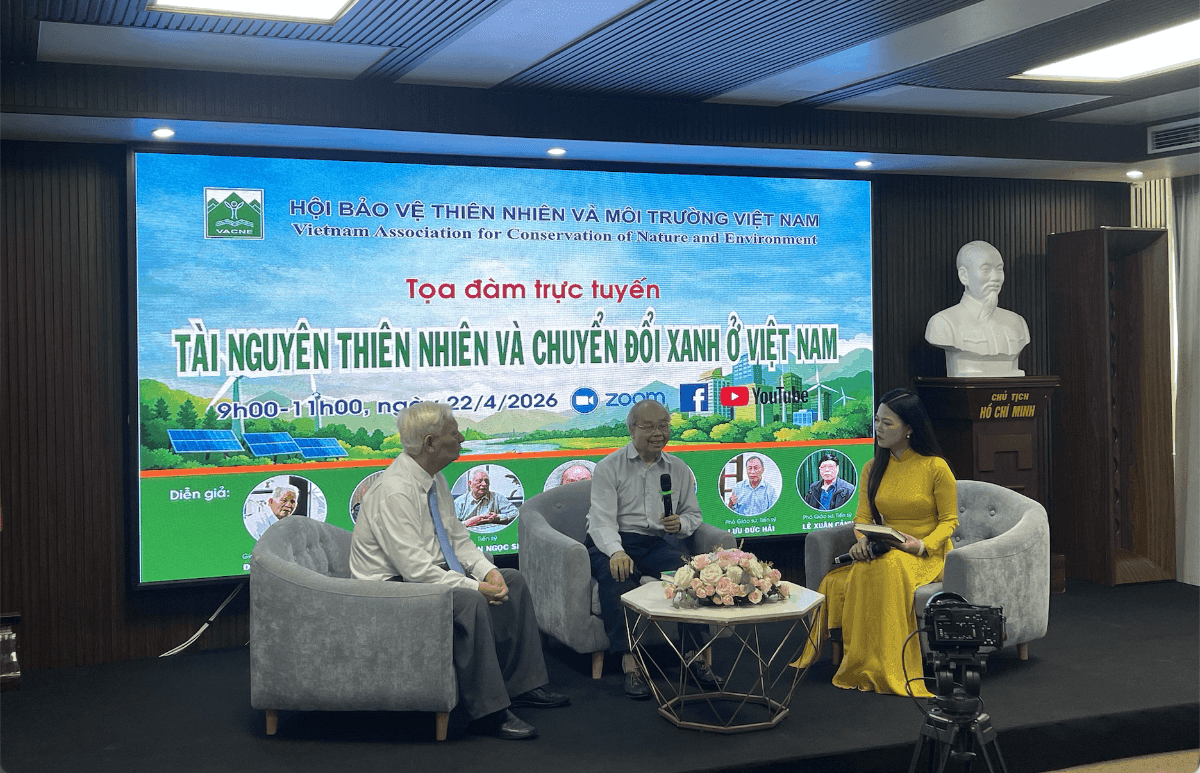
The green transition has become an inevitable trend aimed at sustainable development, seeking to balance economic growth, environmental protection, and social equity. The forum “Natural Resources and Green Transition in Vietnam,” organized by the Vietnam Association for Nature Protection and Environment (VACNE), launched a book of the same name.
The event was held as the world and Vietnam face major challenges including climate change, environmental pollution, and the depletion of natural resources. In his opening remarks, Dr. Nguyen Ngoc Sinh, President of VACNE, said that in a global context already contending with climate change, biodiversity loss, pollution, and resource depletion, the green transition is increasingly urgent and timely.
Dr. Sinh said the green transition is not only a shift in the development model from “brown” to “green,” but also a comprehensive reform toward sustainable development, environmental protection, and social equity. He noted that natural resources are an indispensable foundation for development, providing materials and energy while helping maintain ecological balance and environmental security.
However, he added that overexploitation and environmental pollution in recent times have rapidly depleted natural resources in Vietnam.
Against this backdrop, the forum highlighted that developing renewable energy, circular agriculture, forest protection, sustainable water management, and clean technology in mining reflects a broader trend of leveraging natural advantages while preserving resources and moving toward fast, sustainable development.
Speakers also emphasized that building a green economy requires a “green mindset,” originating from leaders who shape strategic production and business decisions. They stressed the importance of balancing business profits with investments to address negative impacts on natural resources and the environment, and ensuring outputs meet the strictest quality standards.
The discussion further stressed that the green transition begins with a shift in development thinking. If humans previously treated nature as something to exploit, the new approach should recognize humans as part of the ecosystem. From there, green thinking is expected to guide green actions and help form a green economy development model.
The forum also referenced regional and international direction, including the goal of building Ho Chi Minh City into a regional center for the green transition in Southeast Asia, and noted that the EU is tightening climate targets for 2040, with implications for accelerating the green transition in Vietnam.
It was also stated that Vietnam needs about 700 billion USD for the green transition.
Within the forum, VACNE introduced the book Natural Resources and Green Transition in Vietnam. Compiled by VACNE and published by the National Political Publishing House, the book includes three parts: clarifying the theoretical basis of the relationship between natural resources and the green transition; addressing issues in the exploitation, use, and protection of Vietnam’s natural resources; and presenting viewpoints, directions, and solutions to improve institutions, policies, mindset, and approaches for managing natural resources and the green transition in Vietnam.





Premium gym chains are entering a “golden era” that is ending or already in decline, as rising operating costs collide with shifting consumer preferences toward more flexible, community-based ways to exercise. Long-term memberships are shrinking, margins are pressured by higher rents and facility expenses, and competition from smaller, more personalized…




