•
•
•
•
•
•
•
•
•
•
•
•
•
•
•
•
•
•
•
•
•
•
•
•
•
•
•
•
•
•
•
•
•


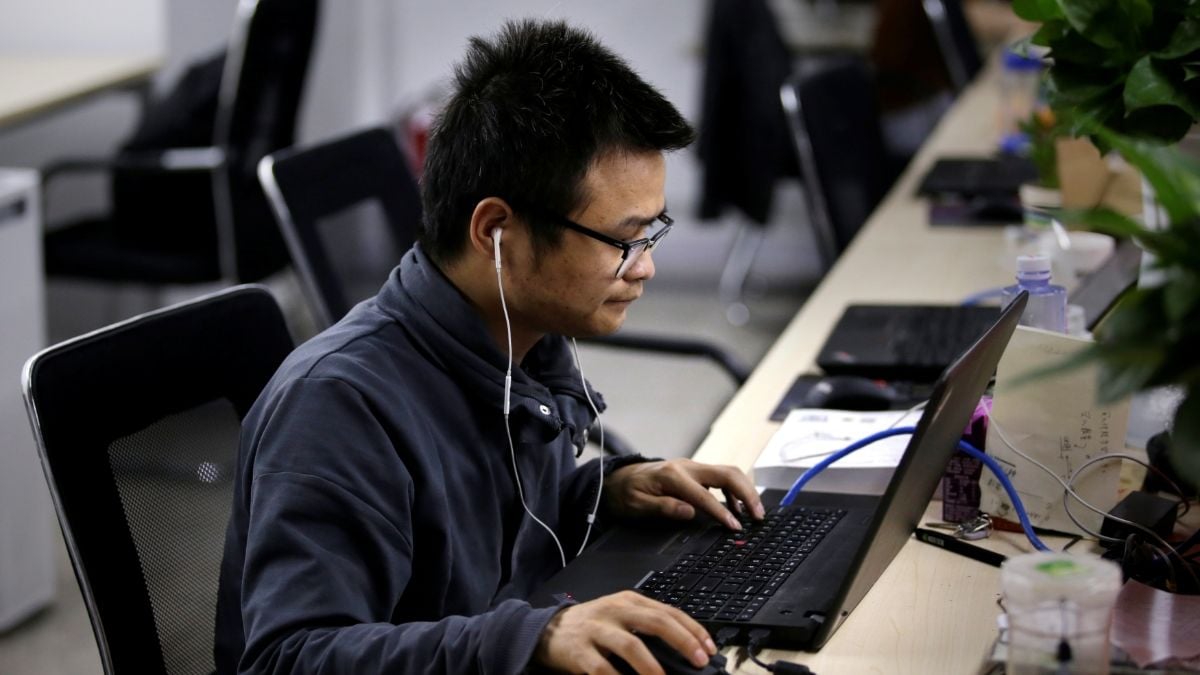
Hangzhou Intermediate People’s Court in China ruled that employers cannot fire employees in order to replace them with AI as a cost-saving measure. The decision was issued in a lawsuit filed by a senior tech employee surnamed Chu, who alleged that the company sought to demote him after deploying AI.
Chu joined the company in November 2022 as a content quality control specialist, earning 25,000 yuan per month (about $3,640). His responsibilities included evaluating AI-generated responses during user interactions, checking accuracy, and filtering out content that violated privacy or posed risks.
After the company implemented an AI system to automate parts of the workflow, Chu was proposed a transfer to another position with a salary of 15,000 yuan per month (about $2,180). When Chu refused the transfer, the company unilaterally terminated his contract.
The court said AI deployment was not sufficient to constitute a “significant change in the objective environment,” a legal basis under China’s Labor Contract Law that can allow termination in certain circumstances.
It also found that the new role involved a substantially lower salary than Chu’s original position, meaning the transfer could not be considered reasonable.
The court emphasized that while companies have the right to pursue innovation and upgrade technology, they must also consider workers’ legal rights and interests.
It further stressed that rather than cutting staff, companies should prioritize retraining and provide opportunities for workers to move into higher-value roles that require more human involvement.
Globally, layoffs and restructurings driven by AI have become contentious as firms automate tasks across areas such as customer support, programming, data labeling, and content moderation. Large technology groups have continued investing in AI-generating systems to reduce operating costs and reliance on human labor.
Earlier this month, reports said nearly 80,000 technology workers in the United States had lost their jobs since the start of 2026, with AI increasingly cited as a rationale for cuts. Some observers argue that AI is sometimes used as a “pretext” for deeper business-strategy problems.
For example, Meta laid off around 8,000 employees. While CEO Mark Zuckerberg said the reductions were not directly tied to restructuring toward an “AI-native” model or the development of AI agents, the company’s AI investment strategy is still described as affecting both its financial and human resource structure.
In this context, the Hangzhou court’s ruling was welcomed as an effort to balance the pace of AI deployment with labor-market stability. Wang Tianyu, a researcher at the Chinese Academy of Social Sciences, said: “Technological progress may be an unstoppable trend, but it cannot exist outside the framework of the law.”

Premium gym chains are entering a “golden era” that is ending or already in decline, as rising operating costs collide with shifting consumer preferences toward more flexible, community-based ways to exercise. Long-term memberships are shrinking, margins are pressured by higher rents and facility expenses, and competition from smaller, more personalized…