•
•
•
•
•
•
•
•
•
•
•
•
•
•
•
•
•
•
•
•
•
•
•
•
•
•
•
•
•
•
•
•
•


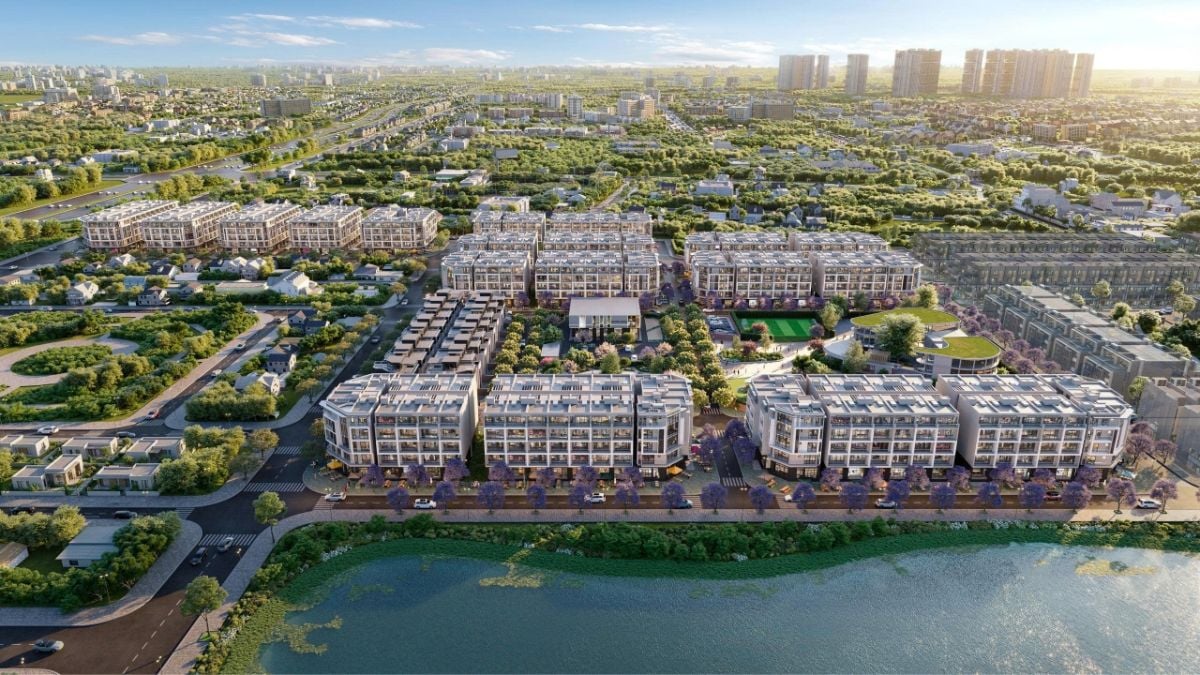
Hanoi Oriental is designed as more than a residential complex, using layered and “smart” spatial planning to balance urban activity with privacy. The approach aims to support a refined living experience while strengthening sustainable value over time.
A key challenge in modern urban development is aligning commercial energy with residential calm. When functional planning is mismatched, residents can face noise and heavy traffic, while commercial areas may struggle to attract sufficient foot traffic.
Layered planning has therefore become a common model in developed markets. Space is organized in depth to create separation while preserving connectivity. The outer layer typically faces major transport axes to support commerce and services, while the inner layer is buffered to provide private, stable living conditions. Similar concepts have been applied in cities such as Singapore, Korea, and the United States.
In the eastern part of Hanoi, this layered approach is implemented at Hanoi Oriental, an upscale low-rise housing development on Nguyen Mau Tai Street (Gia Lam). The project is located within Gia Lam’s newly established administrative center area, which is expected to benefit from the capital’s infrastructure investment cycle through 2030, with a vision to 2050.
The outer layer features rows of shophouses along a wide 22-meter axis. This layout is intended to form vibrant commercial streets where business, services, and dining can develop.
In the future, the area is expected to become a commercial focal point, drawing customers from the administrative center and nearby residential areas. This is designed to enhance the commercial value potential of each Hanoi Oriental shophouse.
Separated from the commercial bustle, the inner space is planned for a calmer environment. The villa area facing the park is supported by green spaces, internal parks, sports yards, and a school, functioning as “soft cushions” that balance daily living rhythm.
This is where residents can find privacy and peace while still maintaining convenient access to external amenities.
The design is described as creating a natural transition rather than a hard boundary. At Hanoi Oriental, the outer layer channels commerce and urban vitality, while the inner layer preserves residential living quality and supports stability in residential value.
The article emphasizes that the planning concept is only effective when executed with clear delivery progress. Hanoi Oriental has completed the structural shell and is entering the finishing stage, targeting handover in the second quarter of 2026.
The shophouses on the 22-meter-wide axis are ready for handover in Q2 2026.
The near-completion is presented as evidence of the developer’s ability to meet schedule and quality commitments. The involvement of Vietcombank is also cited as a factor that helps strengthen confidence in financial capacity and implementation strength.
Beyond construction progress and financing, the article highlights long-term ownership value and transparent legal framing as key considerations in a market increasingly focused on sustainability. It positions Hanoi Oriental not only as a place to live, but also as an asset intended to appreciate over time and be passed on to future generations.
In a market that prioritizes real value, Hanoi Oriental is presented as a project where planning is implemented to create distinctive living experiences. The layered structure is described as supporting business opportunities while maintaining demand for genuine living, laying a foundation for sustainable long-term growth.





Premium gym chains are entering a “golden era” that is ending or already in decline, as rising operating costs collide with shifting consumer preferences toward more flexible, community-based ways to exercise. Long-term memberships are shrinking, margins are pressured by higher rents and facility expenses, and competition from smaller, more personalized…




