•
•
•
•
•
•
•
•
•
•
•
•
•
•
•
•
•
•
•
•
•
•
•
•
•
•
•
•
•
•
•
•
•


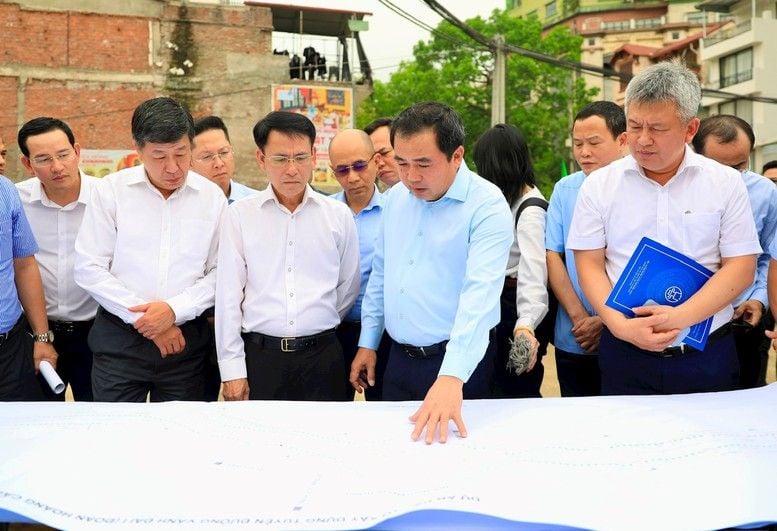
Hanoi Party Secretary Trần Đức Thắng inspected the progress of several major infrastructure projects across the capital, visiting key works including Belt Road 1, drainage lines in Tây Hồ Tây, the Yen Nghĩa 1 drainage reservoir, and improvements to the city’s western drainage system focused on the Yen Nghĩa pump station and the La Khê canal.
At the inspection sites, Secretary Trần Đức Thắng praised project owners and contractors for efforts to maintain construction progress on the city’s priority works. He also urged the relevant agencies to tighten management, identify bottlenecks, and set concrete deadlines for each construction stage.
Belt Road 1 is a Group A project with total investment of more than 7,210 billion VND. The project started in June 2020, and after multiple adjustments, the implementation period has been extended to 2026.
To date, land clearance covering 153,341 m² affecting 1,983 households in the wards of Ô Chợ Dừa, Láng, and Giảng Võ has been completed, and the entire site has been handed over to the Project Management Office for construction.
The Secretary said Belt Road 1 is a backbone route intended to relieve traffic pressure in the city center, open up new development space, and connect important areas of Hanoi. He stressed that delays would translate into more congestion, pollution, longer travel times, and a lower quality of life for residents.
He requested the Project Management Office, relevant departments, and local wards to review all construction stages, identify bottlenecks, specify concrete deadlines, and propose solutions with fixed timelines. Specific targets include completing the entire roadway by September 2 and completing two overpasses on the route by December 31.
Secretary Trần Đức Thắng also required the investor and contractor to commit in writing to the timeline for completing each main item, implement catch-up plans, and work overtime in a scientifically managed manner while ensuring absolute safety and quality. He said the city will strengthen inspections and reassign units that fail to meet requirements or show weak capacity or slow progress to prevent further delays affecting residents along the route.
Regarding the DT4 drainage work from Tây Hồ Tây to Hoàng Quốc Việt Street, the Secretary noted its importance for Tây Hồ Tây and surrounding areas, where population density, high-rise housing, and offices are expanding.
He urged the investor, contractor, and local authorities to treat the drainage line as an urgent public welfare task tied to public trust in government. The project must complete the drainage channel segment by April 30, 2026, and finish surrounding sidewalks by May 15, 2026.
He also called for reviewing construction measures, including phased or night-time works in suitable sections to shorten road occupancy time, while ensuring safe traffic and proper road restoration plans for each affected area.
He further emphasized close coordination among involved departments—especially electricity, water, and telecommunications management units—to relocate infrastructure, warning that internal red tape or lack of coordination must not delay the project chain.
For the La Khê canal project, Secretary Trần Đức Thắng said the canal is an important drainage route and a direct indicator of local residents’ living conditions. He noted that if the canal is clean, well-drained, and aesthetically improved, living standards will rise; otherwise, pollution, encroachment, and debris will affect residents’ health and daily life.
He urged Hà Đông ward and the Project Management Office to report current pollution, direct discharges into the canal, and encroachments, then develop a concrete plan with a timetable. He said violations must be inspected and strictly handled without tolerance.
The timetable for canal packages includes finishing drainage to the Yen Nghĩa Pump Station by April 30, 2026, and completing landscaping around the canal by June 30, 2026.
Secretary Trần Đức Thắng emphasized that the belt roads, bridges, reservoirs, and canals being developed are not only about completing construction, but also about reducing congestion, lowering flooding, and improving air quality for millions of residents in Hanoi.





Premium gym chains are entering a “golden era” that is ending or already in decline, as rising operating costs collide with shifting consumer preferences toward more flexible, community-based ways to exercise. Long-term memberships are shrinking, margins are pressured by higher rents and facility expenses, and competition from smaller, more personalized…




