•
•
•
•
•
•
•
•
•
•
•
•
•
•
•
•
•
•
•
•
•
•
•
•
•
•
•
•
•
•
•
•
•


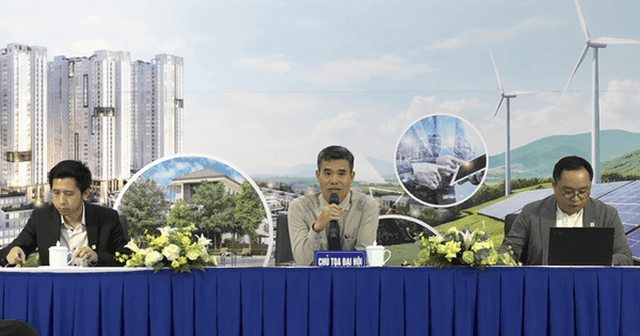
On the morning of April 24, Ha Do Group Joint Stock Company (ticker: HDG) held its 2026 annual general meeting of shareholders online. During the discussion, shareholders asked whether Hà Đô is related to PC1.
Nguyễn Trọng Minh, vice chairman of the board and chief executive officer of Hà Đô, said that Hà Đô is not related to PC1. He noted that PC1 is connected to the 500 kV transmission line, and Hà Đô has no involvement with PC1 as a contractor.
At the Hà Đô 2026 annual meeting, PC1 was described as operating in the field of electrical construction, with experience in transmission projects. According to PC1’s annual report, the company has delivered electricity up to 500 kV and also works on special projects such as GIS substations, island power supply, and submarine cables.
In 2025, PC1’s revenue reached 13,364 billion dong, up 30% year-on-year. The electric construction and industrial park contracting segment accounted for the largest share at 6,698 billion dong, up 82% from 2024, with gross margin of 11.6% for this segment.
During the year, PC1 completed large projects including the Lao Cai – Vĩnh Yên 500 kV line.
Internationally, PC1 implemented a wind power project in the Philippines with a capacity of 58.5 MW, with a contract value of about 1,200 billion dong.
By the end of 2025, PC1’s backlog stood at 8,250 billion dong, up from 6,892 billion dong in the same period last year.
In the current trading session, PC1’s stock continued to fall sharply, hitting the floor at 22,450 dong per share. Selling orders on the floor exceeded 28.7 million shares.
This was the eighth consecutive decline, including two floor-limit days, which reportedly erased about 18% of the company’s market capitalization, from around 27,450 dong to about 22,450 dong per share.
The unusual movement was attributed to negative information about the company circulating on social networks. PC1 had also previously been mentioned in a findings report on private bond issuance.
Tuấn Khôi.






Premium gym chains are entering a “golden era” that is ending or already in decline, as rising operating costs collide with shifting consumer preferences toward more flexible, community-based ways to exercise. Long-term memberships are shrinking, margins are pressured by higher rents and facility expenses, and competition from smaller, more personalized…