•
•
•
•
•
•
•
•
•
•
•
•
•
•
•
•
•
•
•
•
•
•
•
•
•
•
•
•
•
•
•
•
•


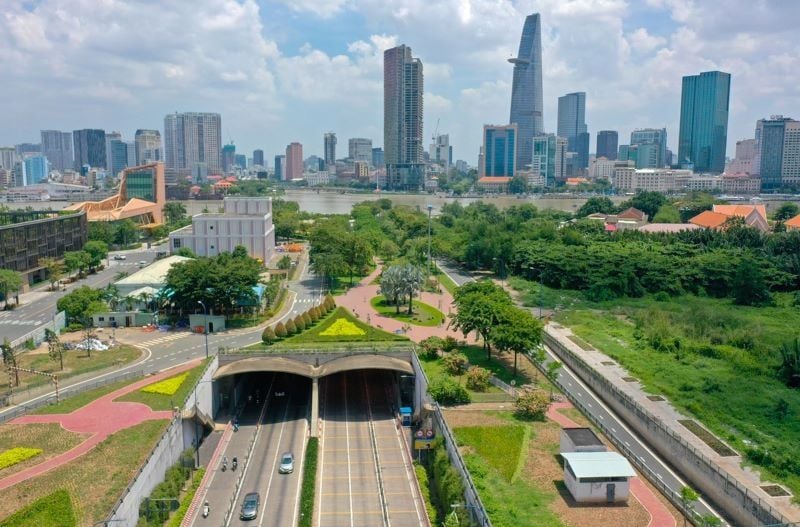
At a press briefing on Ho Chi Minh City’s economic and social situation on the afternoon of April 16, representatives of the Ho Chi Minh City Department of Construction provided an update on the progress of the new Political–Administrative Center project planned for the core area of the Thu Thiem New Urban Area (An Khanh Ward).
The investor proposes to invest in synchronized technical infrastructure, supporting facilities, and underground parking in the central area for the Administrative Center, the theater, and the landscaped park. The main components include the city’s new Administrative Center building, the theater, the central square, and the underground parking system.
The project covers more than 33 hectares, located within an area bordered by major traffic corridors Mai Chi Tho, Nguyen Co Thach, and To Huu, supporting convenient connectivity to surrounding areas.
Under the master plan, the main building occupies about 7.84 hectares and is arranged along To Huu Street. The planned structure will be 33 stories tall, including 30 floors above ground and 3 basement levels. The remaining land will be used for additional facilities and large-scale public spaces, including the Symphony–Opera–Dance Hall, a water-logged park, and the central lake.
The planned area is expected to serve up to about 15,000 people. Of these, approximately:
The number of civil servants and workers at the Political–Administrative Center will be determined in detail based on the staffing plan approved by competent authorities.
The People’s Committee of Ho Chi Minh City has assigned the Department of Finance to lead the planning and implementation of the project in accordance with current regulations.
Earlier, in its conclusions on the first-quarter economic-social situation and the tasks for Q2 2026, the city required full preparation to commence and inaugurate key projects by April 30, with strict adherence to schedules and regulations.
The proposed list of key projects includes:




Premium gym chains are entering a “golden era” that is ending or already in decline, as rising operating costs collide with shifting consumer preferences toward more flexible, community-based ways to exercise. Long-term memberships are shrinking, margins are pressured by higher rents and facility expenses, and competition from smaller, more personalized…




