•
•
•
•
•
•
•
•
•
•
•
•
•
•
•
•
•
•
•
•
•
•
•
•
•
•
•
•
•
•
•
•
•
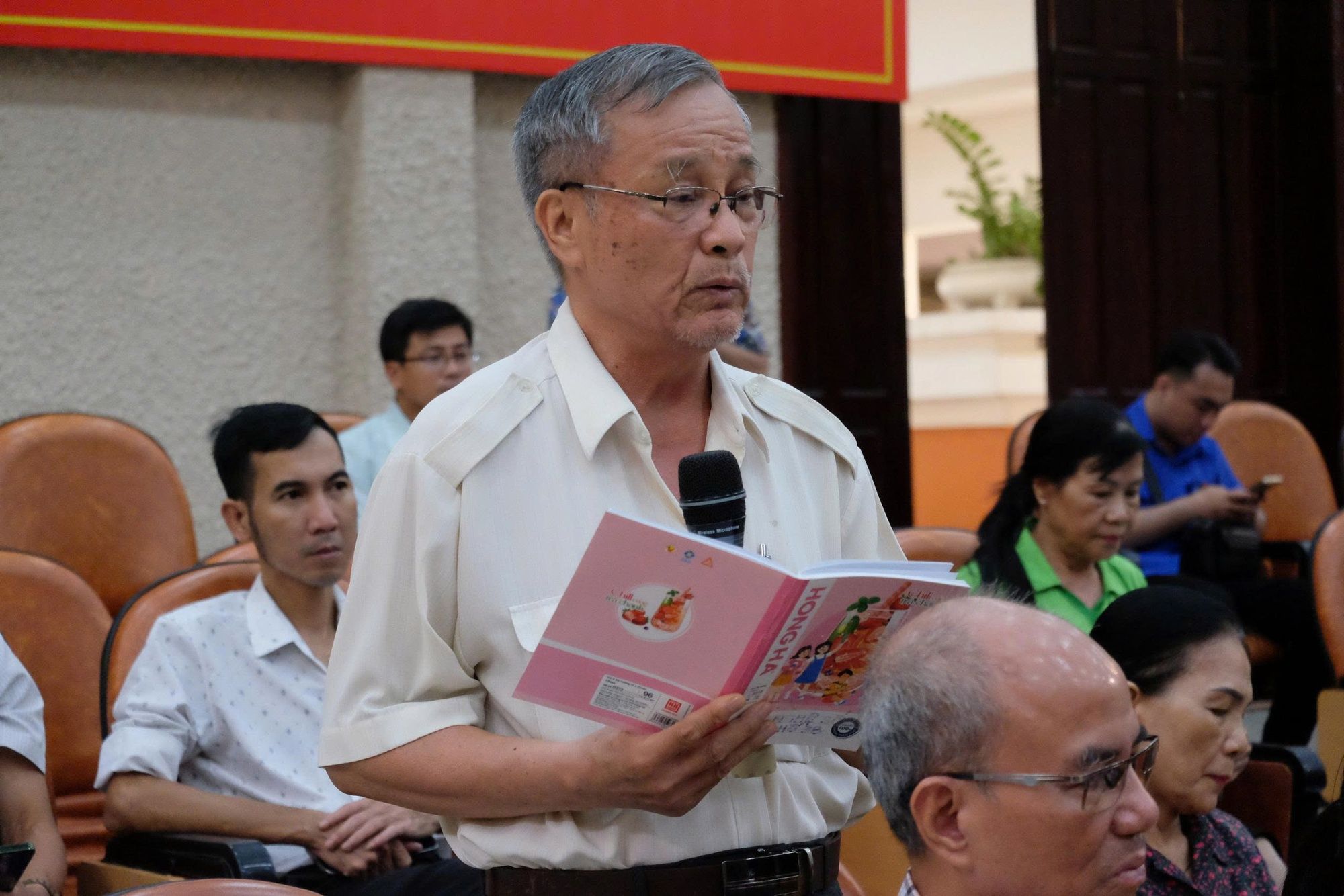
On the morning of May 5, the Ho Chi Minh City National Assembly delegation, Unit 8, met with voters in nine wards—Tan Phu, Tan Hoa, Bay Hien, Tan Binh, Tan Son, Phu Thanh, Tay Thanh, Tan Son Nhi, and Phu Hoa—after the first session of the 16th National Assembly.
The delegation included Major General Nguyen Minh Duc, Deputy Chief of the National Assembly's Committee on Defense, Security and External Affairs; Pham Trong Nhan, Vice Chairman of the Ho Chi Minh City Federation of Labor; and Truong Minh Huy Vu, Director of the Ho Chi Minh City Development Research Institute.
Voter Nguyen Hoang Sang from Tan Phu Ward said administrative reform has been widely discussed, but progress remains slow and fragmented when it comes to land-related documents. He proposed setting a concrete timeline for resolving pending dossiers so residents can better understand when delays may occur. He also suggested that responsibilities be clarified publicly—specifically which agency is primarily accountable if delays arise from inter-agency coordination.
Voter Nguyen Van Doai from Tan Phu Ward said he was pleased that the land site at 1 Ly Thai To has been converted into a park after years of being unused. However, he noted that other projects remain stalled, and he urged Ho Chi Minh City to convert more stalled projects into parks or public spaces for residents.
Responding to voters’ opinions, Major General Nguyen Minh Duc said he acknowledges the recommendations and will discuss them with the People’s Committee of Ho Chi Minh City for consideration.
On streamlining land-related administrative procedures, Duc said the effort is an imperative reflected in Party resolutions, with an urgent call to action. He also referenced a recent signal from Prime Minister Le Minh Hung to reduce more than 600 administrative procedures this year, mainly those related to land.
In discussing stalled or pending projects, Duc said the Party, the State, and the National Assembly have a firm policy to remove such projects transparently and clearly. He added that projects with violations that cannot be remedied will be handled strictly, with the aim of freeing up social resources that have been tied up.
“We cannot allow golden parcels to lie idle for years, unproductive, harming the economy and not benefiting the people or Ho Chi Minh City,” Duc emphasized.
He further stated that relevant resolutions are already in force and that the central government is guiding local administrations to implement them.
Premium gym chains are entering a “golden era” that is ending or already in decline, as rising operating costs collide with shifting consumer preferences toward more flexible, community-based ways to exercise. Long-term memberships are shrinking, margins are pressured by higher rents and facility expenses, and competition from smaller, more personalized…