•
•
•
•
•
•
•
•
•
•
•
•
•
•
•
•
•
•
•
•
•
•
•
•
•
•
•
•
•
•
•
•
•


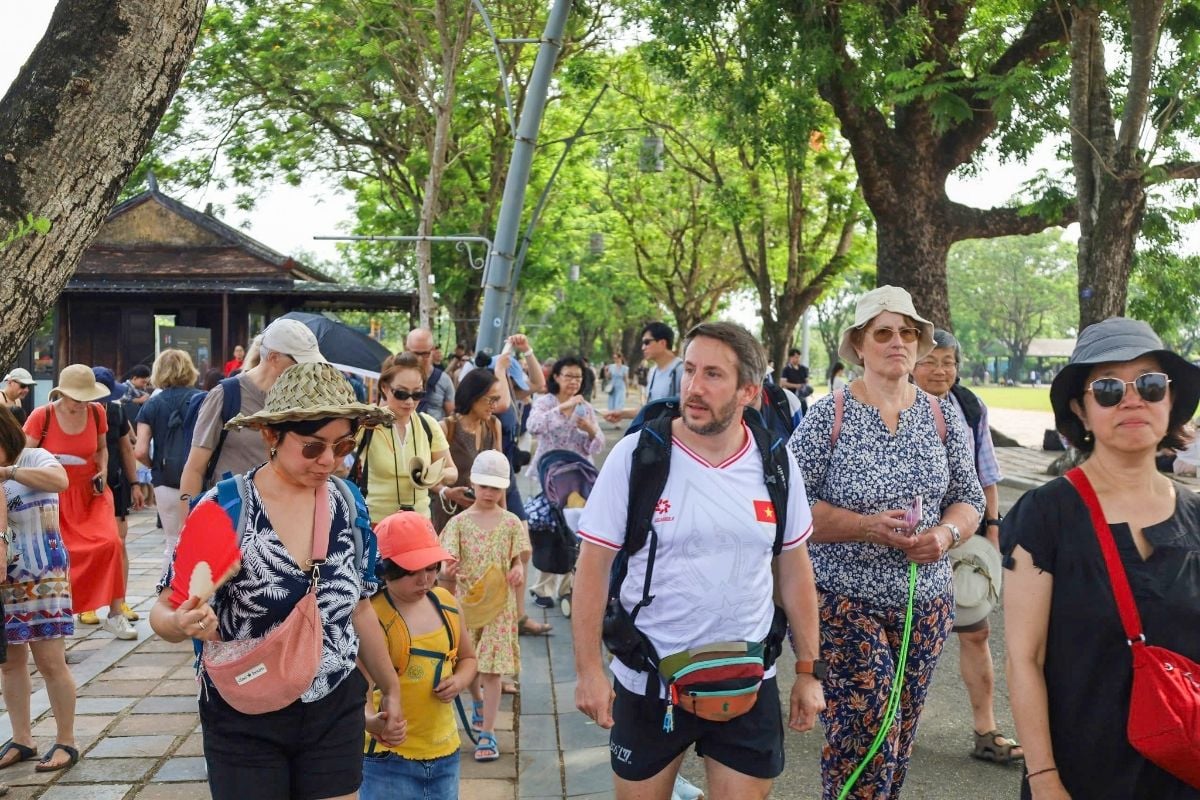
During the Hung Kings Festival holiday, Hue’s tourism sector recorded strong visitor numbers, with about 395,000 arrivals to the city’s tourist sites over five days from April 24 to 28. Of this total, nearly 98,700 were international visitors. Tourism revenue reached approximately 958 billion VND.
Hotel and accommodation occupancy remained above 90% throughout the holiday period. On the peak day, April 27 (the 10th day of the lunar calendar), occupancy nearly reached 99%.
One of the highlight attractions was the Illusory Imperial Palace program in the Imperial City of Hue, held from April 25 to 28 as part of Hue Festival 2026 under the Summer Festival Capital Shines. The night-time program was free to enter and offered a multi-sensory palace experience, including the gate-change ceremony at Ngo Mon, light and sound shows, lantern dancing, reenactments of the Nguyen court, military drills, and cultural and culinary spaces, along with interactive technology experiences.
Hue city officials said 2026 will bring new development opportunities as the city aims to become a distinctive festival city in Vietnam, with nearly 80 cultural, arts, and sports events planned throughout the year. The Summer Festival Capital Shines period (April to June) is identified as the peak season, featuring large-scale programs that combine heritage spaces, performing arts, and modern technology to deliver fresh, emotionally engaging experiences.
Officials described the Illusory Imperial Palace as not only a highlight of Hue Festival 2026, but also expected to become a signature night-tour product. The program is intended to help diversify tourism experiences and raise Hue’s profile on Vietnam’s cultural tourism map.
For the 30 April–1 May holiday (29 April–3 May), Hue is forecast to welcome about 610,000 visitors, up 73.7% year-on-year.






Premium gym chains are entering a “golden era” that is ending or already in decline, as rising operating costs collide with shifting consumer preferences toward more flexible, community-based ways to exercise. Long-term memberships are shrinking, margins are pressured by higher rents and facility expenses, and competition from smaller, more personalized…