•
•
•
•
•
•
•
•
•
•
•
•
•
•
•
•
•
•
•
•
•
•
•
•
•
•
•
•
•
•
•
•
•


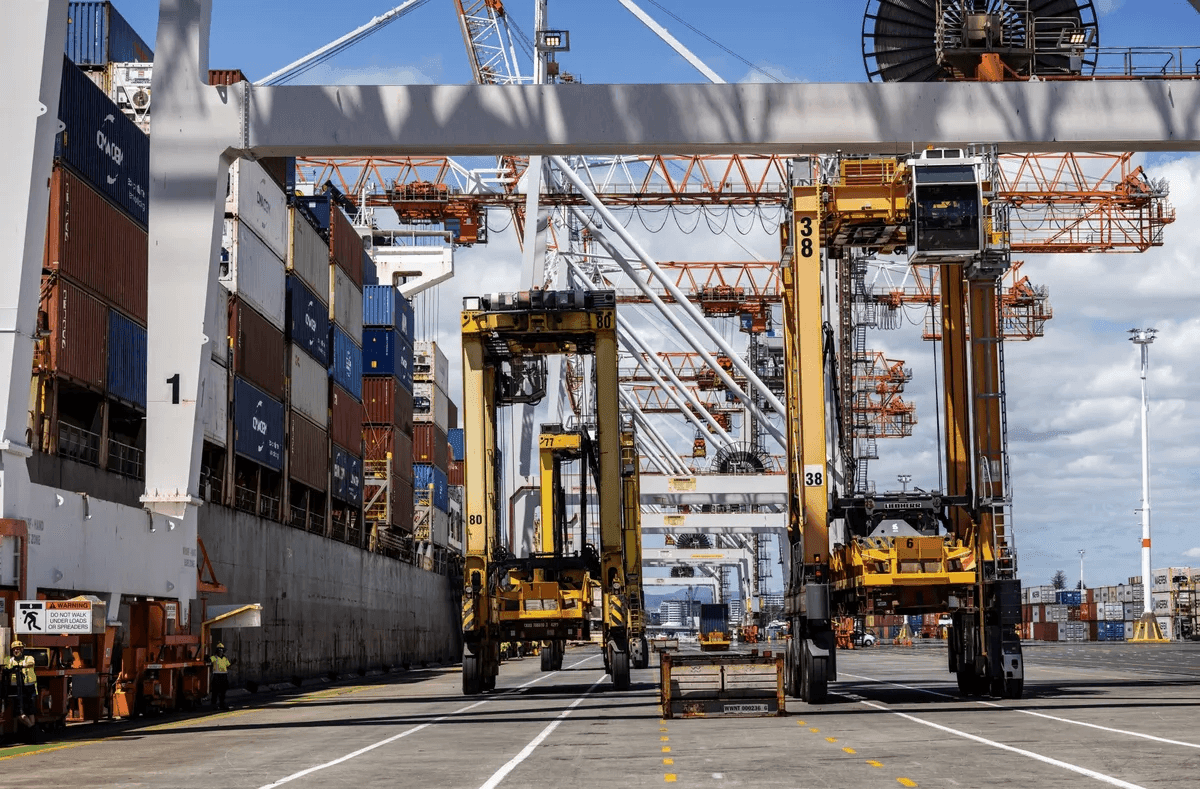
India and New Zealand have signed a free trade agreement (FTA) aimed at significantly reducing tariffs on goods and expanding market access for businesses in both countries, as disruptions to global trade linked to tensions in the Middle East continue to affect food and energy markets.
Bloomberg reported that the two sides completed trade negotiations in December last year before signing the agreement.
Under the deal, New Zealand will eliminate tariffs on all imports from India and ease travel and residency rules for Indian students and workers. In return, New Delhi will eliminate or reduce tariffs on 95% of imports from New Zealand.
New Zealand’s government said that in the long term, 82% of New Zealand’s exports to India will be tariff-free. It added that 57% of exports would become duty-free immediately when the agreement comes into effect.
New Zealand said items with immediate tariff elimination include lamb, wool, coal, and 95% of forestry products. Other categories—such as seafood, industrial goods, Manuka honey, and some fruits—will receive tariff reductions on a phased basis.
Tariffs on wine are also expected to decline over time, from potentially as high as 150% to a range of 25–50%.
New Zealand did not secure full access to India’s dairy market, a sector described as strongly protected and a long-standing sticking point in negotiations.
The signing ceremony took place in New Delhi on Monday (27/4), attended by senior business leaders from both countries. The agreement was signed by India’s Minister of Commerce and Industry Piyush Goyal and New Zealand’s Minister of Trade Todd McClay.
McClay said he expects the agreement could be implemented by year-end after completing necessary legal procedures, including parliamentary ratification in each country.
The deal has faced political pushback in New Zealand. Prime Minister Christopher Luxon urged parties to support the agreement, while New Zealand First—part of the governing coalition—said it would vote against in Parliament, arguing New Zealand conceded too much while benefits have not yet matched. The Labour Party has only recently expressed support after criticizing the government’s handling of the negotiations.
Luxon said on X that the agreement would provide “unprecedented access” for New Zealand exporters to India’s 1.4 billion-strong market, which he said is on track to become the third-largest economy in the world.
Goyal said the agreement was signed as global economic conditions are reshaping and new trade boundaries are forming, adding that India and New Zealand have chosen each other amid volatility.
On investment, Goyal said the agreement could help attract about $20 billion in long-term investment into India, though no specific timeline was provided. Previous Indian government statements indicated the figure would be realized over a 15-year period.
According to New Zealand’s MFAT, bilateral trade between New Zealand and India reached about $2.3 billion in 2025, with New Zealand exporting about $1.18 billion in goods and services to India.
India is currently New Zealand’s 11th-largest export market for goods and services, accounting for about 1.8% of New Zealand’s total exports. New Zealand said tourism services, forestry, apples, kiwifruit, aluminum, steel, and wool are among the largest export categories.
New Zealand’s government also said India will immediately remove tariffs on certain imports from New Zealand, including sheep meat, wool, and coal. It added that the deal improves access for fruits such as kiwifruit, cherries, avocados, strawberries, and blueberries.
Analysts said the current bilateral trade size remains modest relative to India’s potential as the world’s most populous nation and one of the fastest-growing G20 economies.






Premium gym chains are entering a “golden era” that is ending or already in decline, as rising operating costs collide with shifting consumer preferences toward more flexible, community-based ways to exercise. Long-term memberships are shrinking, margins are pressured by higher rents and facility expenses, and competition from smaller, more personalized…