•
•
•
•
•
•
•
•
•
•
•
•
•
•
•
•
•
•
•
•
•
•
•
•
•
•
•
•
•
•
•
•
•


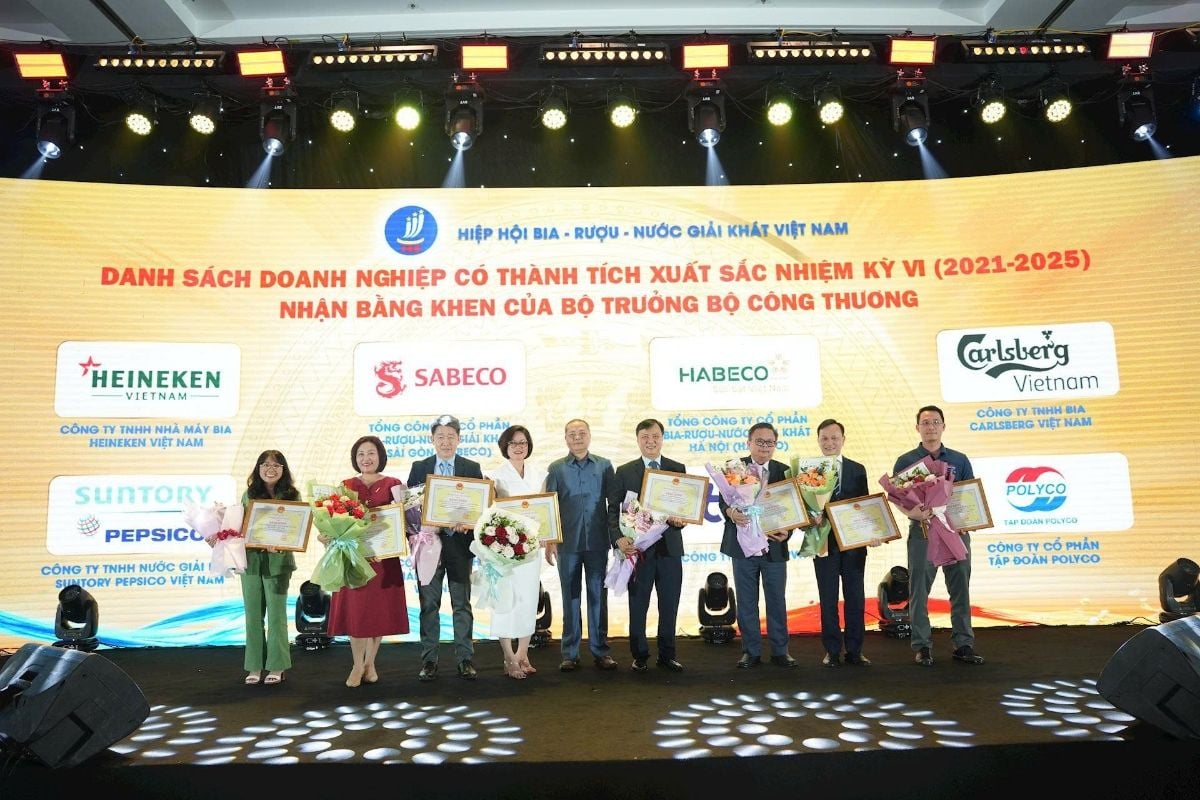
Over three decades, the Vietnam Beer - Alcohol - Beverages Association (VBA) has accompanied and promoted the sustainable development of Vietnam’s beverage sector. VBA recently organized its seventh Congress for the 2026-2030 term and marked its 35th anniversary, receiving numerous commendations from ministries.
Speaking at the ceremony, Prof. Dr. Nguyen Van Viet, Chairman of VBA, said the 35-year milestone reflects the association’s continuous efforts and maturation, as well as the growth of Vietnam’s beverage business community. He noted that while the sector has faced market fluctuations, policy changes and shifting consumer trends, enterprises have continued to expand and contribute positively to the economy.
VBA’s first decade focused on representing the industry as a technically oriented economy, with products and services closely tied to consumer life. During this period, domestic producers invested in equipment, expanded capacity and improved quality. Two major breweries—Bia Sài Gòn (Saigon Beer) and Bia Hà Nội (Hanoi Beer)—solidified as leaders, meeting domestic demand and countering the earlier dominance of Vạn Lực beer.
International groups also entered Vietnam, forming joint ventures with domestic firms to build and operate modern plants, including Heineken, Carlsberg, AB InBev, Coca-Cola and Pepsi. Domestic private sectors such as Tân Hiệp Phát, Hương Sen and Polyco gradually transitioned from manual production to more organized development, reshaping Vietnam’s beverage landscape.
In the following two decades, VBA and beverage companies reported significant efforts and results. The article states that the beverage industry contributes over VND 60,000 billion annually to the national budget and creates millions of jobs across the value chain—from agriculture, production and logistics to distribution, retail and tourism.
VBA described its role as a representative and bridge between beverage enterprises and state agencies, particularly in policy development and critique. The period also saw rapid growth driven by plant investment, scale-up and capacity expansion, alongside efforts to align with the Fourth Industrial Revolution to improve competitiveness.
Companies adopted digital technology in production and management, expanded research and development for health-focused product lines, and led green and sustainable trends. VBA’s congress resolutions set strategic tasks and objectives for the sector toward people, quality of life and sustainable socio-economic development.
To implement these tasks, VBA strengthened its operating apparatus by establishing specialized units. The Vietnam Beverage Journal launched in 2005, and in 2021 the Vietnam Institute of Beverage Research was established to support VBA’s activities and policy contributions.
The report at the Congress said the 2021–2025 term unfolded amid heavy impacts from the Covid-19 pandemic, global economic volatility, alcohol policy controls and rising input costs. These factors reduced output and revenue for many firms and weakened market demand.
In response, VBA acted as a bridge between enterprises and state agencies, proactively proposing solutions to ease difficulties and support production and business recovery. The association also participated in policy critique to balance government, business and consumer interests. Trade promotion, training and international cooperation were intensified, including through the Vietnam Institute of Beverage Research and the Soft Drink Subcommittee to provide policy advice backed by scientific basis.
Public communications continued to evolve, promoting messages on responsible consumption and sustainable development.
Assessing VBA’s role, Mr. Ta Van Ha, Deputy Chairman of the Culture and Education Committee of the National Assembly, said that after 35 years VBA has established itself as a representative organization protecting the voice of the business community and serving as an information bridge between enterprises and state agencies. He highlighted the sector’s contributions to employment, budget contributions and social welfare activities, and said parliamentary bodies “always listen and respond to the legitimate concerns of businesses and the association.”
He also expressed expectations that VBA and the business community will continue to participate actively in policy critique and policy shaping for sustainable development of the beverage sector.
The Congress elected a 39-member Board of Directors for the VII term and a 5-member Supervisory Board. Mr. Nguyen Van Viet was re-elected as VBA President for 2026–2030. The Congress also recognized 20 new member units, expanding the association’s scale and strengthening its connectivity, reflecting growing trust from the business community in VBA’s leadership.
Entering the VII term, the article says the Vietnamese beverage industry will face both opportunities and challenges, particularly rising expectations related to health, environmental protection and responsible consumption. VBA adopted the motto: “Adapt - Unity - Innovation - Sustainable Development.”
Under this orientation, enterprises are expected to adapt to the market, increase technology investment, develop environmentally friendly products and maintain food safety as a foundation. The article also identifies green transformation and digital transformation as key drivers to enhance competitiveness.
It concludes that the 35th anniversary and the receipt of commendations from the Ministry of Industry and Trade and the Ministry of the Interior mark a milestone opening a new development phase, with VBA continuing to position itself as a connector, leader and guide toward building a modern, sustainable and deeply integrated Vietnam beverage sector.





Premium gym chains are entering a “golden era” that is ending or already in decline, as rising operating costs collide with shifting consumer preferences toward more flexible, community-based ways to exercise. Long-term memberships are shrinking, margins are pressured by higher rents and facility expenses, and competition from smaller, more personalized…




