•
•
•
•
•
•
•
•
•
•
•
•
•
•
•
•
•
•
•
•
•
•
•
•
•
•
•
•
•
•
•
•
•


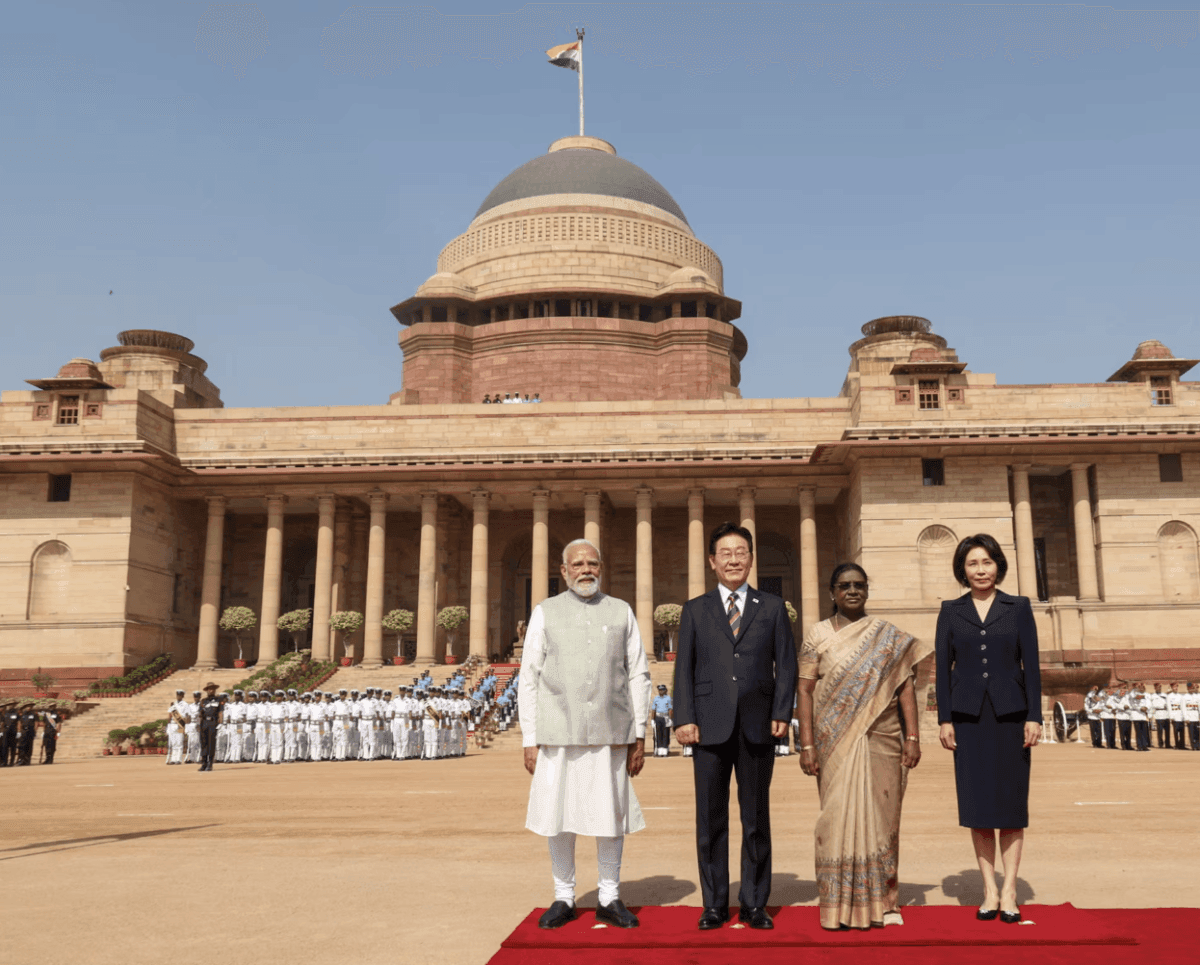
India and South Korea agreed to strengthen economic cooperation during the official visit of South Korean President Lee Jae Myung to India, the first state visit by a South Korean president to India in eight years. In talks with Prime Minister Narendra Modi on 20 April, the two sides pledged to broaden collaboration across energy, key minerals, shipbuilding, semiconductors, and steel, aiming to double bilateral trade to $50 billion by 2030.
Reuters reported that the two countries also agreed to resume and push negotiations to renew the 2010 trade agreement to support joint growth. India is seeking a more balanced trade relationship, while South Korea is looking for greater access to India’s large market.
A highlight of the visit was the establishment of a minister-level Economic Cooperation Committee. The committee is set to focus on nuclear power and clean energy, alongside trade and investment.
Amid a global energy supply squeeze linked to the Iran conflict, India and South Korea pledged to work toward stable supplies of energy resources and key raw materials, including naphtha.
Prime Minister Modi said the countries have decided to raise bilateral trade to $50 billion by 2030, from about $27 billion currently. He also pointed to long-standing cultural ties as a foundation for cooperation.
Steel was a notable area of cooperation. POSCO Holdings plans to build a joint-venture steel plant in Odisha with JSW, with capacity of 6 million tonnes per year. The project is estimated at around $1.09 billion through 2031, reflecting Korea’s efforts to expand its presence in India’s fast-growing steel sector.
At a business forum, India’s Commerce Minister Piyush Goyal and Korea’s Yeo Han-koo discussed reviving and improving the trade agreement and opportunities to deepen cooperation in industry, green energy, and digital trade. The two sides agreed to develop a fast-track roadmap, including reducing non-tariff barriers, rules of origin, and expanding market access.
President Lee said India’s AI capabilities and Korea’s advanced manufacturing technology could create synergies. He also suggested that shipbuilding cooperation could open a new chapter in their industrial relationship.
The forum included participation from major Korean companies such as Samsung Electronics, Hyundai Motor, and LG Group, underscoring interest in the Indian market.
A key challenge highlighted in the reporting is India’s growing trade deficit with South Korea. Data from the Korea International Trade Association shows that South Korea recorded a trade surplus with India of $12.8 billion last year, with exports to India of $19.2 billion and imports from India of $6.4 billion.




Premium gym chains are entering a “golden era” that is ending or already in decline, as rising operating costs collide with shifting consumer preferences toward more flexible, community-based ways to exercise. Long-term memberships are shrinking, margins are pressured by higher rents and facility expenses, and competition from smaller, more personalized…