•
•
•
•
•
•
•
•
•
•
•
•
•
•
•
•
•
•
•
•
•
•
•
•
•
•
•
•
•
•
•
•
•
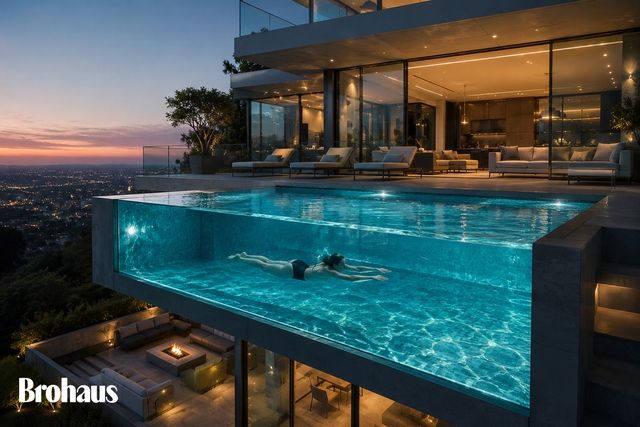
In the ultra-wealthy segment, the luxury race has moved beyond familiar benchmarks such as villa size, location, or the number of exotic cars in a garage. With almost everything purchasable, the value of a home increasingly depends on how effectively it serves its owner.
In recent years, the most expensive villas in markets including Dubai, Miami, Beverly Hills, and Singapore have reflected a shared trend: technology is being treated as an investment on par with imported marble, bespoke interiors, and art collections worth tens of millions of dollars.
For most users, a smart home typically means controlling lights or climate via a phone or voice commands. In the ultra-luxury segment, the concept has advanced further: technology is designed to anticipate rather than simply respond.
Instead of executing requests only after a user presses a button or speaks to a system, high-end homes are built to learn an owner’s habits and act before a request is made. For example, when an owner returns from a long business trip, facial recognition can trigger pre-programmed scenes—adjusting living room lighting to familiar tones, setting the temperature to preferred levels, opening curtains to use natural light, and starting the usual evening audio playlist.
Behind these experiences is a network of sensors, data collection, and artificial intelligence that continually learns how the home is used. The system can remember wake times, preferred bedroom temperatures, workout schedules, and how different areas of the house are utilized. At the highest level, the technology becomes less noticeable, allowing the owner to focus on living while the home adapts to their routine.
A paradox is emerging in ultra-luxury real estate: the more expensive the home, the less visible the technology. In earlier years, modern devices themselves were often treated as symbols of wealth. Today’s elites increasingly view exposed wiring, large screens, and bulky audio equipment as detracting from aesthetics.
As a result, buyers are reportedly willing to spend hundreds of thousands of dollars on solutions designed to be nearly unseen. Speakers can be hidden behind wall panels, cameras can be integrated into building architecture, and presence sensors can be distributed throughout spaces without drawing attention.
The article cites an example of a $30 million villa where concert-hall quality acoustics can be delivered without visible speakers. It also notes that central control systems can connect hundreds of devices, while the owner interacts through a single app or a minimalist control panel tucked into the decor.
Architectural design is also shifting toward “view-centric architecture,” emphasizing sightlines and using large glass walls to reduce the visual boundary between indoor living and the outside environment.
Wellness in luxury homes extends beyond fitness and anti-aging technology. After the pandemic, health has become a top priority for global elites, and this is reflected in the growing interest in “wellness homes” across the U.S., the Middle East, and Asia.
These homes are designed to improve life quality and support longevity. The article describes high-end air filtration systems that continuously monitor fine dust, humidity, and CO2 levels in different areas. Lighting is tuned to natural circadian rhythms to support sleep and focus, while water filtration is described as running 24/7 to maintain drinking water quality.
Some ultra-luxury projects also include dedicated wellness features such as red-light therapy rooms, infrared saunas, cold plunge pools, and health monitoring devices connected to the home’s ecosystem.
In entertainment, virtual reality is positioned as a portal into the digital world, enabling owners to experience role-playing games, sports simulations, or virtual travel through next-generation VR.
Security is also described as evolving. Traditional cameras and alarms are portrayed as insufficient for the highest-end segment. In some villas in California or Dubai, security systems can coordinate motion sensors, thermal cameras, and access controls to create a multi-layer protection network. The stated goal is risk detection before incidents occur, rather than recording events after they happen.
While outsiders may assume billionaires spend millions on flashy gadgets, the article argues that the real priority is time and convenience—systems that operate precisely as desired without requiring constant attention.
Overall, the luxury home landscape is shifting from ownership toward experience, with smart homes increasingly framed as the opening chapter of a broader future in which technology becomes an invisible part of daily life.
The crypto bear market remained in force on Wednesday, with bitcoin slipping back toward the $60,000 area. Sharp pullbacks in gold and oil also weighed on the 2025 “debasement trade,” which had supported hard assets amid concerns about government debt and fiat currencies. Meanwhile, tech—particularly the AI boom—continued…