•
•
•
•
•
•
•
•
•
•
•
•
•
•
•
•
•
•
•
•
•
•
•
•
•
•
•
•
•
•
•
•
•


Road-opening policies and large-scale infrastructure investment are driving Vietnam’s cultural industries forward, elevating the country to a new destination in the global experiential economy.
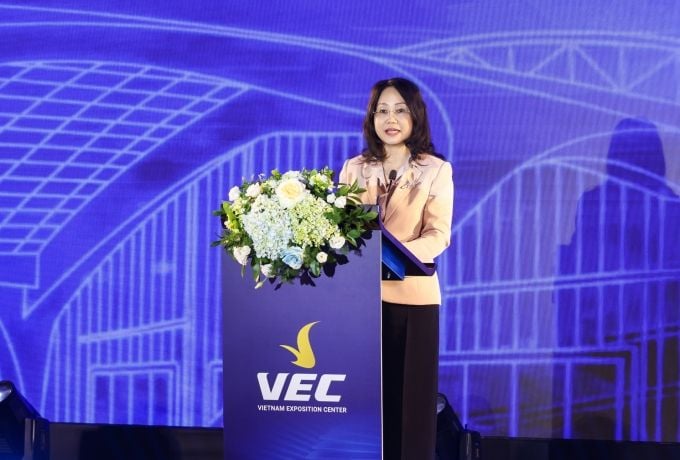
The assessment drew broad consensus from policymakers, economic experts, and business leaders at the Vietnam Expo, Event, and Advertising Industry Summit held at the Vietnam Exhibition Center (VEC) in Hanoi on May 8.
With the theme of an era of growth in the cultural industry and the sports economy, the event provided a forum for international organizers to discuss strategies to position Vietnam as a world-class experiential hub.
Representatives of the authorities, including Culture, Sports and Tourism Minister Lâm Thị Phương Thanh, said the state views culture as a strategic economic sector, equal to economy, politics, and society. The government targets cultural industries contributing about 7% of GDP by 2030 and 9% by 2045.
To realize these goals, the national budget will maintain at least 2% of spending on culture and apply incentives for key areas such as cinema, performing arts, exhibitions, and sports.
From a financial perspective, Dr. Can Van Luc, Chief Economist of BIDV, said the USD-based economy has significant growth potential. He noted that Vietnam’s domestic advertising market totals $3.5 billion and is growing by about 12% annually.
He also cited the events and exhibitions (MICE) tourism sector at $6 billion, with expected steady growth of 12–15% per year from 2026 to 2030.
Infrastructure was highlighted as decisive for national competitiveness. Ms. Pham Thai Ha, CEO of VEC, said the “grand dream” of developing the cultural industry cannot materialize without world-class physical infrastructure, describing culture as both soft power and an economic driver for national development.
To address infrastructure, Vingroup operates VEC in Hanoi and continues the VEC Can Gio project in Ho Chi Minh City. The group is also building an international-scale network of multi-functional facilities, including Hung Vuong Stadium with a record 135,000-seat capacity and the PVF sports stadium in Hung Yen.
Ha said the hardware platform—paired with a cohesive ecosystem of lodging, transport, and entertainment including Vinpearl, Xanh SM, V-Spirit, and VinPalace—will help Vietnam remove technical barriers and welcome world-class music festivals and major sports events.
CEO Geoff Dickinson of dmg events, a global organizer of energy exhibitions, said Vietnam is at a “golden moment” to expand its international event footprint. He attributed the opportunity to modern venues, government backing, and organizers’ capabilities, and noted that dmg events has an office in Hanoi while pledging long-term investment to bring global exhibitions to Vietnam.
Jason Yan, Partner at M Square Capital, pointed to the “urban ignition” model as a growth lever. He said that in 2025 alone, more than 800 music events in Vietnam generated revenues exceeding $50 million.
Yan also cited a spillover effect: for each US$1 spent on event tickets, $4–$6 is driven in accommodation, dining, and retail. He added that strong purchasing power among Vietnamese youth—reflected in sold-out shows—underscores demand that many markets seek.
To concretize the shared vision, Chairman Le Bros Le Quoc Vinh announced Vietnam Event Week 2026 (VEEW 2026), scheduled from July 30 to August 2 at VEC.
The event is intended to function as an annual connectivity platform to initiate Vietnamese-branded projects and gradually build a sustainable event ecosystem with international reach.

Premium gym chains are entering a “golden era” that is ending or already in decline, as rising operating costs collide with shifting consumer preferences toward more flexible, community-based ways to exercise. Long-term memberships are shrinking, margins are pressured by higher rents and facility expenses, and competition from smaller, more personalized…