•
•
•
•
•
•
•
•
•
•
•
•
•
•
•
•
•
•
•
•
•
•
•
•
•
•
•
•
•
•
•
•
•


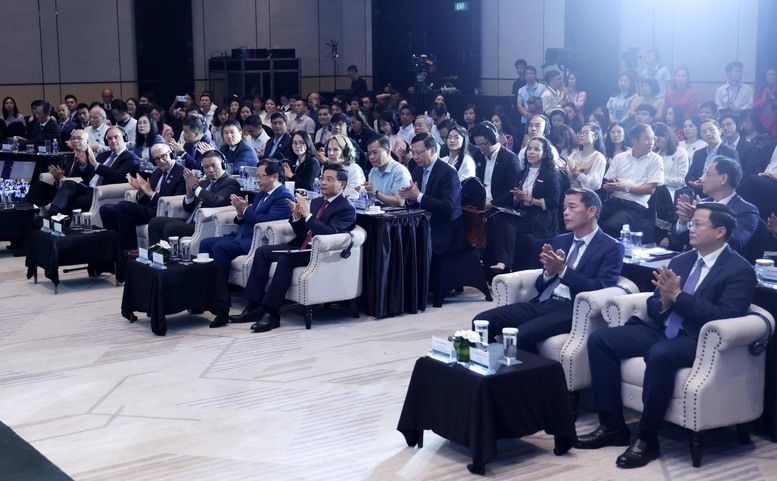
Speaking at the Vietnam Development Bridge Forum 2026 on the afternoon of May 13, Deputy Prime Minister Nguyen Van Thanh said new-generation foreign direct investment (FDI) should not only come to Vietnam to manufacture or access markets, but also help Vietnam create new value, new capabilities, and a stronger position in the global value chain.
The sixth edition of the forum, themed “Foreign Direct Investment with the foreign-invested sector and the domestic private economy: Joint force to spur sustainable growth in a new phase,” brought together Deputy Prime Minister Nguyen Van Thanh; leaders from policy and strategy units of central agencies, ministries, and legislative committees; provincial leaders from northern Vietnam; and more than 300 leaders from foreign investment promotion associations, foreign-invested groups, domestic business associations, and economists.
Deputy Prime Minister Thanh noted that Vietnam has more than 46,500 active FDI projects, which contribute over 20% of GDP and about 70% of export turnover.
Delegates discussed two main areas: assessing Vietnam’s opportunities and capacity to attract new-generation FDI, particularly in sectors Vietnam prioritizes; and identifying measures to maximize spillover effects from the foreign-invested sector to the domestic economy. These measures include technology transfer commitments, higher localization, and greater participation of Vietnamese enterprises in global value chains.
“For Vietnam, this is both a challenge and a huge opportunity to redefine its role in regional and global value chains, to shift growth drivers toward science and technology, innovation, digital transformation, green transition, and the development of the private sector,” Deputy Prime Minister Thanh said.
He also referenced the broader environment for investment flows, saying that while many regions face a global slowdown in FDI, Vietnam continues to maintain a leading position among ASEAN economies for attracting FDI.
The forum outlined five major directions for Vietnam’s next phase of development:
Deputy Prime Minister Thanh said the government will create the most favorable conditions for investors to operate legally, efficiently, and long-term in Vietnam, while decisively addressing issues including transfer pricing, trade fraud, environmental violations, outdated technologies, and intellectual property (IP) violations.
Vietnam is entering a new development phase with the goal of becoming a high-income country by 2045. To achieve this, the government said Vietnam needs a new growth model based on innovation, technology, a high-quality workforce, and the combined effect of the foreign-invested and domestic sectors.
The Deputy Prime Minister said the government hopes the international business community and foreign investors will continue to accompany Vietnam not only as an investment destination but also as a strategic development partner in the global value chain. He also called on Vietnamese enterprises to proactively reform thinking, upgrade governance and technology, and strengthen cooperation to participate more deeply in global production networks and supply chains.
The government committed to continuing to listen and act with the business community to build a transparent, stable, safe, and globally competitive investment environment, expressing confidence that coordinated efforts between the foreign-invested sector and the domestic economy will generate renewed momentum for rapid and sustainable growth in the new phase.
Premium gym chains are entering a “golden era” that is ending or already in decline, as rising operating costs collide with shifting consumer preferences toward more flexible, community-based ways to exercise. Long-term memberships are shrinking, margins are pressured by higher rents and facility expenses, and competition from smaller, more personalized…