•
•
•
•
•
•
•
•
•
•
•
•
•
•
•
•
•
•
•
•
•
•
•
•
•
•
•
•
•
•
•
•
•


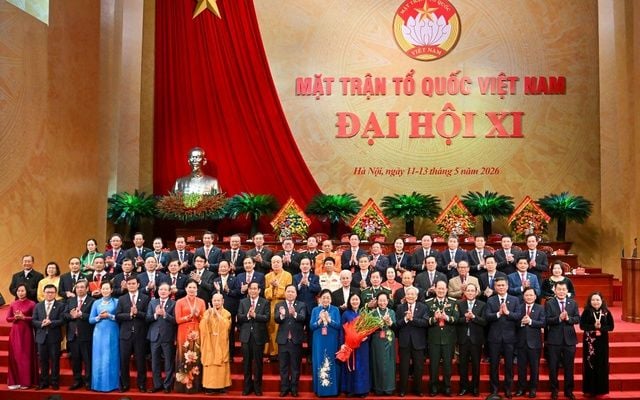
On May 13 in Hanoi, at the closing session of the 11th National Congress of the Vietnam Fatherland Front for the 2026–2031 term, 70 members of the Presidium of the Vietnam Fatherland Front Central Committee for the XI term were officially introduced. Businessman Do Quang Hien was approved to join the Presidium of the Central Committee of the Vietnam Fatherland Front.
Do Quang Hien is the founder and Chief Executive of the T&T Group. He also serves as Chairman of SHB Bank’s Board of Directors, Vice Chairman of the Vietnam Association of Small and Medium Enterprises (VINASME), and Chairman of the Hanoi Association of Small and Medium Enterprises (HANOISME). In addition, he is a member of the Central Committee of the Vietnam Fatherland Front.
Over more than three decades of leadership and active involvement in business and social organizations, Do Quang Hien has been recognized for contributions to economic development, social welfare, and community activities. He has received multiple awards, including the Labour Order First, Second, and Third Class for achievements in production and business, contributing to socialist construction and national defense.
He is also noted as the only private-sector entrepreneur in the finance-banking sector to receive the Asia Pacific Entrepreneurship Award (APEA) 2017 from Enterprise Asia.
As a member of the Central Committee of the MTTQ, Do Quang Hien has made contributions to MTTQ activities nationwide, particularly in social welfare. His work includes supporting poor households and disadvantaged families, disaster relief, care for the Mother Việt Nam Anh hùng, and facilitating corporate social responsibility, including mobilizing private-sector participation in national development.
The appointment highlights the expanding role of the private sector in social activities and community development, and recognizes Do Quang Hien’s responsibility, dedication, and perseverance in MTTQ activities and social welfare efforts across the country.

Premium gym chains are entering a “golden era” that is ending or already in decline, as rising operating costs collide with shifting consumer preferences toward more flexible, community-based ways to exercise. Long-term memberships are shrinking, margins are pressured by higher rents and facility expenses, and competition from smaller, more personalized…