•
•
•
•
•
•
•
•
•
•
•
•
•
•
•
•
•
•
•
•
•
•
•
•
•
•
•
•
•
•
•
•
•


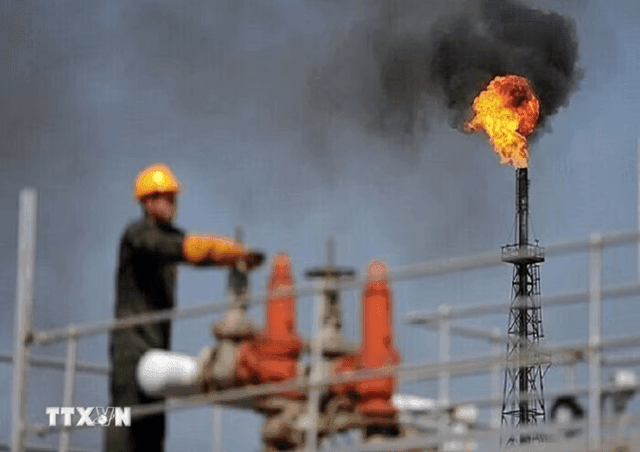
The conflict in Iran is driving global oil inventories down at a record pace, draining the cushion that has protected the world economy from supply shocks. The rapid drawdown of stockpiles is raising the risk of price spikes and tighter supplies.
Governments and industry have few options to mitigate the impact of losing more than one billion barrels of oil supply after two months as the Hormuz Strait has been nearly closed. The situation leaves the market vulnerable for an extended period, even if the conflict ends.
Morgan Stanley estimates global oil inventories fell by about 4.8 million barrels per day in the period from March 1 to April 25. The figure far exceeded quarterly declines previously recorded by the International Energy Agency (IEA), with crude oil accounting for nearly 60% of the decline and the rest from refined fuels.
Natasha Kaneva, head of global commodities research at JPMorgan Chase & Co., said stockpiles play the role of a buffer for the global oil system. However, she noted that the system always requires a minimum level of oil to operate, and that the world will hit the “minimum operating level” long before inventories actually reach zero.
Goldman Sachs Group Inc. said that while the pace of decline slowed a little recently due to weaker demand from China, total world oil inventories have touched a low not seen since 2018.
The greatest pressure is weighing on several Asia-dependent economies that rely on imported fuels. In Europe, fuel stocks are also depleting rapidly ahead of the summer travel season, and some analysts forecast a serious shortage as early as June.
In the United States, which still serves as the world’s final supplier, domestic crude and fuel stocks have been drawn down below historical averages as exports surged. Government data show U.S. crude oil inventories, including the Strategic Petroleum Reserve (SPR), have fallen for four consecutive weeks. Distillate stocks are at their lowest since 2005.
Eimear Bonner, chief financial officer of Chevron Corp., cautioned that stock levels could continue to fall in the near term, projecting that some importing-dependent countries will begin facing severe shortages in June and July.
Antoine Halff, co-founder of data analytics firm Kayrros, said oil inventories in the Asia-Pacific region (excluding China) have fallen by about 70 million barrels since the conflict began, with Japan and India at the lowest levels in at least a decade.
Some analysts say that if the Hormuz Strait does not reopen by early June, some Asian economies will have to absorb macroeconomic shocks from diesel shortages. Europe could face a shortage for another month before the situation becomes hard to control.
Even if the Hormuz Strait reopens, pressure on the market is expected to persist as governments and companies rush to replenish what was lost. Willie Chiang, CEO of Plains All American Pipeline LP, said that after the conflict, many countries may rebuild strategic stocks at higher levels than before the conflict, creating a new layer of demand for the market in the future.






Premium gym chains are entering a “golden era” that is ending or already in decline, as rising operating costs collide with shifting consumer preferences toward more flexible, community-based ways to exercise. Long-term memberships are shrinking, margins are pressured by higher rents and facility expenses, and competition from smaller, more personalized…



