•
•
•
•
•
•
•
•
•
•
•
•
•
•
•
•
•
•
•
•
•
•
•
•
•
•
•
•
•
•
•
•
•


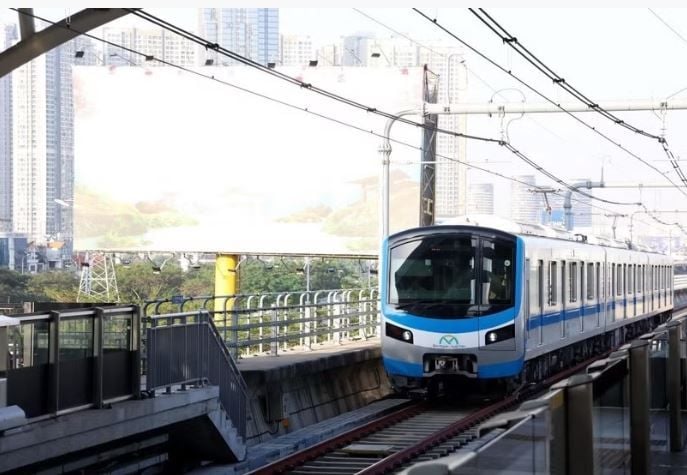
Land acquisition for Ben Thanh-Suoi Tien Metro project extension to Long Thanh International Airport According to the Dong Nai Provincial Land Fund Development Center, the project to extend the Ben Thanh-Suoi Tien Metro line to the Provincial Administrative Center and Long Thanh International Airport has a total length of 44.6 km. Metro Ben Thanh-Suoi Tien. (Photo: Hong Dat/TTXVN) The Bien Hoa branch of the Dong Nai Land Fund Development Center has issued Notice No. 1059/TN-TTTPQĐ-CNBH on the land resumption policy for compensation, support, and resettlement for the project extending the Ben Thanh-Suoi Tien Metro line to the Administrative Center of the province and Long Thanh International Airport. Previously, the Government Office issued Notice No. 98/TB-VPCP, dated March 5, 2026, regarding the conclusions of Prime Minister Pham Minh Chinh—the head of the Steering Committee at the seventh meeting of the Steering Committee for key rail projects. The project extending the Ben Thanh-Suoi Tien Metro to the Administrative Center and Long Thanh International Airport was approved by the Prime Minister under emergency conditions. In line with the directive of the Dong Nai Provincial People’s Committee to implement the extension project under emergency construction conditions, the compensation, support, resettlement, and land clearance contents have been separated into an independent sub-project and assigned to the Dong Nai Center for Land Fund Development as the investor. According to the Dong Nai Center for Land Fund Development, the project extending the Ben Thanh-Suoi Tien Metro to the Administrative Center and Long Thanh International Airport has a total length of 44.6 km, passing through Tran Bien, Bien Hoa, Long Hung, Phuoc Tan, Tam Phuoc, An Phuoc, Nhon Thanh, and Long Thanh wards/communes, with a total land use of about 192.5 hectares (TOD sites excluded). In April 2026, the Bien Hoa branch of the Land Fund Development Center will coordinate with relevant units and the People’s Committees of Tran Bien, Bien Hoa, Long Hung, Phuoc Tan, and Tam Phuoc to conduct on-site surveys and collect data on land, housing, structures, trees, schools, religious facilities, companies, factories, and other properties within the land-resumption area to form a basis for estimating total compensation and resettlement costs for the project. The route for the Ben Thanh-Suoi Tien Metro to the Administrative Center and Long Thanh International Airport starts from S0 station at Tan Van, crossing the Dong Nai River and running along National Highway 1, connecting to the SC station of the new administrative center in Dong Nai province. Thereafter, the Metro line would follow the Bien Hoa-Long Thanh rail corridor, along DT.771, cross the Ho Chi Minh City-Long Thanh expressway, and connect to the SA station, entering the rail corridor planned for airport access. Technically, this is an MRT urban railway system. The preliminary total investment is about VND 60,261 billion (with compensation and resettlement costs about VND 4,323.2 billion). The project is planned for 2025-2029. The Dong Nai Provincial People’s Committee regards the need to connect Tan Son Nhat International Airport and Long Thanh International Airport as essential to ensure parallel operation of the two airports. Long Thanh Airport will receive a portion of passengers and cargo from Tan Son Nhat when in operation. Therefore, early study and implementation of other connecting transport projects such as metro, high-speed rail, and cross-regional bridges is crucial to meet connectivity needs, reduce travel time, and shorten the distance between Tan Son Nhat and Long Thanh airports. Earlier, the Dong Nai People’s Council resolved that the Dong Nai People’s Committee is the competent authority to implement the project to extend the Ben Thanh-Suoi Tien Metro to the Administrative Center and Long Thanh International Airport under a PPP arrangement, crossing Dong Nai and Ho Chi Minh City. — Sỹ Tuyên Vietnamplus 12:25 17/04/2026




Premium gym chains are entering a “golden era” that is ending or already in decline, as rising operating costs collide with shifting consumer preferences toward more flexible, community-based ways to exercise. Long-term memberships are shrinking, margins are pressured by higher rents and facility expenses, and competition from smaller, more personalized…




