•
•
•
•
•
•
•
•
•
•
•
•
•
•
•
•
•
•
•
•
•
•
•
•
•
•
•
•
•
•
•
•
•


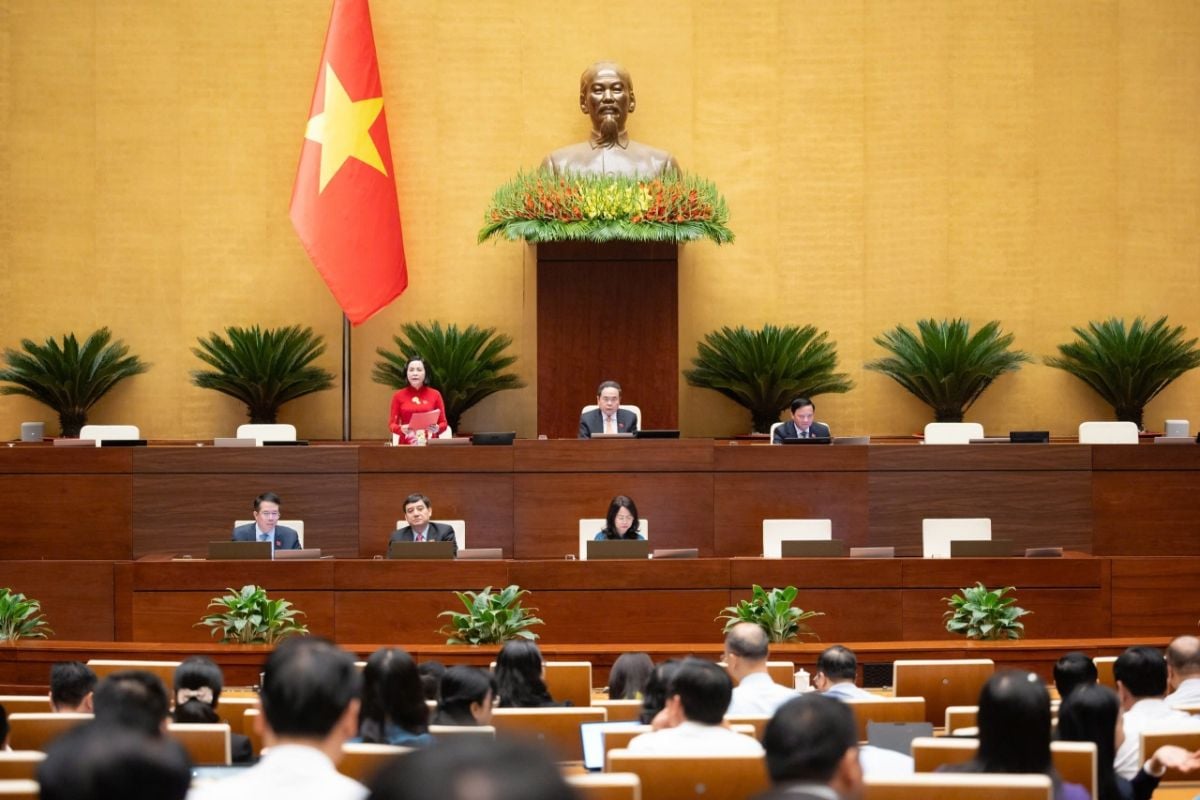
On the morning of April 22, 2026, in discussions in the chamber on the draft Resolution on the Development of Vietnamese Culture, members of the National Assembly broadly agreed on the necessity of issuing the Resolution to promptly institutionalize the Party's stance in Resolution No. 80-NQ/TW of the Politburo. Given limited budget resources for culture, the draft's provision that the State should ensure annual cultural expenditures of at least 2% of the total state budget is considered appropriate. However, Deputy Tran Van Khai (Ninh Binh Province) argued that the 2% floor is correct but not sufficient, because the key issue is the allocation structure. If the draft does not clarify the share allocated to grassroots cultural institutions, heritage preservation, digital transformation, data infrastructure, and ensuring digital cultural security, the target could be met while the investment's strategic objective is not achieved. He urged that besides the 2% floor, the draft should clearly identify priorities in the mid-term public investment plan and annual budget estimates, especially for cultural digital transformation and digitization of ranked heritage. Analyzing the risk-acceptance provisions in Articles 8 and 11, Deputy Nguyen Phuong Thuy argued that the policy direction is appropriate but not yet operable. The draft references cost controls, outsourcing, and a Culture Fund under a risk-acceptance approach, but it does not clarify acceptance testing and settlement mechanisms. This is a major bottleneck because it still applies traditional public financial management logic to the creative cultural sector. She proposed revising Article 8 so that innovative tasks funded by the budget are evaluated through an independent process, with the professional council’s conclusion on ideological and artistic value as the primary basis for acceptance and settlement. Also, at Article 11 a principle should be added that there is no requirement to repay reasonable costs if the project does not achieve the expected economic efficiency but still ensures artistic quality. Regarding pilot provisions, the draft is said to design various pilot policies across different articles, from models of cultural institutions, the cost-control mechanism for creativity, digital culture, to the Cultural Arts Fund. This approach suits the cultural sector’s characteristics, where many new contents require testing before codification, and the draft has initially set pilot durations from 5 to 10 years. However, Deputy Nguyen Phuong Thuy notes that the draft lacks clarity on implementing entities, authorities, and accountability in the pilot process. Many provisions stop at allowing pilots but do not specify what content differs from current law or within what limits. This could hinder implementation or grant too broad authority to the executing agency. The draft also does not clarify the goals and evaluation criteria for pilots. Most provisions set policy directions but do not specify concrete outputs to be achieved, making it difficult to assess effectiveness and decide whether to continue or expand the pilot. While the government’s detail regulations scope is broad, the policy framework in the Resolution is not fully defined, risking authority. From these analyses, deputies urged continuing to refine the draft to specify within the Resolution the scope of application, content allowed that differs from current law, accountability mechanisms, and implementation principles. If there is not enough basis, prepare and submit to the National Assembly a separate pilot resolution to ensure rigor, transparency, and proper authority.





Premium gym chains are entering a “golden era” that is ending or already in decline, as rising operating costs collide with shifting consumer preferences toward more flexible, community-based ways to exercise. Long-term memberships are shrinking, margins are pressured by higher rents and facility expenses, and competition from smaller, more personalized…